
Original briefings. Zero spin.
Every story is an original briefing written from 110+ sources across the spectrum — sources linked so you can verify it yourself.
 politics
Notable (5/10)
Event date: September 1, 2026
politics
Notable (5/10)
Event date: September 1, 2026
State Department Renews Brazil Crime Warning as Visa Dispute Reportedly Stalls U.S.-Brazil Cooperation
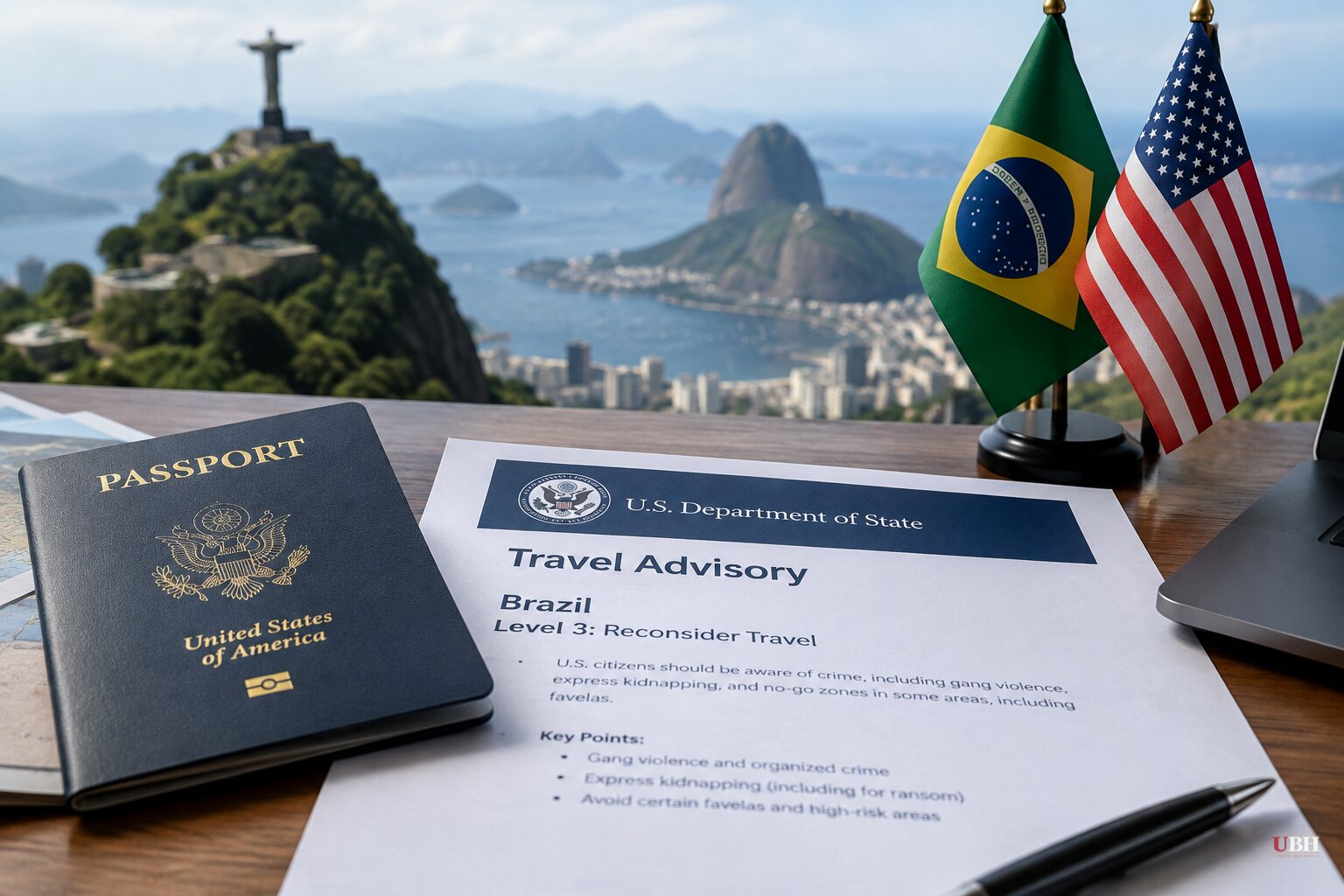
The U.S. State Department renewed its travel advisory for Brazil on Tuesday, September 1, keeping the country at a "Level 2: Exercise increased caution" designation while adding more detail on where and how Americans get hurt there, according to the department's advisory reported by the Epoch Times.
Some regions inside Brazil carry a "Level 4: Do not travel" designation, the most severe category the State Department issues. The department did not raise Brazil's overall level. It expanded the specifics instead.
What the Advisory Warns About
Violent crime including murder, carjacking, and armed robbery happens in Brazil's urban areas, the State Department said. It told visitors to be careful at night, during dating-app meetups, and when withdrawing cash from ATMs or leaving banks.
"Assaults are common, including with sedatives or drugs placed in drinks, especially in Rio de Janeiro," the department said, according to the Epoch Times.
Express kidnapping, where criminals hold people at gunpoint and force them to drain ATMs or transfer money through banking apps, is an ongoing threat, the department said. Kidnapping for ransom involving U.S. citizens is rare but does happen, prompting American businesses to arrange enhanced security for executives in São Paulo and other major cities.
The advisory singled out favelas and vilas, Brazil's informal housing settlements, as areas where neither tour companies nor police can guarantee safety. "Gangs strictly control access to these neighborhoods," the department said. "Tourists have been killed after accidentally entering on foot or when following GPS directions while driving."
An Argentine tourist was shot in the head and chest in Rio de Janeiro in December 2024 after wandering into a gang-controlled hillside favela on his way to the Christ the Redeemer statue. He died the following month. In April 2026, nearly 200 tourists were trapped atop a Rio hill when police launched an operation against a local gang. No visitors were reported injured in that incident.
U.S. government employees stationed in Brazil now need special authorization to travel within 100 miles of the country's land borders with Bolivia, Colombia, Guyana, French Guiana, Paraguay, Peru, Suriname, and Venezuela, the advisory said.
Roughly 759,637 American tourists visited Brazil last year, according to tourism industry data cited in a January 9 report. Brazil's Level 2 rating puts it alongside the United Kingdom, Denmark, and France, though those countries carry that designation mainly over terrorism risk rather than street crime.
The Visa Dispute
Separately, a New York Times report picked up by Down Under Voices on September 12 says Brazilian officials contend the Trump administration is blocking some of Brazil's efforts to expand cooperation with the United States on fighting transnational crime, and that a visa issue is at the center of the friction.
The reporting is thin on specifics. It does not name which U.S. officials are involved, which visa category is disputed, or which Brazilian crime-fighting proposals have been affected. No U.S. agency spokesperson is quoted responding to the claim in the available reporting.
Brazilian officials, per the Times report, frame this as the U.S. undercutting cooperation Brazil says it wants to expand. If Washington is genuinely worried about gangs, cartels, and cross-border crime networks operating in and around Brazil, exactly the threats detailed in the State Department's own travel advisory, blocking a partner nation's cooperation offer looks inconsistent.
That said, visa restrictions are a routine tool nations use for all kinds of reasons unrelated to crime-fighting policy, including security vetting, reciprocity disputes, or unrelated diplomatic friction. Without the specific visa category or the administration's stated rationale, it is not possible to say whether this is a genuine break in law-enforcement cooperation or a narrower bureaucratic dispute being framed by Brazilian officials as bigger than it is.
Neither source names which Brazilian agency raised the complaint or whether it came from the foreign ministry, the justice ministry, or another body. That leaves an open question: what specific visa policy is being disputed, and will either government confirm the details on the record. Until one side puts a name and a document to the claim, the story remains an allegation of friction, not a documented policy conflict.
Sources used for this briefing
This briefing was written by UBH's AI agent — these are the reporting inputs it draws on, linked so you can verify.


