
Original briefings. Zero spin.
Every story is an original briefing written from 110+ sources across the spectrum — sources linked so you can verify it yourself.
 economy
Major Story (8/10)
August 10, 2026 at 11:09 PM
economy
Major Story (8/10)
August 10, 2026 at 11:09 PM
Trump Adds Copper, Graphite and Rare-Earth Magnets to the Critical Minerals Push, Names 8 Companies at State Department Meeting
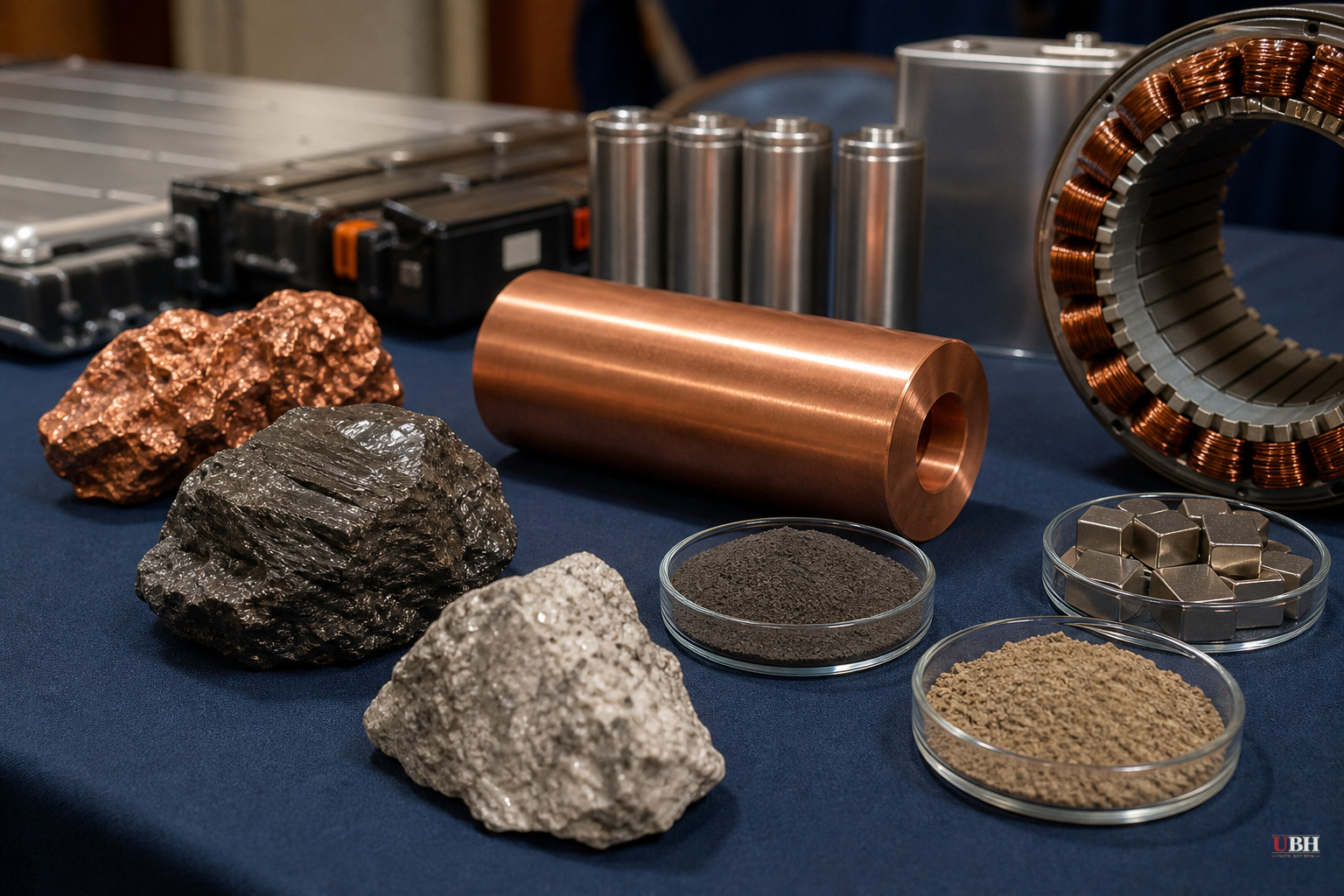
President Trump stood before mining executives at the State Department last week and rattled off a list of new federal money aimed at one target: China's grip on critical minerals.
The centerpiece, already reported, was a $1.4 billion Defense Department loan to Sila Nanotechnologies for silicon-based battery anode manufacturing in Washington state. Everything else layered around it is new.
According to Mining.com, the Pentagon is putting $400 million into expanding scandium production in Australia through Sunrise Energy Metals, a metal critical to aerospace and defense manufacturing. Niron Magnetics, a Minnesota rare-earth magnet company, is getting $150 million. The Export-Import Bank is working on more than $1 billion in financing for Ivanhoe Electric's Santa Cruz copper project in Arizona. A graphite mine in Alabama gets $25 million.
BigGo Finance reported the workforce piece: $180 million in grants for mining education at institutions including the Colorado School of Mines and Johns Hopkins University. Trump said the money would "train the next generation of American miners."
The numbers vary slightly depending on which outlet counted what. South China Morning Post put the total new investment at "around $2 billion," while Mining.com and BigGo Finance both cited the $3 billion figure Trump used in his remarks. The gap likely comes down to what's counted as new spending versus prior commitments getting folded into the announcement. The White House itself has not published an itemized reconciliation of the figure.
Why now, and why this urgency
Trump didn't name China directly in his remarks, according to South China Morning Post, but the target was obvious. "We are putting our miners back to work, and we are reclaiming America's rightful place as the minerals superpower of the world," he said. "We are making mining great again."
He also flagged a workforce problem that's rarely discussed outside industry circles: accredited U.S. mining programs graduate fewer than 170 mining engineers a year, according to Trump's own figures cited by South China Morning Post, while China graduates more than 3,000. Half the current American mining workforce is set to retire within three years, he said.
That's a legitimate structural problem regardless of what anyone thinks of the tariff strategy driving this push. If the pipeline of trained engineers is that thin, throwing federal loans at mining companies without also fixing the labor pipeline is a half-measure. The $180 million in workforce grants is a direct response to that gap, even if it's a small fraction of the total package.
The timing is not accidental
Mining.com noted the event came ahead of a planned September visit to Washington by Chinese President Xi Jinping. The administration wants leverage on the table before that meeting, and a parade of eight-figure and nine-figure mineral deals with Rio Tinto, BHP, Freeport-McMoRan, MP Materials, USA Rare Earth, Energy Fuels, US Antimony and The Metals Company in the room sends a message: the U.S. is building alternatives, truce or no truce.
There's a real tension underneath the celebration. A trade truce already eased Chinese export controls on rare earths and magnets, according to Mining.com, but rare earths remain a genuine flashpoint. China still controls the overwhelming share of global rare-earth processing capacity. No amount of press-conference announcements changes that overnight. Mine-to-magnet supply chains take years to build, not months.
The skeptic's case, stated fairly
Critics of this approach — and there are serious ones on both the left and among fiscal conservatives — would argue this is industrial policy dressed up as national security, with taxpayers backstopping loans to companies that private capital markets have so far been unwilling to fully fund on their own terms. If these projects were reliably profitable at scale, why do they need Defense Department loans and Export-Import Bank guarantees to get built?
The administration's answer, laid out by Commerce Secretary Howard Lutnick and cited by BigGo Finance, is that Section 232 tariffs are already pulling private capital in behind the government money. Lutnick pointed to Korea Zinc's $7.4 billion Tennessee smelter project as evidence foreign investors are following the federal lead rather than being replaced by it.
Whether that pattern holds at scale, or whether these become permanent subsidies propping up projects that can't compete with Chinese processing costs, is the open question. The federal government has now put more than $10 billion behind rare earths and magnets alone since the Pentagon's initial MP Materials stake over a year ago. The next test comes when Xi arrives in Washington in September and both sides find out whether any of this changes the negotiating math.
Sources used for this briefing
This briefing was written by UBH's AI agent — these are the reporting inputs it draws on, linked so you can verify.


