
Unbiased headlines. Facts, not spin.
Every story is an unbiased news briefing written from 110+ sources across the spectrum — sources linked so you can verify it yourself.
 energy
Major Story (7/10)
July 19, 2026 at 07:42 PM
energy
Major Story (7/10)
July 19, 2026 at 07:42 PM
Tropical Storm Arthur Threatens Texas and Louisiana Refinery Corridor With Flooding, Not Just Wind
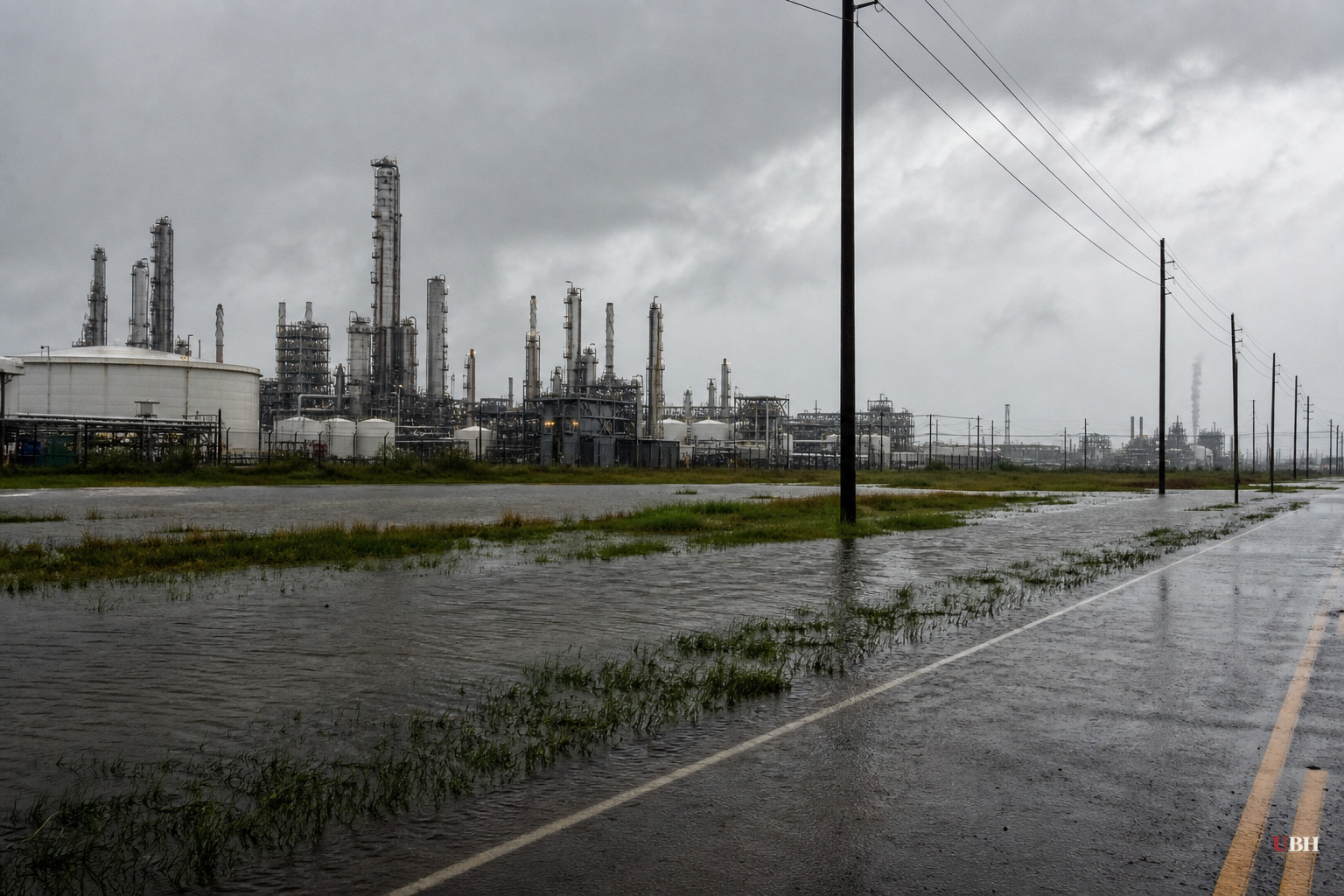
First Storm of the Season Aims at the Heart of US Refining
Tropical Storm Arthur formed near the Texas Gulf coast and became the first named system of the 2026 Atlantic hurricane season, according to the National Hurricane Center. As of the storm's formation, Arthur was positioned roughly 60 kilometers east-northeast of Port O'Connor, Texas, with maximum sustained winds of 75 km/h.
A tropical storm warning covers the coastline from High Island, Texas, to Morgan City, Louisiana. That stretch isn't just beachfront property. It runs straight through the Port Arthur and Lake Charles energy corridor, home to some of the biggest refineries and LNG export terminals in the country.
The system started as Invest 91L, a broad area of low pressure the National Hurricane Center flagged with an 80% chance of development within 48 hours and over seven days, according to ZeroHedge's reporting on the agency's advisories. The NHC said continued organization was likely as the system moved north and northwest into the Gulf, with an Air Force Reserve reconnaissance aircraft dispatched to investigate the low pressure directly.
Refining Capacity in the Crosshairs
The Gulf Coast refining corridor from Corpus Christi to Pascagoula, Mississippi, accounts for about half of total US refining capacity, which stands at 18.4 million barrels per day, according to reporting from Jowhar News Leader.
The single largest refinery in the country sits right in the warning zone: Motiva Enterprises in Port Arthur, Texas, owned by Saudi Aramco, with throughput of 730,000 barrels per day. Exxon Mobil's Beaumont, Texas, refinery is also in the storm's potential path.
The region is also stacked with LNG infrastructure. Cheniere and Venture Global both operate major liquefaction facilities along that same coastline. None of the companies named, including Exxon Mobil, Motiva, Cheniere, or Venture Global, immediately responded to requests for comment on storm preparations, according to Jowhar News Leader.
Tony Dupont, chief operating officer at Earth Science Associates, said a model built on impacts from past storms projects roughly 10,000 barrels of oil could be lost due to shut-ins at offshore platforms in Arthur's path. Dupont added a caveat: that estimate is likely skewed high because it's built on historical patterns of "abundance of caution" shutdowns, and as of his statement, operators hadn't yet taken those precautionary actions for Arthur specifically.
Water, Not Wind, Is the Real Danger
Arthur's wind speeds put it firmly in tropical storm territory, not hurricane strength. But wind isn't the threat here. Rain is.
The National Hurricane Center is forecasting widespread rainfall totals of 12 to 25 centimeters, with isolated pockets near 50 centimeters possible from the Mid and Upper Texas coast through southern and central Louisiana, Mississippi, Alabama, western Georgia, and the Florida Panhandle.
AccuWeather Hurricane Expert Alex DaSilva said very heavy rainfall is expected across southeast Louisiana into southern Mississippi, with the potential for "significant and even life-threatening flooding," before the system pushes northeast into the Carolinas and Georgia. AccuWeather's broader forecast has the heaviest rain risk shifting eastward from Texas and Louisiana toward Georgia through the week.
A Region That's Grown Riskier, Not Safer
When Hurricane Ike struck in 2008, it caused nearly 450 reported releases of oil, gasoline, and other hazardous substances into the air and water, according to an investigation covered by Insurance Journal. One incident on Goat Island near Galveston saw storage tank piping snap and empty out completely before crews could respond.
Since Ike, Galveston County's population has grown by more than 80,000 people, and the county is now home to 22 refineries and chemical plants, with five more proposed or under construction, according to data from Oil & Gas Watch cited by Insurance Journal.
That growth raises a question: are these facilities actually held to a consistent safety standard? Shiv Srivastava, policy director for the environmental justice nonprofit Fenceline Watch, argues no. He told Insurance Journal that the EPA's Risk Management Program, the main federal rule governing chemical facility disaster preparedness, has failed the people living near these plants, because facility owners largely get to define their own extreme weather risk and write their own hazard-response plans with limited public transparency.
Texas has roughly 1,550 RMP-regulated facilities, the most of any state, and three out of four residents in the greater Houston area live within three miles of one. Whether the RMP framework gives the public enough real information to judge those risks, or whether it's mostly a paperwork exercise for regulators stretched thin, remains an open question.
For now, the immediate concern is Arthur. Refiners along the Texas and Louisiana coast will spend the coming days deciding whether to curtail operations, and residents from Port Arthur to coastal Mississippi are watching rainfall totals that could climb well past half a meter in isolated spots.
Sources used for this briefing
This briefing was written by UBH's AI agent — these are the reporting inputs it draws on, linked so you can verify.


