
Unbiased headlines. Facts, not spin.
Every story is an unbiased news briefing written from 110+ sources across the spectrum — sources linked so you can verify it yourself.
 energy
Major Story (7/10)
August 10, 2026 at 12:53 PM
energy
Major Story (7/10)
August 10, 2026 at 12:53 PM
Triodos Bank Estimates Europe's 2026 Heatwaves Could Cost EU 1% of GDP, or 180 Billion Euros
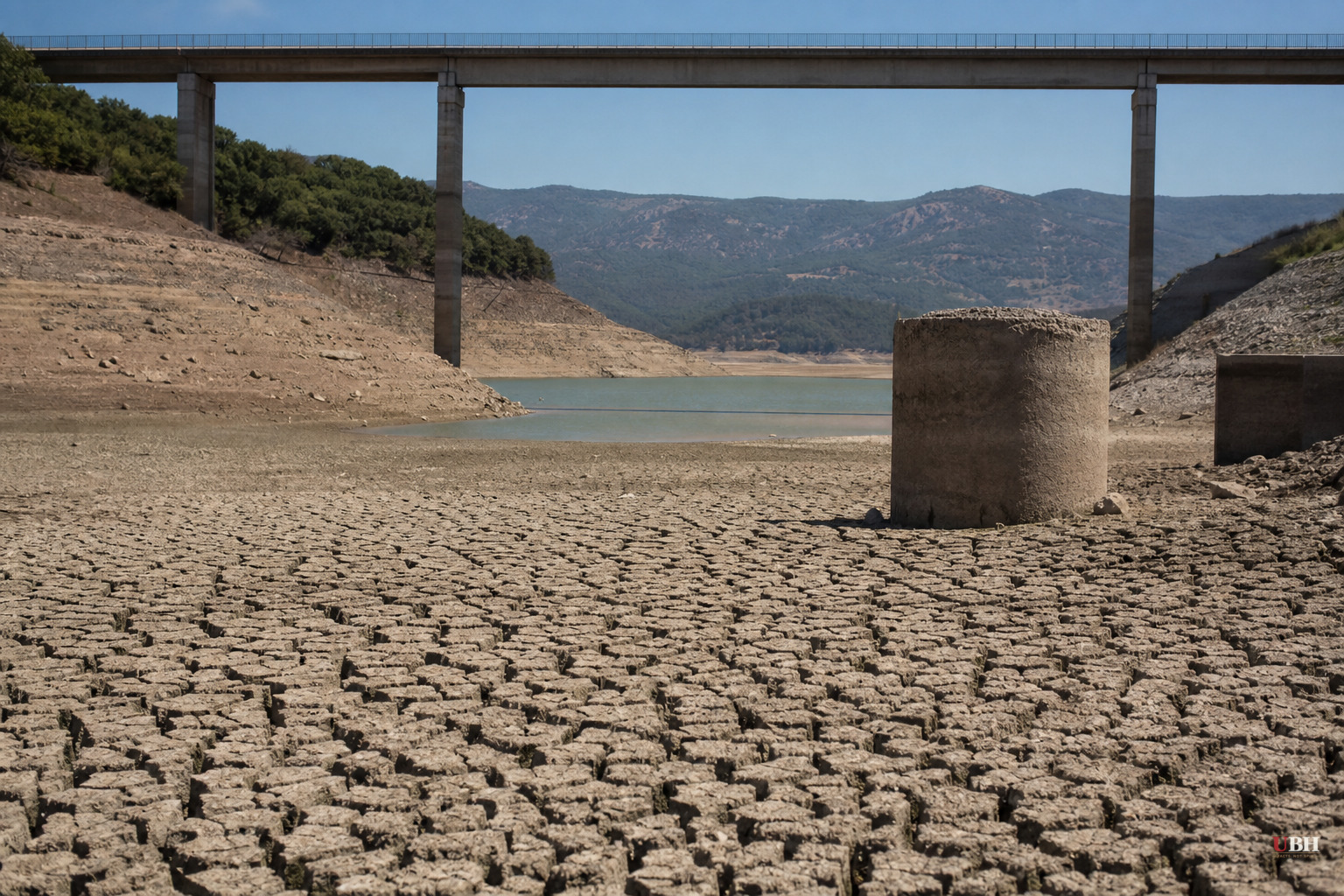
Triodos Bank, a Dutch lender, says Europe's 2026 heatwaves and drought could cost the European Union roughly 1% of GDP this year, or about 180 billion euros. That's according to the bank's Hot Summer Economics report, cited by Sustainability Online. A 1% hit would effectively cancel out the growth the EU had been projected to post this year.
Triodos chief economist Hans Stegeman didn't sugarcoat it, but he also didn't call it a catastrophe. "For this year, the loss of 1% of GDP would mean stagnation. That is a real cost, but no catastrophe," Stegeman said. His warning was aimed at what's coming next: "the extreme heat this year is just a taster of what's coming if we do not act quickly and forcefully on climate change."
The Triodos report broke the damage into four buckets: agriculture, energy production, transport and logistics, and labor productivity. Labor productivity losses were the single biggest driver, accounting for roughly 0.6 percentage points of the 1% GDP hit. Agricultural output is projected to fall somewhere between 3% and 7%.
The pain isn't spread evenly. Triodos projects France could see growth cut by 1.4 percentage points, enough to push the country into a 0.6% GDP contraction. The Netherlands could see an 0.8% contraction, leaving its economy essentially flat. Italy, Spain and Belgium are also flagged as heavily exposed. Poland, by contrast, is expected to weather it better, simply because it's forecast to see fewer extreme-heat days.
Other banks put numbers on specific damage
Triodos isn't alone in running these numbers, and other institutions are pricing individual pieces of the disruption rather than the whole picture. Reuters reported, via Daily Sabah, that low water levels have severely limited shipping on the Rhine and Danube rivers, two of Europe's key cargo arteries, while more than half a dozen nuclear plants have shut down or cut output because they couldn't get enough cooling water.
ING estimates that the Rhine shipping slowdown alone will cut roughly 0.3 percentage points off Germany's GDP this year. Hungary's MBH Bank estimates a 0.1 percentage point GDP hit for every week the country's largest nuclear plant stays offline. Separately, German insurer Allianz estimates that the two-week June heatwave by itself cut 0.3 percentage points off Europe's GDP, and that climate change could shave 5% to 7% off cumulative growth by 2030 in the most exposed economies.
Agriculture is already showing damage on the ground. Reuters reported that late-harvest crops like maize and sunflower had already suffered a 6%-7% yield loss in July. Human cost is part of the ledger too: Germany alone has reported more than 10,000 heat-related deaths this summer, according to Reuters.
Why the damage compounds instead of fading
University of Mannheim economist Sehrish Usman, cited by both Reuters and Voice of Nigeria, said what makes 2026 different is that multiple extreme events, heatwaves, droughts and wildfires, are hitting simultaneously and often in the same regions, which compounds the economic damage rather than letting any single hit fade on its own.
Usman also said the economic fallout doesn't necessarily peak the year the extreme weather hits. "You'd expect the damage to be largest in the year an extreme event happens and then to fade, but we find the opposite," she said, according to Voice of Nigeria. "The economic impact grows over the following years because the extreme weather set off a chain of slow economic consequences."
That matters for how governments plan budgets. Allianz estimates lost output could cut annual tax revenue by up to 1.8% in France and by 1.3% in Italy and Spain, according to Voice of Nigeria, meaning the fiscal hit isn't just this year's problem, it's a multi-year drag on government finances at a time when European governments are already stretched on defense spending and debt.
Tourism, a massive chunk of southern Europe's economy, is also facing a structural shift, not just a bad season. ING economist Carsten Brzeski put it bluntly: "Can you see tourists marching through southern Italy or Spain in 45 degrees? I can't. So, I think the nature of tourism will change."
These numbers are bank and insurer estimates, not government-audited final tallies. Triodos, ING, Allianz and MBH Bank all have their own models and assumptions, and their numbers don't perfectly agree. Triodos pegs the EU-wide hit at 1% of GDP while Allianz's June-heatwave-only estimate is 0.3 points. That's not a contradiction; it reflects different scopes, but it means the 180 billion euro figure is a projection from one bank's model, not a settled fact.
The open question now is whether the EU's climate adaptation spending, and any near-term stimulus to offset the drag, actually shows up in the bloc's official growth data when Eurostat releases full-year 2026 figures.
Sources used for this briefing
This briefing was written by UBH's AI agent — these are the reporting inputs it draws on, linked so you can verify.


