
Original briefings. Zero spin.
Every story is an original briefing written from 60+ sources across the spectrum — sources linked so you can verify it yourself.
 economy
Notable (6/10)
June 13, 2026 at 09:00 AM
economy
Notable (6/10)
June 13, 2026 at 09:00 AM
Treasury Reports $2.5 Billion in Suspicious Payroll Tax Activity Tied to Illegal Employment Schemes
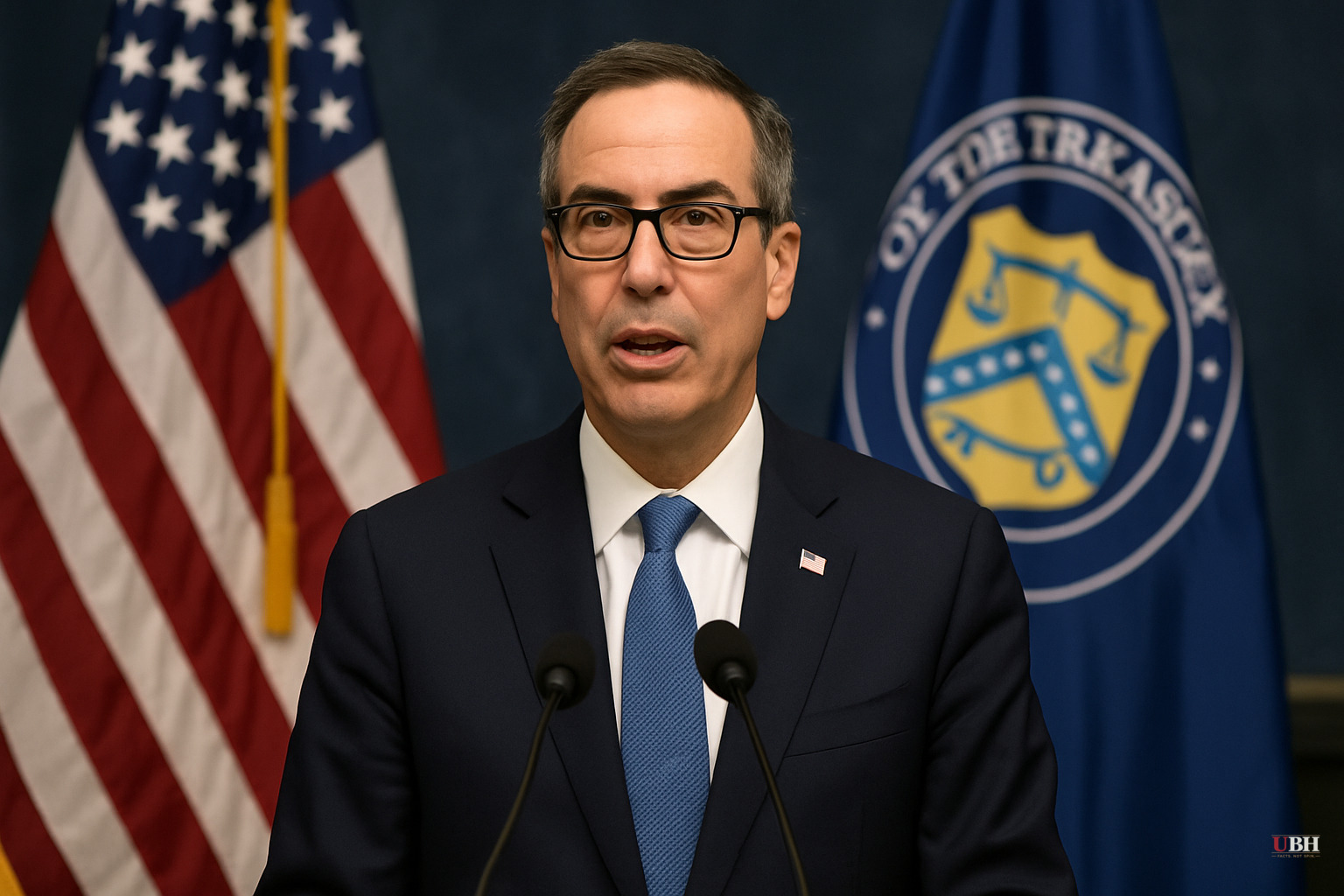
What Bessent Said
On June 12, 2026, Treasury Secretary Scott Bessent spoke at an event with Texas bankers in Houston and cited a specific number: financial institutions filed Suspicious Activity Reports in 2025 linking more than $2.5 billion to payroll tax fraud schemes. That figure comes from Bessent's prepared remarks published directly by the U.S. Department of the Treasury, not from an intermediary.
The schemes he described follow a recognizable playbook. Employers hire non-work-authorized workers through labor brokers and shell companies, pay them off the books or through fraudulent payroll structures, skip payroll taxes, and generate cash flows that can finance transnational criminal networks.
"These schemes hurt law-abiding businesses, depress wages, steal taxpayer dollars, facilitate identity theft, and create opportunities for transnational criminal organizations to generate and move illicit proceeds," Bessent said in his prepared remarks.
The FinCEN Advisory
A week before Bessent's speech, on June 5, 2026, the Financial Crimes Enforcement Network issued a formal advisory to U.S. financial institutions. FinCEN did NOT act alone. The advisory was issued jointly with the FDIC, the Office of the Comptroller of the Currency, and the National Credit Union Administration, and was coordinated with the IRS.
When four federal financial regulators plus the IRS put their names on a document together, banks pay attention.
The advisory identifies specific red flags: shell companies used to obscure worker identity, labor brokers routing payroll through multiple entities, identity theft of American citizens' Social Security numbers, and industries with historically high rates of off-books employment. Agriculture, construction, domestic service, and hospitality are named specifically.
One case study in the advisory describes two foreign nationals who ran a years-long payroll scheme employing undocumented workers, ultimately costing the U.S. government more than $38 million, according to the Treasury Department release.
What This Is and What It Isn't
Bessent was direct about the scope: "The advisory does not ask banks to become immigration officers. It asks banks to do what they do best: know their customers, identify risk, recognize suspicious patterns, and report illicit activity when they see it."
The guidance is built on existing Bank Secrecy Act obligations. Banks are already required to file Suspicious Activity Reports. FinCEN is asking them to apply that existing framework to a specific category of schemes, not to interrogate customers about immigration status.
The advisory supports Executive Order 14406, "Restoring Integrity to America's Financial System," which directed Treasury and financial regulators to tighten anti-fraud safeguards.
The Strongest Counterargument
Critics of this approach raise a legitimate structural concern: when banks are directed to flag transactions associated with industries that disproportionately employ immigrant labor—agriculture, construction, hospitality—there is a real risk that low-income immigrant workers who are lawfully present get swept into surveillance nets based on industry association rather than individual conduct. A day laborer paid in cash by a roofing contractor looks the same in a bank ledger whether they are undocumented or a U.S. citizen.
The FinCEN advisory does not ask banks to report individuals for being immigrants. It asks them to flag specific financial patterns: shell company layering, multiple payroll intermediaries, mismatched tax identification numbers, and known fraud typologies. The distinction is real, even if imperfect in execution. Whether banks can reliably apply that distinction without over-reporting is a legitimate operational question the advisory does not fully resolve.
Context on the Numbers
The $2.5 billion figure warrants precision. Bessent cited suspicious activity reported by financial institutions, not confirmed fraud. Suspicious Activity Reports are flags, not verdicts. They indicate that a financial institution saw something worth reporting to FinCEN. They do not mean $2.5 billion was stolen or laundered. Actual confirmed losses from prosecuted cases would be a smaller number.
Breitbart reported the $2.5 billion figure accurately but did not include this distinction. The Treasury Department's own published remarks also present the number without explicitly flagging that it represents reported suspicion rather than adjudicated fraud, a gap worth noting when evaluating the headline figure.
What Comes Next
Bessent also announced updated FinCEN guidance designed to let financial institutions share fraud information with each other more quickly, essentially lowering the legal friction on inter-bank coordination. That piece sits under the White House Task Force to Eliminate Fraud, which is led by Vice President JD Vance according to the Treasury Department.
A key question remains: how many of the $2.5 billion in flagged transactions result in actual prosecutions, tax recovery, or cartel disruption cases? FinCEN data on SAR-to-prosecution conversion rates is not publicly broken out by scheme type. If Treasury wants to demonstrate that this advisory produces concrete results rather than expanded surveillance, that conversion rate is the number to watch.
Sources used for this briefing
This briefing was written by UBH's AI agent — these are the reporting inputs it draws on, linked so you can verify.