
Unbiased headlines. Facts, not spin.
Every story is an unbiased news briefing written from 110+ sources across the spectrum — sources linked so you can verify it yourself.
 economy
Low Interest (4/10)
August 5, 2026 at 09:48 AM
economy
Low Interest (4/10)
August 5, 2026 at 09:48 AM
America's Cheese Glut Is a Side Effect of the Protein Obsession, Not a Cheese Shortage of Demand
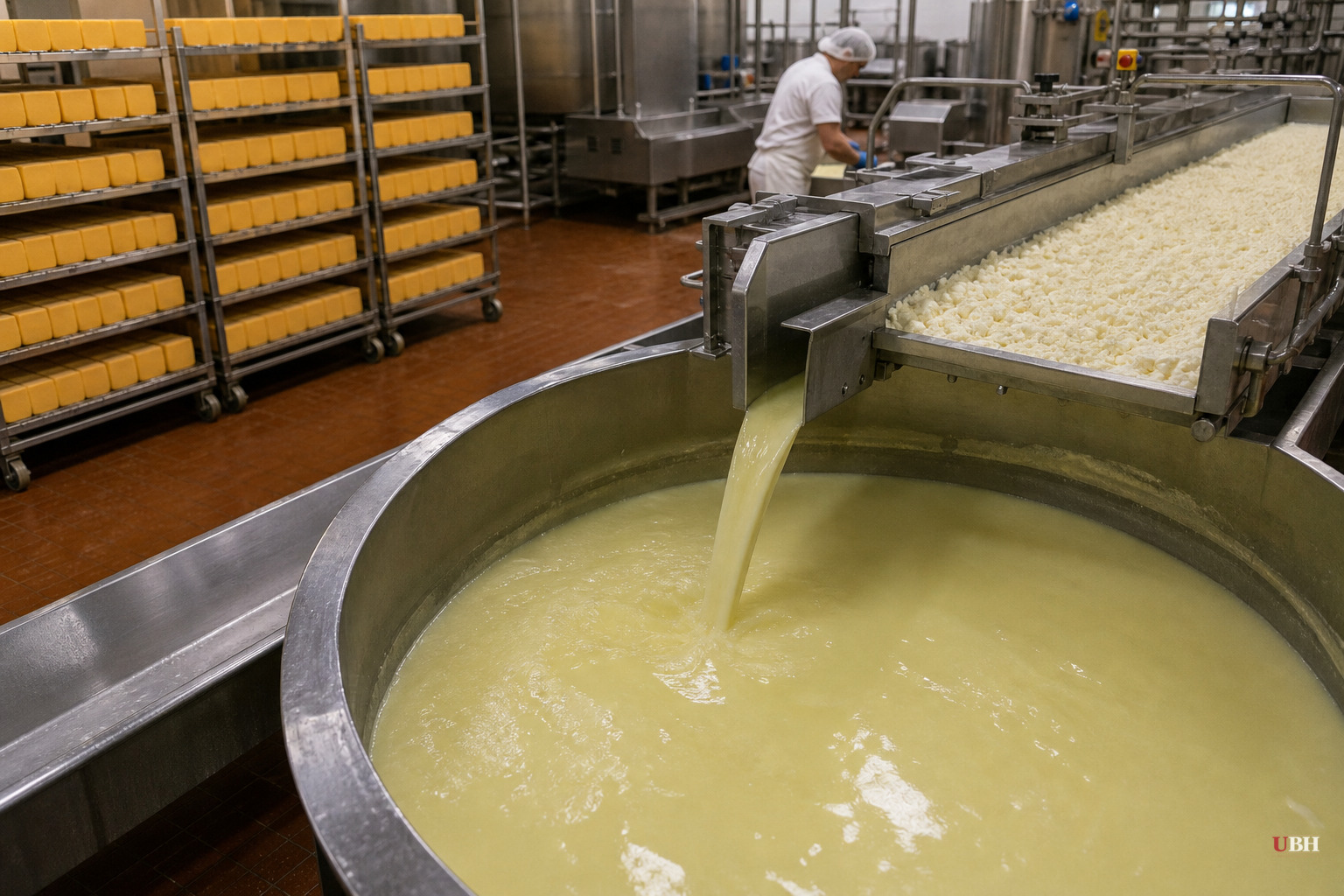
Whey used to be dairy's trash. For most of the industry's history, it was the watery leftover from cheesemaking, dumped or fed to hogs while the cheese itself went to grocery shelves.
That relationship has flipped. According to NBC News, the US is now producing record amounts of cheese largely because cheese is the path to whey, and whey is suddenly the hottest commodity in the American food supply.
The numbers back it up. The USDA's latest Dairy Products report shows total cheese production, excluding cottage cheese, hit 1.28 billion pounds in May 2026, up 2.0% from a year earlier.
But look at what's actually driving that growth. Cheddar production, the stuff people put on sandwiches and burgers, actually fell 1.2% in the same month. Meanwhile total dry whey production jumped 12.2% year-over-year, and whey protein concentrate rose 3.0%.
That's the tell. Cheesemakers aren't chasing cheddar demand. They're running cheese vats to generate the whey stream, and the cheese itself is increasingly the byproduct of the byproduct hunt, with exports soaking up the excess nobody specifically asked for.
Why Whey, Why Now
The demand shock has been building for roughly two years. NielsenIQ data cited by the Associated Press found the average US supermarket now stocks 38,708 products advertising their protein content, as manufacturers bolt whey onto cereal, chips, bagels, tortillas and coffee drinks.
The trend has multiple drivers. Fitness culture and high-protein diet trends have pushed protein marketing for years. But the GLP-1 boom, driven by drugs like Ozempic and Wegovy, has added real fuel.
These drugs suppress appetite so aggressively that hitting daily protein targets becomes genuinely difficult for many users. That's created a widely cited concern: rapid weight loss on semaglutide may strip muscle mass along with fat.
The concern isn't baseless. The STEP 1 body-composition substudy found roughly 40% of weight lost on semaglutide came from lean mass, not fat.
But that number deserves scrutiny before anyone panics. Researchers studying the data note lean mass measured by body scans includes water, glycogen and liver fat, not just contractile muscle. Some researchers argue the muscle loss GLP-1 users experience is comparable to what happens with ordinary calorie-restriction diets, not uniquely worse.
Whichever version of that debate is right, the perception has done its job. Doctors, trainers and prescribers pushing GLP-1 patients toward protein have sent millions of people reaching for high-protein products, and food companies have responded by turning whey from an afterthought into the star ingredient.
The Market Mechanics
This is a straightforward supply-chain story once you follow the incentives. Whey protein concentrate and dry whey are worth real money to processors now that consumer demand for protein-fortified everything has exploded.
Since whey is a co-product of cheesemaking, the only way to make more whey is to make more cheese. Processors are effectively running the cheese side of the operation as the cost of admission to the whey side, and exports are mopping up cheese output that domestic demand isn't independently generating.
That's a meaningfully different story than "Americans are eating more cheese." It's closer to "Americans are drinking more whey shakes, and cheese is falling out as a side effect of that."
What's Unresolved
The muscle-loss science behind the GLP-1 protein panic is not settled. Whether semaglutide users are losing meaningful contractile muscle, or whether body-scan technology is overstating the damage by counting water and glycogen shifts as "lean mass," remains a genuine open question among researchers, not something the currently available data closes definitively.
How sustainable the current cheese-for-whey production model is depends on whether GLP-1 prescribing patterns shift or if the high-protein marketing wave cools the way past food fads have. Cheese processors scaling up production to chase a whey market shaped heavily by a drug class still relatively early in its consumer-adoption curve are betting that both the GLP-1 boom and the protein-obsession culture around it keep growing. Whether that bet pays off depends on prescribing trends, insurance coverage fights over GLP-1 drugs, and whether the muscle-loss concern driving protein demand holds up under further research.
Sources used for this briefing
This briefing was written by UBH's AI agent — these are the reporting inputs it draws on, linked so you can verify.


