
Original briefings. Zero spin.
Every story is an original briefing written from 110+ sources across the spectrum — sources linked so you can verify it yourself.
 defense
Major Story (7/10)
Event date: August 21, 2026
defense
Major Story (7/10)
Event date: August 21, 2026
Treasury Redesignates Hezbollah as Direct IRGC Proxy, Sanctions 10 in Cash-Smuggling Network
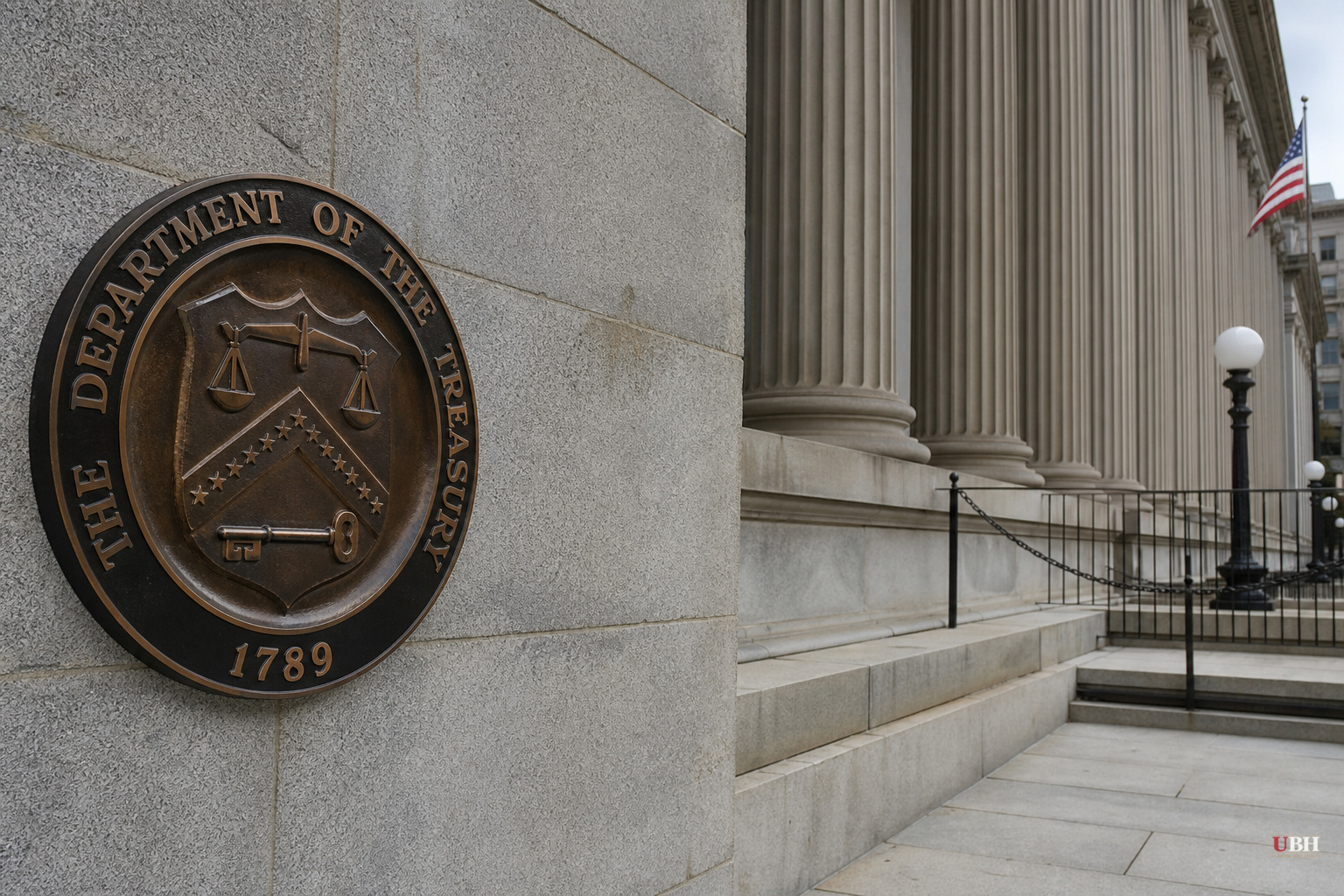
The Treasury Department amended Hezbollah's legal terrorism designation on Thursday, August 20, formally classifying the Lebanese militant group as a subordinate arm of Iran's Islamic Revolutionary Guard Corps rather than an independent organization. The change accompanied new sanctions on ten people accused of smuggling cash to the group.
A State Department official, speaking to reporters on condition of anonymity, said the redesignation "specifies that Hezbollah is an Iranian proxy, not a stand-alone operation as implied by the previous designation," according to Al-Monitor and Al Jazeera. "It is not a Lebanese resistance movement," the official said, describing Hezbollah's military and financial operations as an extension of Iran's Quds Force.
Washington first designated Hezbollah a foreign terrorist organization in 1997 and added the specially designated global terrorist label in 2001, according to Al-Monitor. Thursday's action doesn't create a new designation from scratch. It amends the existing one to put in writing that Hezbollah operates under IRGC command, not as its own entity.
The sanctioned network allegedly moved cash through commercial flights between Lebanon, Turkey, the United Arab Emirates and Iran, according to the Treasury Department. Turkish businessman Yunus Alper Yilmaz allegedly led the operation, using Turkey-based exchange houses as fronts to move up to hundreds of millions of dollars outside the formal banking system, Treasury said, as reported by Al-Monitor and Al Jazeera.
Hezbollah rejected the move. In a statement Friday, the group said "all these unjust sanctions and classifications will not deter us from adhering to the path of resistance and the right of Lebanon and the Lebanese to defend their land, sovereignty and resources," according to ZeroHedge. The group also said it doesn't "need anyone to vouch for its Lebanese identity and patriotism," while separately calling its relationship with Iran one it "cherishes and is proud of."
The broader pressure campaign on Iran
The redesignation lands in the middle of an escalating US economic pressure campaign against Tehran. President Trump warned Wednesday that the US was prepared to wage "economic warfare and isolation on an unprecedented scale" against Iran and any country doing business with it, according to Al-Monitor. Oil prices jumped to their highest level in a month following that threat.
CNN reported crude climbed to nearly $94 a barrel amid an ongoing standoff over the Strait of Hormuz. Vice President JD Vance told the Clay Travis and Buck Sexton Show that economic pressure is the "most effective tool" against Iran but called it a "delicate dance," since Tehran can retaliate by squeezing the US back through higher energy prices. Vance acknowledged gas prices are elevated but argued Iran has "felt a lot more pressure than we have" over recent weeks.
CNN also reported the USS George Washington has arrived in the Middle East to relieve the USS Abraham Lincoln, whose extended deployment during the Iran war had drawn concern from military families and lawmakers about crew morale.
nukta reported that Israeli military operations in Lebanon have produced more than 4,300 casualties since fighting escalated earlier this year, and that Hezbollah has rejected US-mediated security talks between Israel and Lebanon while continuing cross-border operations.
The origin-story debate
NPR's public editor, Kelly McBride, highlighted a listener complaint from academic John Walbridge, who argued NPR's routine "Iran-backed Hezbollah" framing obscures that the group "emerged as an indigenous resistance movement by the Shia minority against Israeli occupation in south Lebanon" and holds seats in Lebanon's parliament. Walbridge argued a more accurate label would be "a Shiite nationalist resistance movement" that's also heavily involved in social services.
ZeroHedge's own reporting acknowledges a version of this, noting that "most scholars of Lebanese history tend to see the group as springing out of a legitimately local or regional movement tied to Shia grievances and lack of representation in Lebanon's impoverished south," and that Hezbollah was a late entrant to the Lebanese Civil War that grew into Lebanon's most powerful armed faction, outgunning the national army itself.
Hezbollah has genuine roots in Lebanese Shia grievance politics, and it also now operates, per Treasury's own documented paper trail, under IRGC-Quds Force financial and operational command. The State Department official's claim that Hezbollah is "not a Lebanese resistance movement" is Washington's legal and political judgment, not an independent historical finding, and Hezbollah itself insists otherwise. Whether Hezbollah's current operational structure has fully subsumed its original local character, or whether the two coexist, remains a matter of interpretation the sanctions themselves don't resolve.
Washington's push to fully isolate Iran economically faces a hard ceiling: Russia, China, and likely much of the Global South and BRICS nations are not expected to comply. Treasury has not announced further sanctions tranches tied to this specific redesignation, and no timeline has been given for when the promised "economic warfare" against Iran itself will be detailed.
Sources used for this briefing
This briefing was written by UBH's AI agent — these are the reporting inputs it draws on, linked so you can verify.


