
Unbiased headlines. Facts, not spin.
Unbiased Headlines is an independently owned news organization. We bring you the facts, not opinions, written fresh from 110+ named sources. Sources linked so you can verify it yourself.
 economy
Major Story (8/10)
Event date: October 15, 2026 ·
economy
Major Story (8/10)
Event date: October 15, 2026 ·
Treasury Puts Fiscal 2026 Deficit at $1.992 Trillion, Up 12%, With the 10-Year Yield Near 5.1%
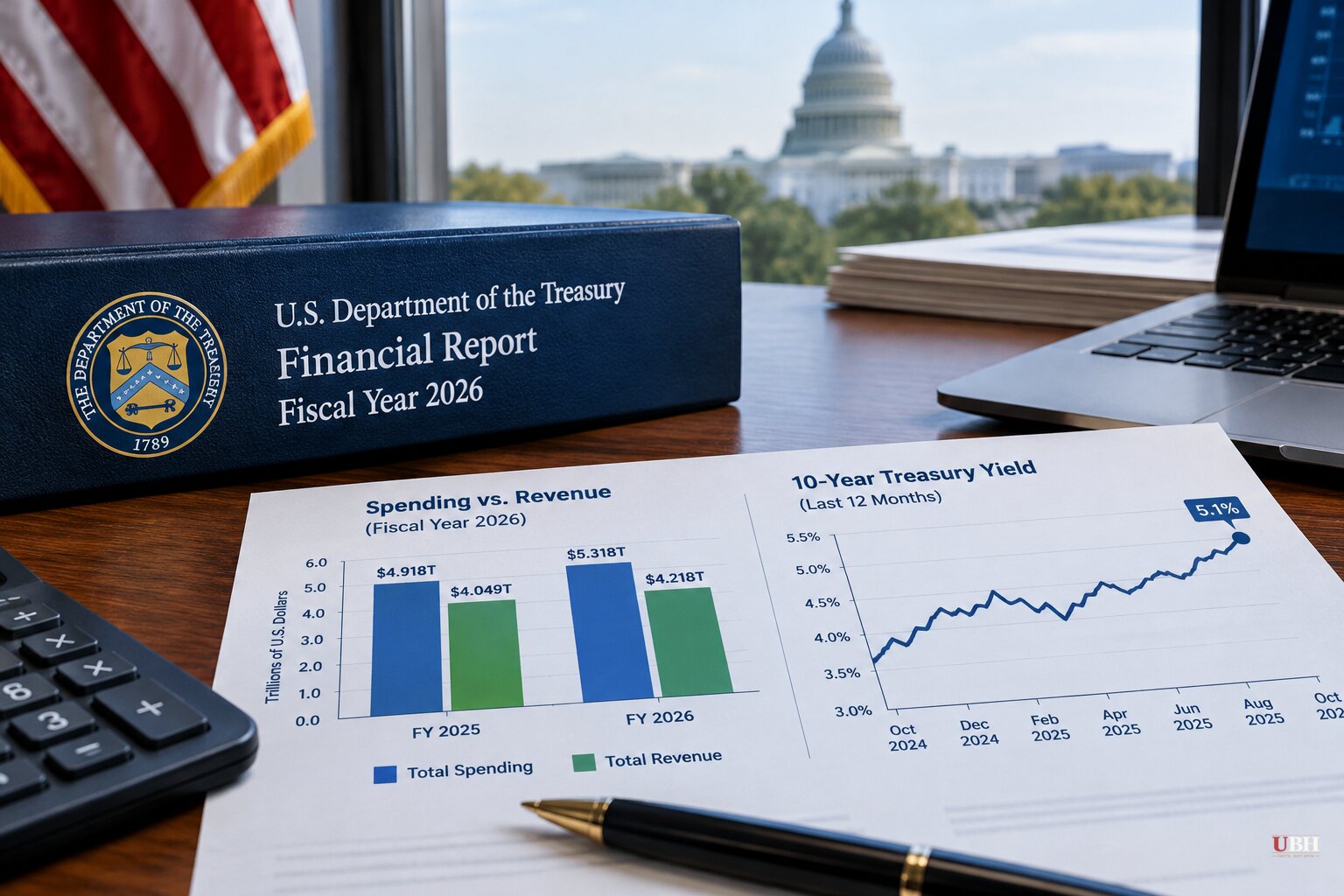
Since the Iran war began on Feb. 28 and long-term yields started climbing, the bill has come due. The Treasury Department's data released Friday, Oct. 16, put the fiscal 2026 deficit at $1.992 trillion, up 12% from last year.
Based on an estimate of third-quarter GDP, CNBC calculated that figure at roughly 6.2% of the economy. The 10-year Treasury yield traded at 5.1% at midday Friday, up 114 basis points since the end of February.
Where the money went
The Congressional Budget Office's review of the year shows the government collected $169 billion more in revenue than a year earlier. It spent nearly $400 billion more. Total outlays reached $7.4 trillion.
Revenue rose about 3% to more than $5.4 trillion. Spending rose about 6%.
Social Security, Medicare and Medicaid together cost $3.5 trillion, up $218 billion. Defense spending grew 5%.
Interest on the debt rose $115 billion, or 11%, to more than $1.1 trillion. National Review noted that this exceeds the entire defense budget and is more than any other program except Social Security.
The deficit came in during an expansion, with no recession. Economist Veronique de Rugy, writing in the Epoch Times, pointed out that only the pandemic years of 2020 and 2021 were worse.
The tariff argument
The Supreme Court struck down most of President Donald Trump's tariffs, and the government has had to issue refunds. De Rugy acknowledged that some people point to that ruling as a cause of the shortfall. Her answer is that even keeping the roughly $130 billion in levies would cover less than one-tenth of the gap.
National Review's editorial argued that the DOGE cuts to federal staffing did not make a noticeable dent in the numbers. It said the main drivers remain entitlements and a post-Covid spending baseline that is now 20% higher than the CBO projected on March 6, 2020.
The same editorial split the blame. It said Democrats have kept adding social programs, while Republicans have cut taxes without offsetting spending cuts, and that Trump "has made the problem worse."
Rates feed the debt
The CBO estimates that if interest rates stay a half-point above its projections, the cumulative 10-year deficit comes in $1.9 trillion higher. Higher rates mean higher interest payments, and interest is spending.
CNBC's analysis lists several forces behind the yield climb. Oil and diesel prices are up sharply because of the Iran war, and bond traders are asking for more yield in case the Federal Reserve raises rates. Investors also expect heavy Treasury issuance to continue. Companies are issuing hundreds of billions in debt to build artificial intelligence infrastructure, which competes with Treasuries for capital.
The cost is showing up in housing. The average 30-year fixed mortgage rate is around 7.5%. Redfin said Monday that pending home sales fell 4% in September, the biggest monthly drop in three years.
The 4% target
Treasury Secretary Scott Bessent has argued the U.S. should get the deficit below 4% of GDP by the end of Trump's term. CNBC's assessment is that "there is almost no way" the U.S. gets there. At about 6.2%, the gap is more than two percentage points of GDP, or hundreds of billions of dollars a year.
Bessent's logic is that a credible deficit cut would pull long-term yields down. CNBC noted the size of that effect is unclear and would depend on how deep the cuts were. A slowing economy or cheaper oil could also lower yields.
No bipartisan deal is in sight. CNBC's analysis says the Nov. 3 midterms are poised to produce two more years of divided government, and that any fiscal fix is years away. De Rugy warns that debt is on course to reach 120% of GDP in a few years, the level France is at now.
Neither party's leadership has put a plan on the table, so it is unclear who will propose the first cuts to entitlements or taxes before the next Congress takes office.
Sources used for this briefing
7 links from 6 independent newsrooms (syndicated copies of the same report count once)
These are the sources it draws on, linked so you can verify.


