
Unbiased headlines. Facts, not spin.
Unbiased Headlines is an independently owned news organization. We bring you the facts, not opinions, written fresh from 110+ named sources. Sources linked so you can verify it yourself.
 economy
Low Interest (4/10)
economy
Low Interest (4/10)
McClellan Air Force Base closed in 2001 and now hosts about $600M in investment. HUD's Weaver Building sits mostly vacant
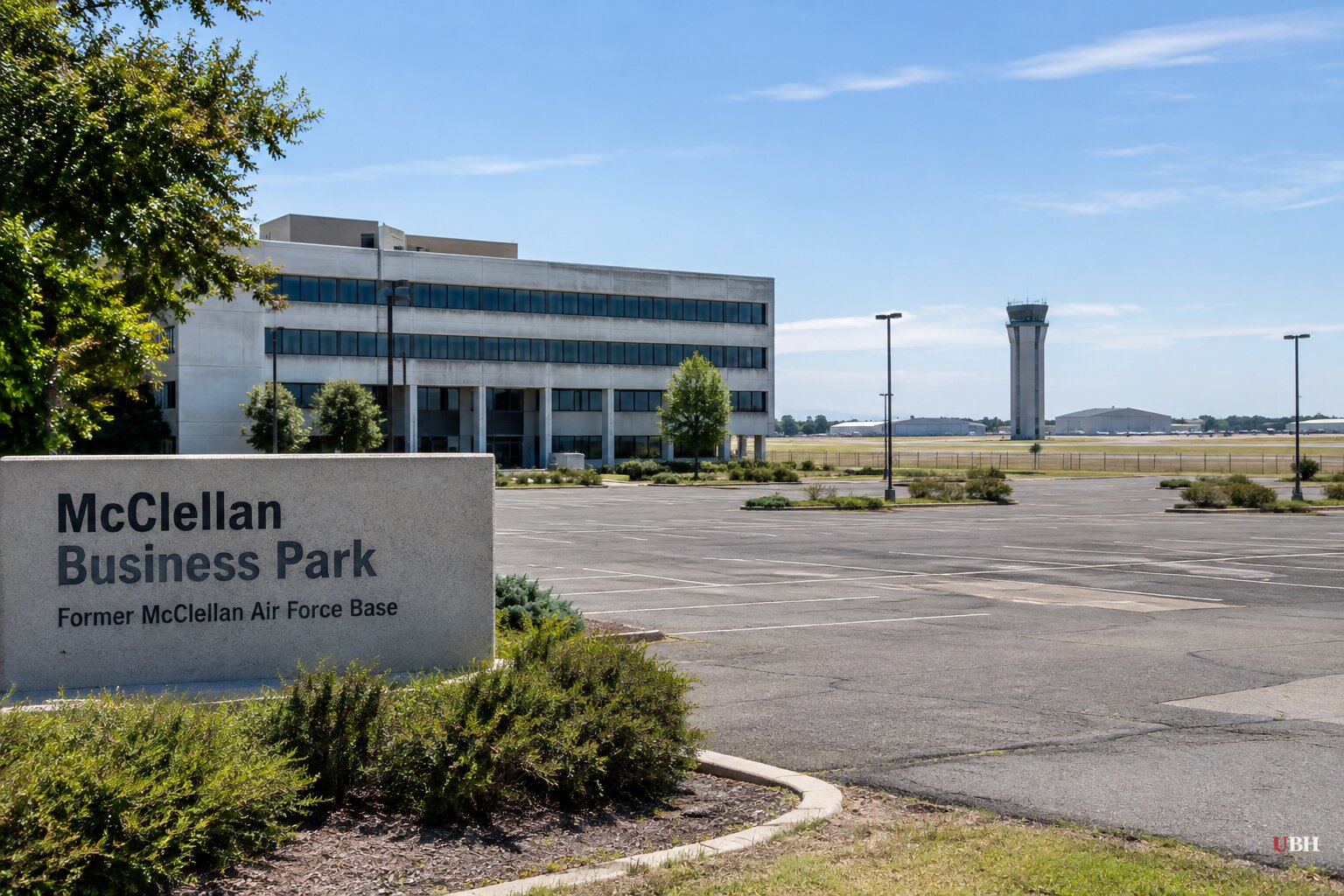
McClellan Air Force Base outside Sacramento closed in July 2001. The closure was announced in 1995 under the federal Base Realignment and Closure process, and it was expected to cost the region thousands of jobs.
A quarter century later, the 3,000-acre site is McClellan Park. It holds about 10 million square feet of buildings and a public-use airport. McClellan Park's 2020 fact sheet puts total investment at roughly $600 million.
The base had supported military logistics and maintenance for more than six decades and employed thousands of military and civilian workers. Losing it was a real economic threat to the surrounding community.
How McClellan got there
The U.S. Air Force Civil Engineer Center says the redevelopment ran through partnerships among the Air Force, Sacramento County and private developers. Environmental restoration of the site ran alongside it.
One tool stands out. Before the base officially shut, private businesses moved into vacant buildings through what McClellan Park's own history calls a "hot transfer." That kept some jobs in place and let redevelopment start before the gates closed.
It took six years from the 1995 announcement to the 2001 closure. The private tenants were already there when the military left.
Meanwhile, in Washington
The Robert C. Weaver Federal Building, the longtime HUD headquarters, sits next to the L'Enfant Metro station and just north of D.C.'s waterfront. It is some of the best real estate in the capital. It is also mostly vacant and has proven difficult to get rid of.
The Trump administration announced plans to move HUD to leased space in Alexandria and hand the D.C. property to private developers. That set off an uproar. Defenders of the building, designed by modernist architect Marcel Breuer and nearly 60 years old, rushed to protect it. Nearby businesses sued, arguing the move would do "irreparable harm" to them.
The Washington Post's opinion section described the condition of the place. The building has a maintenance backlog of about $550 million. Aging pipes leak often, and one flood knocked out one of the agency's largest conference rooms and damaged its videoconferencing equipment. Employees were warned for years not to drink from the water fountains over possible contamination, so they chipped in for bottled water.
The ventilation is poor, many restrooms are inaccessible to people with disabilities, and the elevators malfunction regularly. The building has more than 1 million square feet of space, little of it exposed to natural light. Some employees have called it "10 floors of basement," according to the Post.
Who is responsible
The Post's opinion writers put the blame on Congress. They argue lawmakers have failed for decades to appropriate the money to maintain federal properties, and that a web of bureaucracy keeps cities from putting government-owned space to better use.
That is an argument from one side of the dispute. The Trump administration's stated plan is to leave the building rather than fix it. The business owners who sued, and the architecture advocates, want the property kept or handled differently.
The lawsuit's outcome and any timeline for a sale are not detailed in the available figures.
The comparison
The two properties are not identical. McClellan was a sprawling military installation handled under the BRAC process. Weaver is a single office building in a dense urban setting, with neighbors who have gone to court.
But the numbers are plain. McClellan was a closing federal asset that drew private capital over time. Weaver is a federal asset with a $550 million repair bill and few occupants.
Taxpayers own both kinds of property. The cost of carrying a mostly empty building falls on them. The unresolved question is whether the Weaver plan, relocation to Alexandria and a handoff to developers, survives the lawsuit and the bureaucratic obstacles, or whether the building stays on the federal books with its repair bill still growing.
Sources used for this briefing
2 links from 2 independent newsrooms (syndicated copies of the same report count once)
These are the sources it draws on, linked so you can verify.


