
Unbiased headlines. Facts, not spin.
Unbiased Headlines is an independently owned news organization. We bring you the facts, not opinions, written fresh from 110+ named sources. Sources linked so you can verify it yourself.
 economy
Major Story (8/10)
economy
Major Story (8/10)
Diesel Hits $6.30 a Gallon, Up 68% Since Before the Iran War, as Core Inflation Rises to 2.6%
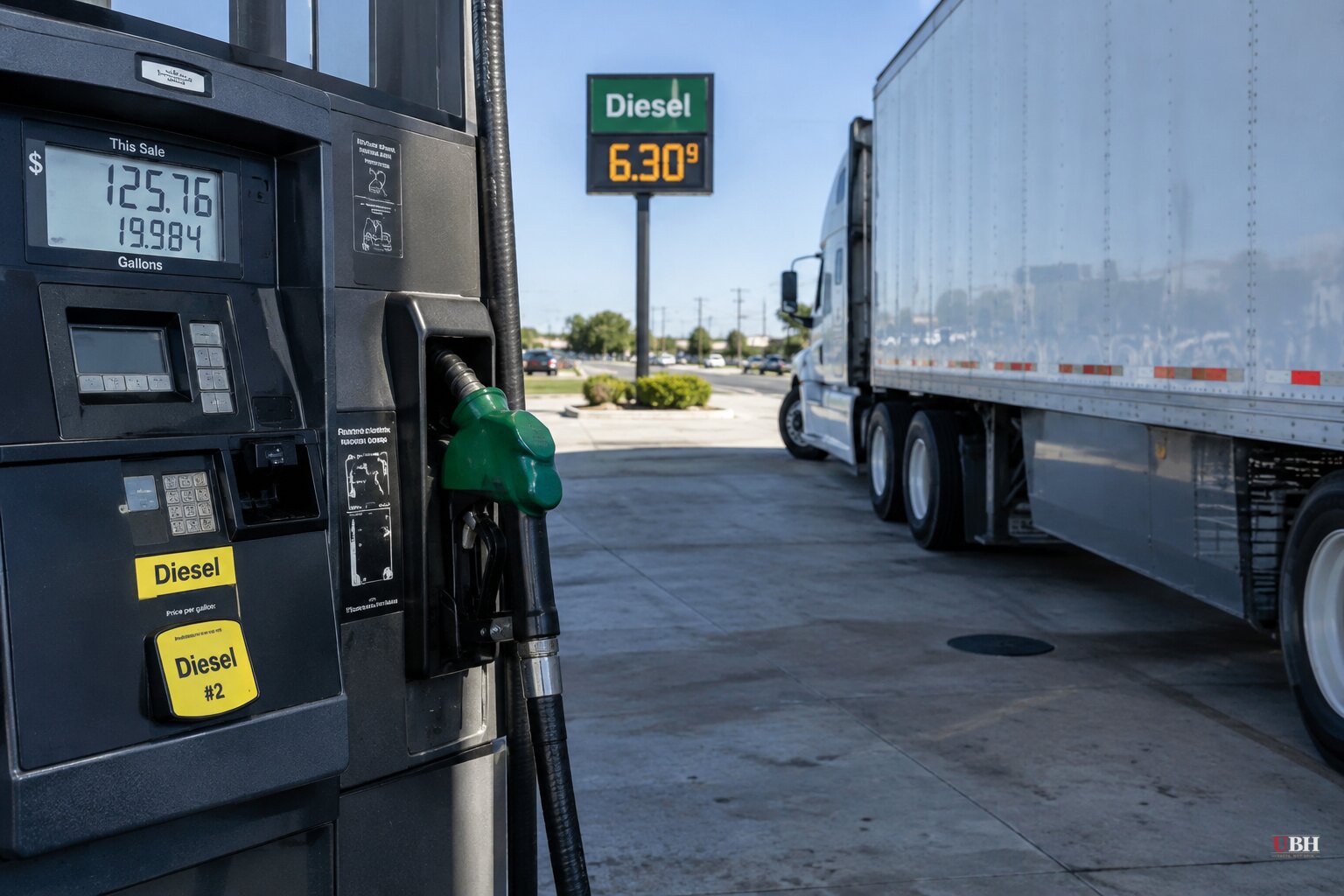
The national average price of diesel reached $6.30 a gallon on Wednesday, Oct. 14, according to AAA. That is about 68% above where it stood before the Iran war began.
AAA also logged roughly $6.32 on a recent Monday, against about $3.69 a year earlier. The previous record was $5.816, set in June 2022 after Russia invaded Ukraine.
Crude oil itself has eased somewhat, even with the Iran war escalating again. Refining constraints are keeping gasoline and diesel expensive anyway.
Why diesel is different
Diesel runs trucks, tractors, construction equipment and factories. When it jumps, the cost shows up in nearly everything that moves.
Olivier Gervais, director of modelling and forecasting at Scotiabank, laid out the mechanism in an Oct. 5 report. He called it a structural product shortage, not an ordinary crude supply problem. The Iran war has disrupted shipping through the Strait of Hormuz, and Ukrainian strikes on Russian energy infrastructure have knocked out refining capacity, he wrote. International diesel inventories have tightened as a result.
Gervais expects the pass-through to arrive in stages. Freight costs and trucking surcharges come first. Shelter prices follow within a year as construction materials get more expensive to haul. A secondary surge in grocery prices comes roughly 18 months out.
His own caveat matters. The analysis treats the shock as temporary. He wrote that the consequences could be "meaningfully larger" if high prices persist or begin to shape expectations.
What the latest data show
The Labor Department's consumer price index showed core inflation, which strips out food and energy, at 2.6% in September, up from 2.4% in August. That is still a modest level, but the direction points to businesses passing on more of their costs.
Retail sales told a similar story. Core spending outside gas stations rose just 0.2% as fuel took a larger share of household budgets.
The Federal Reserve's latest Beige Book, which collects reports from businesses in each Fed district, was full of fuel complaints. The Cleveland Fed wrote that "higher fuel costs remained the dominant driver," spilling into freight, packaging and petroleum-based materials. One builder in its district called high fuel costs and tariffs a "double whammy."
The New York Fed said one food manufacturer had not seen inflationary pressure this broad since the pandemic. The San Francisco Fed noted a manufacturer's complaint that every material purchased in recent weeks came with a freight surcharge.
Fortune reported that one grocery chain now pays more to ship its lettuce than the lettuce costs.
The pain is not uniform. Most districts reported little or no change in overall consumer spending, and the Richmond Fed said spending there grew moderately. Cleveland's was flat after four straight periods of decline.
Truckers are absorbing some of it
Trucking companies are charging more, but they are also eating costs. The Richmond Fed said carriers struggled to turn a profit when diesel climbed after they had locked in contract rates. To cover the gap, some drew down savings, cut maintenance spending or stopped buying fuel-efficient trucks.
Miami-based trucker Suave Dorsett, nine years behind the wheel, told Fox News Digital the math is not working. "Fuel prices is going up. The rates are not going up," he said. He said he paid $7.40 a gallon in Ohio.
Dorsett predicted smaller owner-operators will fall away first, setting off a "domino effect" that eventually reaches larger carriers. Drivers from Florida, Louisiana and North Carolina told Fox News Digital of route cuts and mounting pressure on small operators.
The case that relief is coming
President Donald Trump has predicted oil prices will fall "like a stone" amid expectations the Iran conflict could soon end. If that happens, the crude side of the equation would ease.
The diesel problem, though, is tied to refining capacity and disrupted shipping. Falling crude prices do not by themselves restore either.
The Fed surveys also point to a lag. The Boston Fed said existing trucking contracts have helped hold produce prices in check, but costs could jump when those contracts are renegotiated. The Philadelphia Fed said the expiration of hedges that had kept costs stable has given manufacturers more room to raise prices.
So the biggest open question is timing. If diesel stays near $6.30 as contracts and hedges roll off, the surcharges now showing up in freight bills are likely to move into shelf prices. Whether Trump's forecast of a quick drop proves right will decide how much of that lands on shoppers.
Sources used for this briefing
7 links from 6 independent newsrooms (syndicated copies of the same report count once)
These are the sources it draws on, linked so you can verify.


