
Unbiased headlines. Facts, not spin.
Unbiased Headlines is an independently owned news organization. We bring you the facts, not opinions, written fresh from 110+ named sources. Sources linked so you can verify it yourself.
 economy
Major Story (7/10)
economy
Major Story (7/10)
France and Germany agree to scrap 10% offset in EU 2035 car rules in exchange for 'Made in Europe' quotas
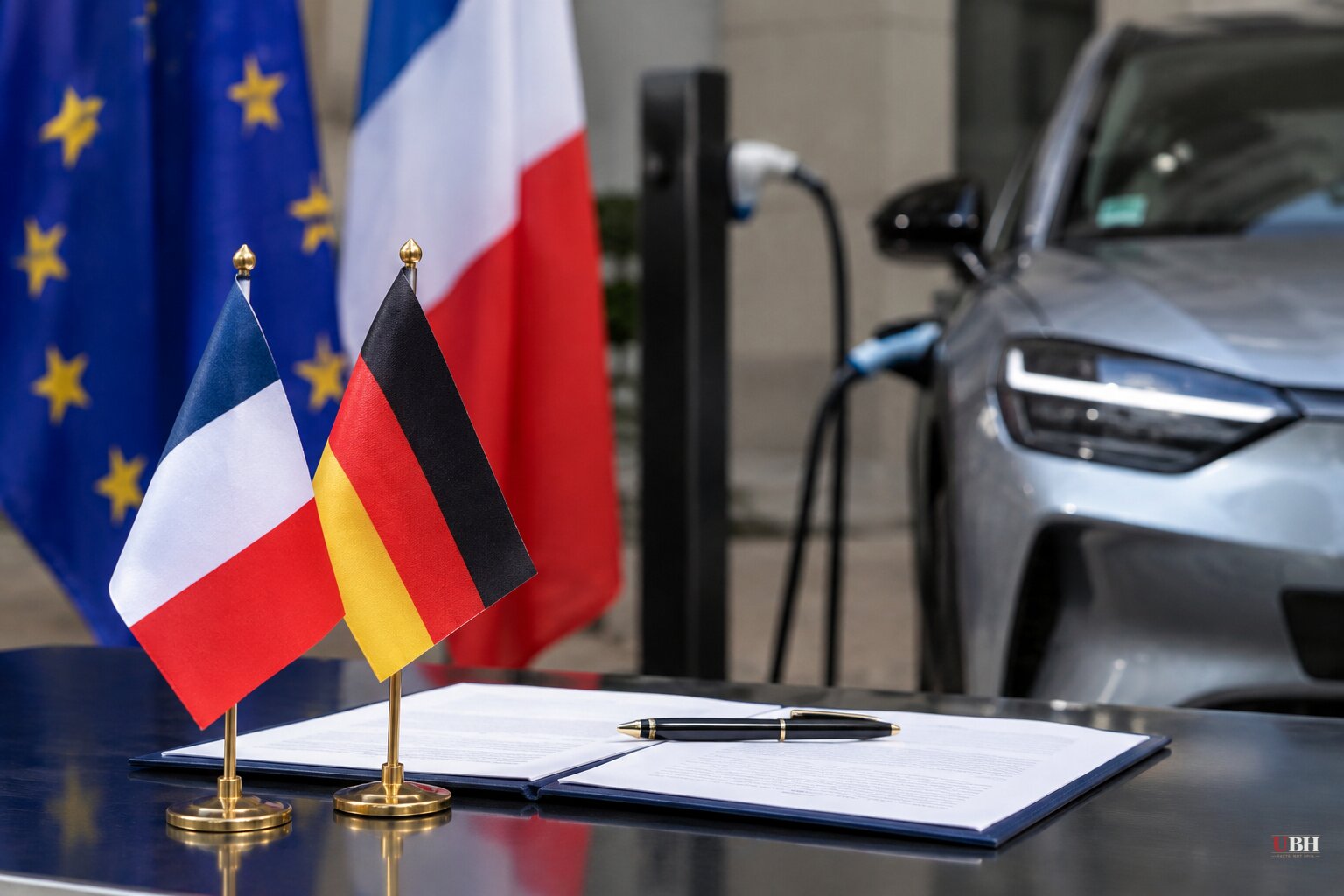
France and Germany announced a deal Friday, Oct. 16, on the sidelines of an EU leaders' gathering in Brussels. It loosens the bloc's 2035 rules for new combustion-engine cars and tightens "Made in Europe" requirements for subsidies and public contracts.
It is a swap. Berlin gets softer car-emissions rules. Paris gets the European preference it has pushed since the Commission proposed the Industrial Accelerator Act in March.
What the deal changes
The original rules required a 100% cut in tailpipe CO₂ from new cars by 2035, an effective ban on new petrol and diesel sales. The Commission proposed in December 2025 to lower that to 90%, with the remaining 10% compensated through credits tied to EU low-carbon steel and renewable fuels.
The Franco-German text keeps the 90% target against 2021 levels but drops the compensation requirement entirely. Carmakers could keep selling petrol, diesel and hybrid models after 2035 as long as the fleet average hits the target.
According to the trade press, Germany also won more favourable treatment for plug-in hybrids and indicative rather than binding national fleet targets. The "supercredits" originally meant to nudge small, cheap EVs would be extended to electric cars of all sizes, which could help German premium brands.
What France got
Public subsidies and contracts would go only to cars with at least 70% of their components, excluding batteries, produced in Europe. Ten percent of battery content would also have to come from European sources.
"This creates a European preference to ensure that our factories do not become mere assembly plants," an Élysée source said.
Germany had defended a broader "Made with Europe" approach that would have covered more trading partners. Under the compromise, eligibility centres on the 27 member states. A draft seen by the Financial Times would extend it to other European partners that were in the EU internal market on Jan. 1, 2020, meaning the UK, Norway, Iceland and Switzerland. Those countries would have to align with EU trade-defence and investment-screening measures.
For the UK, that means tariffs on Chinese electric vehicles. Britain currently charges a 10% duty on them. The EU's maximum has been 45% since 2024, and the U.S. applies 100%. Business Secretary Jonathan Reynolds has said higher UK duties are "under review," while the government worries about retaliation against carmakers such as Jaguar Land Rover that sell into China.
A UK government official said: "This is a Franco-German proposal and there is still a European process to run, but if confirmed, we welcome the objective to have UK included."
Japan, South Korea and Turkey would stay outside. Renault, Toyota, Hyundai and Ford all build cars in Turkey, Japan or South Korea for the European market.
Who is cheering and who is not
Chancellor Friedrich Merz called it "a good day for motorists and for jobs in Germany, France and Europe," describing a package of "freedom of choice, technology openness and the safeguarding of climate targets." German Finance Minister Lars Klingbeil said domestic production "will be strengthened" and told automakers they have "a responsibility to invest in the future of German sites and to secure jobs."
Olaf Lies, premier of Lower Saxony, the second-largest shareholder in Volkswagen, said a 90% cut without an offset obligation makes the 2035 target "realistic."
The criticism is already on record. Swantje Michaelsen, the Greens' transport spokesperson in the Bundestag, said the federal government "is holding back the German automotive industry instead of supporting it." She said "anyone who weakens the 2035 targets now creates new uncertainty" and accused Merz of negotiating without consulting his coalition partner.
Toyota Motor Europe CEO Yoshihiro Nakata also pushed back on the trade provisions. "Toyota is not a guest in Europe. We are a European manufacturer," he said. Toyota backs the 90% target and a slower transition for hybrids, but warns that shutting out trusted partners such as Japan and Turkey could undermine the competitiveness Europe wants to protect.
The supplier group Clepa, which represents about 3,000 companies, said the battery threshold is lower than it hoped and that 150,000 high-skilled supplier jobs remain at risk.
The market backdrop
Automotive World's analysis argues that a 10% battery requirement leaves room for European-assembled EVs to carry largely Chinese cells, including from CATL and Gotion plants now being set up in Hungary and Spain. That is the publication's assessment, not an official finding.
The loosening comes as electric sales climb. According to ACEA, the European carmakers' association, EV sales have risen 45% in 2026 to 22% of the EU market. Including hybrids, electrified vehicles now exceed two-thirds. Automotive World ties part of the surge to record fuel prices linked to the war in Iran.
It also reports that Chinese brands took more than a quarter of the EU plug-in hybrid market in September. A 350,000-unit cap on hybrid imports could take effect as early as December.
What happens next
Nothing here is law. The agreement is a joint position of the EU's two largest economies, which improves its odds. It still needs approval from the other member states and the European Parliament, which is reviewing the Commission's amendments to the 2035 legislation.
Officials involved in earlier talks had flagged open disputes over how "European content" is defined and whether free-trade partners should get equal treatment. Those fights now move to the Council and Parliament. Whether London agrees to match EU tariffs on Chinese EVs is undecided.
Sources used for this briefing
7 links from 7 independent newsrooms (syndicated copies of the same report count once)
These are the sources it draws on, linked so you can verify.


