
Unbiased headlines. Facts, not spin.
Unbiased Headlines is an independently owned news organization. We bring you the facts, not opinions, written fresh from 110+ named sources. Sources linked so you can verify it yourself.
 economy
Major Story (7/10)
economy
Major Story (7/10)
Rubio Takes U.S. Business Delegation to Samarkand Oct. 19 to Court Central Asia's Minerals
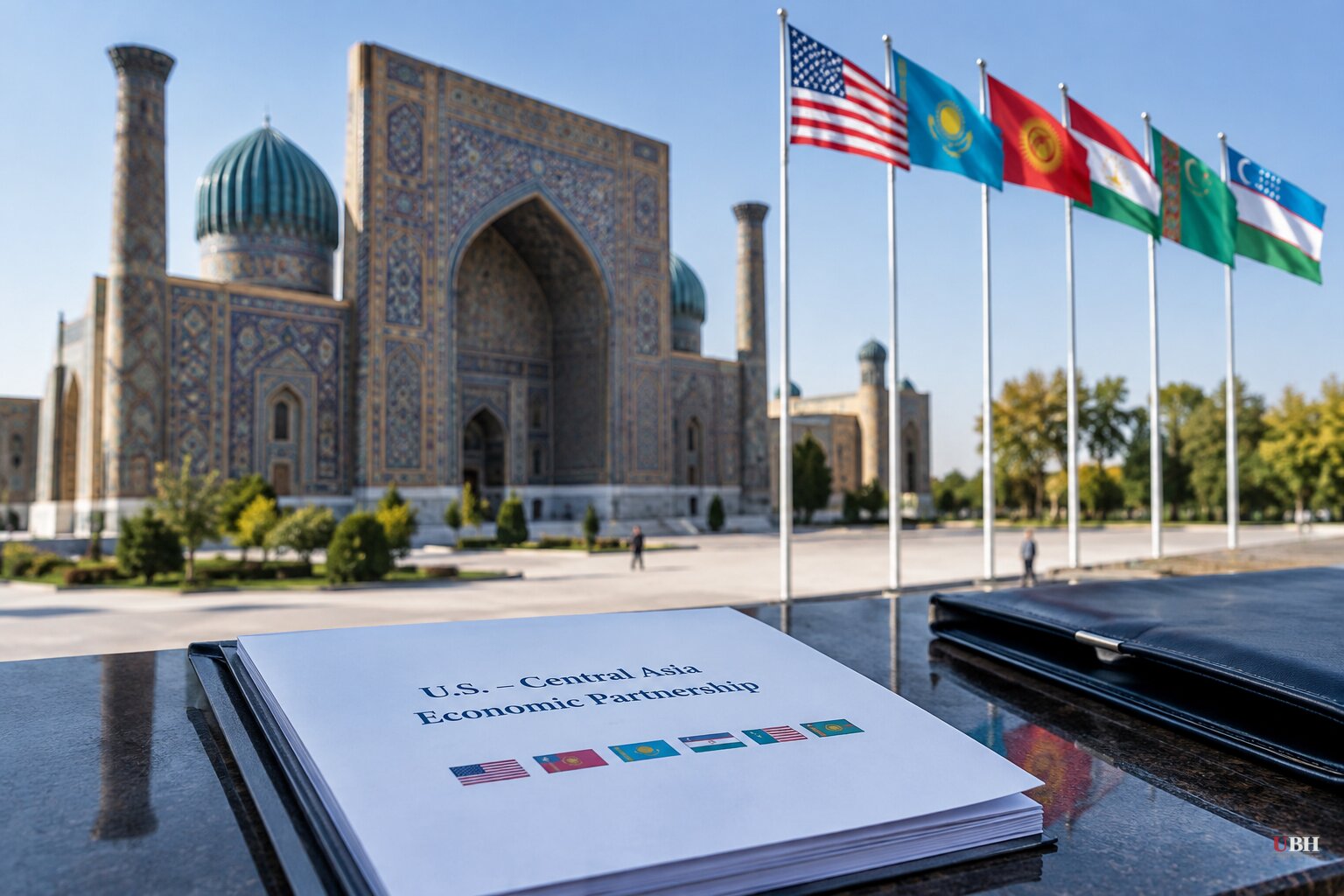
Secretary of State Marco Rubio is scheduled to sit down with the foreign ministers of Kazakhstan, the Kyrgyz Republic, Tajikistan, Turkmenistan and Uzbekistan in Samarkand on Oct. 19. It is a C5+1 ministerial, the format Washington has used since 2015 to organize ties with the region around economics, energy and security. A separate Critical Minerals Dialogue runs in parallel.
Samarkand was picked for a reason. It hosted the first C5+1 ministerial in 2015.
The Central Asian foreign ministers visited Washington last November, where Rubio said he planned to visit the region in 2026.
A big business delegation
U.S. Ambassador to India Sergio Gor, speaking Thursday, Oct. 15, at the Bloomberg New Economy Forum in New Delhi, said Rubio will be joined by representatives of more than 200 American companies. Earlier descriptions of the trip put the delegation at more than 100 companies.
Gor said the goal is to "showcase American ingenuity, American technology" and to "compete" in the region.
"You have some of the richest deposits in Central Asia, and they're looking for reliable, trusted partners, and we believe American companies can offer those solutions," Gor said. He added that the five governments "are sovereign nations; they'll decide what's best for them."
The size of the delegation points to a push for signed deals rather than another joint declaration.
Why minerals, and why now
Central Asia holds deposits of tungsten, uranium, rare earths and copper. Washington wants them because China dominates processing. A 2025 International Energy Agency assessment, cited in a June 2026 policy brief by the Centre for Economic and Financial Policy Research, found China led refining for 19 of 20 key minerals tracked.
Those materials feed defense systems, electronics and energy equipment. Dependence on Beijing for them is a strategic problem, not a trade-policy footnote.
The republics have their own demands. Uzbekistan has said publicly it wants value-added production in the region, not raw-ore exports. Water scarcity could limit how much processing the region can actually host.
The five governments are also after investment without picking a side among Washington, Moscow and Beijing.
The corridor problem
The Trans-Caspian International Transport Route, known as the Middle Corridor, runs across the Caspian Sea, Azerbaijan and Georgia, then on to Europe via Turkey. It offers an alternative to routes through Russia.
It is held back by limited port capacity, mismatched rail systems, customs delays and stacked tariffs. Fixing that means harmonized customs procedures, digital trade paperwork and financing for rolling stock and port upgrades. A roadmap with named partners and timelines would be a real result. Vague language about "improving connectivity" would not.
Questions about the fund's chairman
One piece of the broader push is already drawing scrutiny. Reuters reported, based on documents it reviewed, that the Trans-Caspian Enterprise Fund, a $201 million investment vehicle covering Armenia, Azerbaijan, Georgia and the five Central Asian states, is led by Konstantin Sokolov. Incorporation documents show he was put in charge in January.
Sokolov, 51 and Russian-born, holds major stakes in Armenia's largest mobile phone company, Viva Armenia, according to Reuters. It reported that he also bought Armenia's second-largest copper and molybdenum mine earlier this year after receiving a special permit from the U.S. government. Reuters also reported that he formerly ran a Russia-focused investment firm that touted close ties to the Kremlin.
Sokolov was among 37 donors to President Trump's White House ballroom project on a list the White House distributed last year. The Washington Post reported he gave $1 million. Federal Election Commission data show about $13 million in donations from Sokolov to Republican political groups.
Six ethics experts who reviewed the Reuters findings told the news agency his holdings create a conflict of interest because his role gives him control of government money that could benefit his companies. "I think Congress should be asking questions," said Ann Skeet of Santa Clara University.
Reuters found no indication of wrongdoing by Sokolov. The law governing these funds does not forbid directors from holding investments in the regions where they operate.
A representative for Sokolov's firm, IJS Investments, said the fund is prohibited from investing in any of his businesses and that he has complied with all due diligence and security requirements. A State Department spokesperson said the fund will meet annual reporting requirements, independent audits and conflict-of-interest provisions in its grant terms.
Reuters said it found no sign that the heads of the three other U.S. enterprise funds now operating hold major investments in the countries where their funds invest. Bo Cutter, chairman of the Tunisia fund, told Reuters he has no business interests in Tunisia.
Taxpayer-backed money is involved, so the safeguards matter. The fund's board has the power to make grants, loans and investments across all eight countries.
What to watch
The Oct. 19 meeting will show whether the delegation produces a short list of named flagship projects, licensing rules and investor protections, or only another communiqué. The State Department's audit and reporting commitments for the Trans-Caspian fund are the first checkpoint on the conflict-of-interest questions. No congressional inquiry into the fund has been announced.
Sources used for this briefing
7 links from 6 independent newsrooms (syndicated copies of the same report count once)
These are the sources it draws on, linked so you can verify.


