
Unbiased headlines. Facts, not spin.
Unbiased Headlines is an independently owned news organization. We bring you the facts, not opinions, written fresh from 110+ named sources. Sources linked so you can verify it yourself.
 economy
Notable (6/10)
economy
Notable (6/10)
Bailey Says UK Price Pressures Are 'Quite Subdued' So Far as Economists Forecast a November Rate Hike
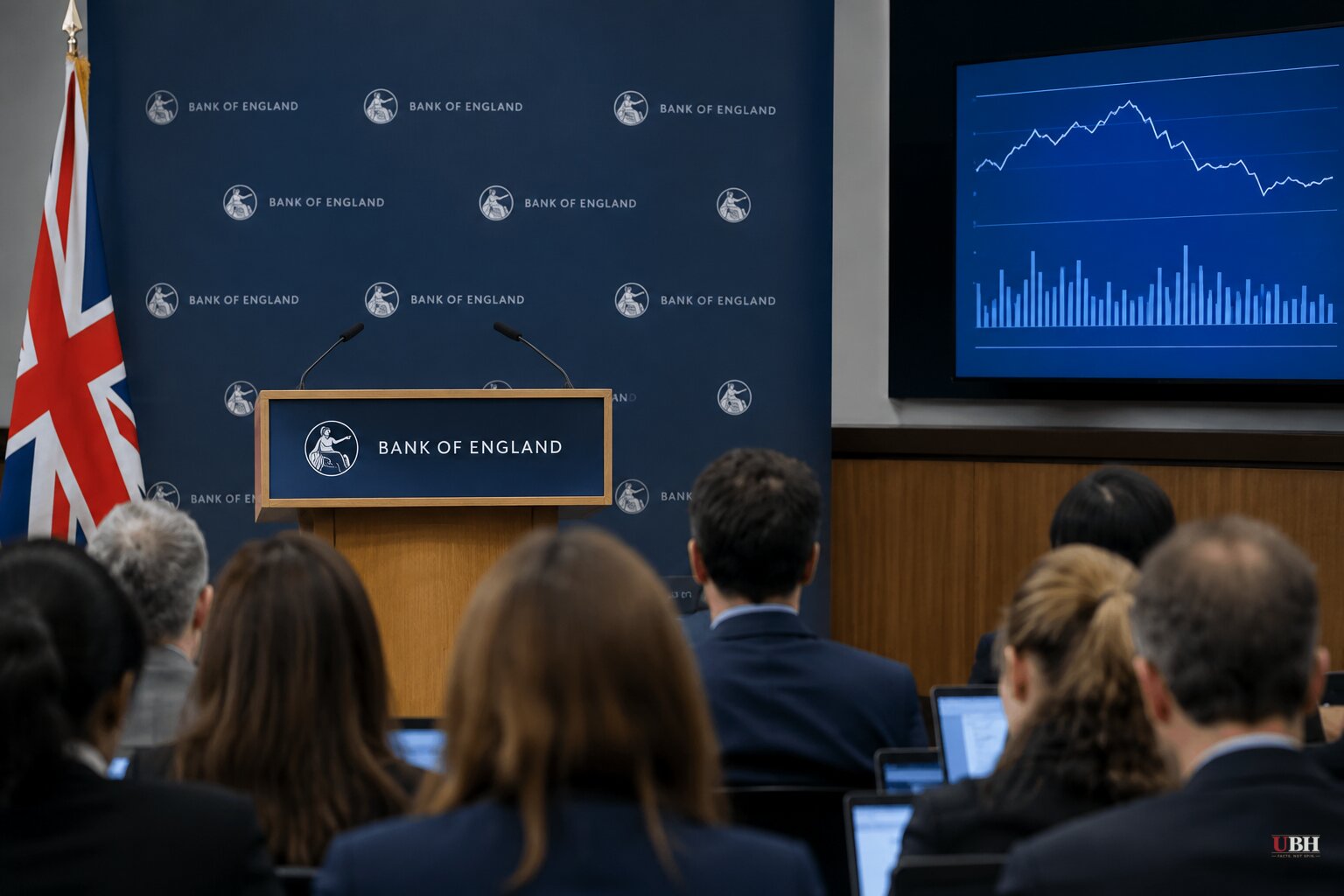
Bank of England Governor Andrew Bailey said Friday that the surge in energy prices has so far had limited knock-on effects on British prices. He also said it is too soon to draw conclusions.
"I think it's too early, but to the extent we've seen evidence, so far it's been quite subdued," Bailey told the Institute of International Finance meeting in Bangkok, on the sidelines of the IMF and World Bank annual meetings.
He said businesses he meets are focused on cutting costs and are struggling to pass higher energy bills on to customers.
Inflation still above target
August inflation came in at 3.1%, a five-month high. Bailey called it "enormously frustrating" and blamed the overshoot of the Bank's 2% target on conflicts in the Middle East. The US-Israeli war with Iran began in late February.
In a separate Bloomberg appearance, Bailey said the energy shock has taken rate cuts off the table and that the Bank has effectively tightened financial conditions without raising rates. He warned against reading anything into the Bank's next decision, saying officials still have to assess pass-through risks.
Bailey also said Britain's economy is "more resilient than we expected it to be." Official figures this week showed August GDP rose 0.1% after a 0.4% gain in July. Economists had forecast a 0.1% contraction. The Office for National Statistics data showed the strongest annual growth since October 2022.
Economists see a hike coming
The Bank has held Bank Rate at 3.75% since the war began. Last month's Monetary Policy Committee vote was 6-3 to keep it there. Bailey was in the majority, but said then that policy might have to tighten if the risk of second-round effects grew.
A Reuters poll of 63 economists, taken October 12 to 14, shows 54 now expect a 25-basis-point rise to 4.0% in November. That would be the first increase in more than three years. The November meeting coincides with the Bank's next quarterly forecasts. In last month's poll, about 90% of respondents expected rates to stay on hold for the rest of the year.
The poll's inflation forecasts have moved sharply higher. Economists now see inflation averaging 3.6% this quarter, 3.8% next quarter and 3.0% across 2027. Last month's poll had 3.3%, 3.2% and 2.5%.
Sonali Punhani, a UK economist at Bank of America who recently switched from a hold call to a hike call, said: "The bigger pickup in inflation is still ahead of us rather than behind us." She added that with inflation heading toward 4%, "the risk-reward is probably leaning towards the direction of a hike versus a hold and hoping second-round effects don't come in."
Dani Stoilova of BNP Paribas said that, based on Bailey's guidance, "that rate hike will need to be delivered."
Not everyone expects a string of increases
There is no majority view on what follows November. Thirty of 61 economists expect one more rise in the first quarter of 2027. Financial markets are far more aggressive, fully pricing four quarter-point increases by the end of next year.
Chief Economist Huw Pill, who has voted for a rate rise since April, pushed back again on Thursday against market expectations of a series of hikes.
Deputy Governor Sarah Breeden also struck a cautious tone. She told CNBC on Thursday that the Bank has been "surprised so far about how well the economy has absorbed what has been a pretty significant energy price shock." She credited companies that hedged their energy purchases after the 2022 crisis, and said AI-related investment has helped sustain activity.
Breeden did not call the matter settled. The Bank is trying to establish whether firms absorbing higher costs has reduced the damage or only postponed it. She also said a prolonged energy shock could still require higher rates.
The Bank has also said that waiting for clear evidence of second-round effects, such as in annual pay settlements in early 2027, risks making it too late to act.
Borrowing costs and the Budget
Bailey said the Middle East conflicts are also the main factor behind sharp moves in British government bonds. Last week some gilt yields reached their highest levels since 1998.
Bailey has argued that the jump in mortgage rates and other borrowing costs since the war began has given the Bank time to decide whether a hike is needed.
Higher yields raise the government's own borrowing costs. GDP numbers that beat forecasts gave Chancellor Rachel Reeves a modest reprieve ahead of the autumn Budget, but the date and contents of that Budget were not part of Bailey's remarks.
Breeden described the public mood as "Oh, here we go again."
The next monthly UK inflation figures are due next week. Those numbers, along with pay data, will be the first hard test of whether Bailey's "subdued" reading holds before the Bank's November meeting.
Sources used for this briefing
7 links from 7 independent newsrooms (syndicated copies of the same report count once)
These are the sources it draws on, linked so you can verify.


