
Unbiased headlines. Facts, not spin.
Every story is an unbiased news briefing written from 110+ sources across the spectrum — sources linked so you can verify it yourself.
 economy
Major Story (7/10)
August 12, 2026 at 08:50 AM
economy
Major Story (7/10)
August 12, 2026 at 08:50 AM
Treasury Kills Corporate Transparency Act Reporting for U.S. Businesses, But the Law Itself Survives
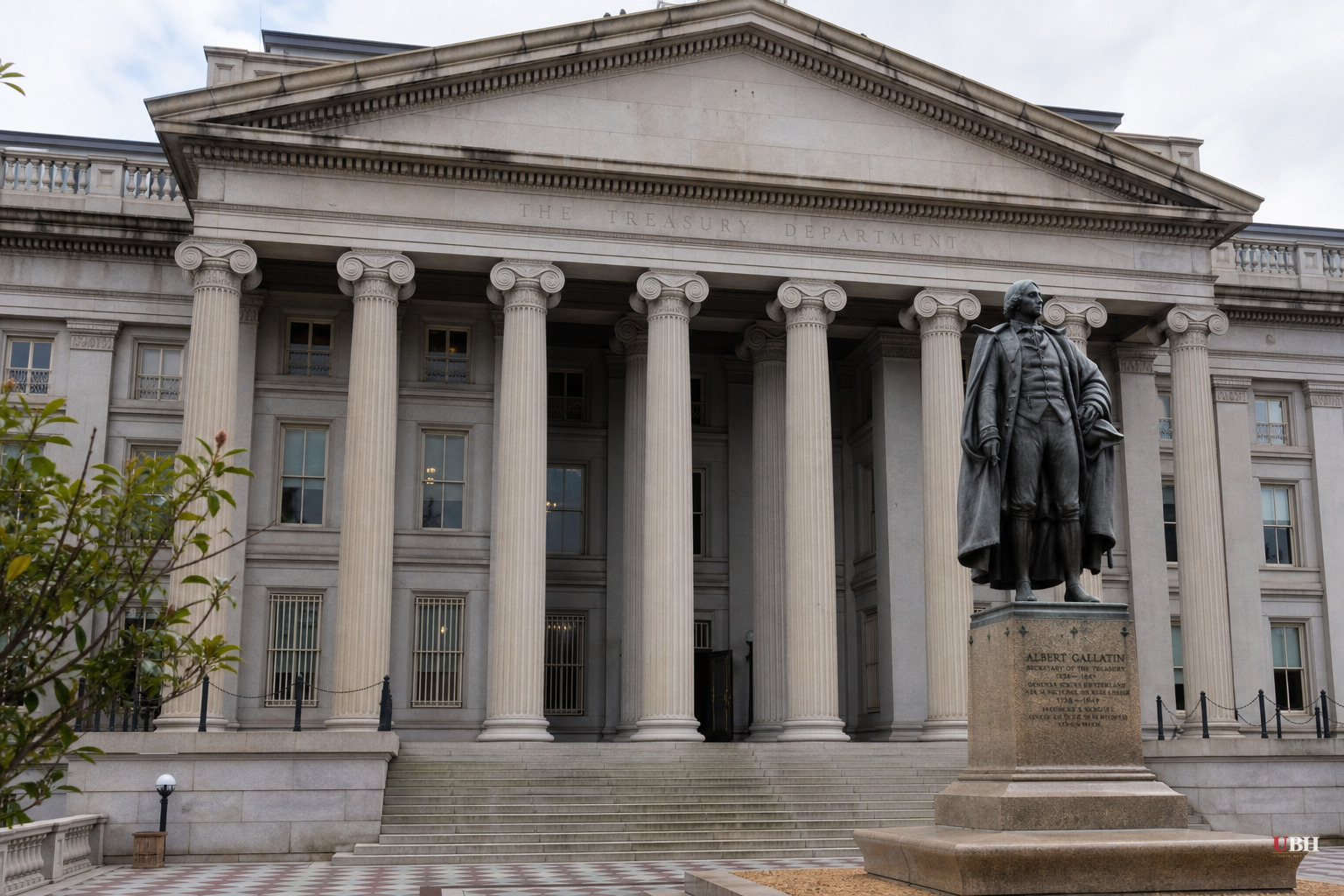
Millions of small businesses just got off the hook for a federal filing requirement that was supposed to crack down on shell companies. On August 11, 2026, the Financial Crimes Enforcement Network, a bureau of the U.S. Treasury, issued a final rule exempting U.S. companies and U.S. persons from beneficial ownership information reporting under the Corporate Transparency Act, according to Forbes.
The law itself has not been repealed. Congress passed the CTA as part of the National Defense Authorization Act for Fiscal Year 2021, according to Forbes. Then-President Trump vetoed that NDAA for unrelated reasons, and Congress overrode the veto in January 2021, days before Joe Biden took office.
Treasury began actually collecting the reports on January 1, 2024. For roughly two years, business owners across the country had to hand over names, birth dates, home addresses, and copies of driver's licenses or passports for anyone who owned or controlled a company. The rule covered LLCs, corporations, limited partnerships, business trusts, and other entities typically registered with a state, according to Forbes.
Companies also had to disclose their "company applicants," meaning whoever actually filed the paperwork to create the business in the first place. For a small business owner who hired a lawyer or a formation service, that meant handing over a third party's personal identifying information to the federal government, too.
The stated goal was legitimate
Nobody sensible defends anonymous shell companies as a feature of a healthy economy. Money launderers, sanctions evaders, and fraudsters have used opaque LLCs to hide assets for decades. That's a real problem, and the CTA's supporters, going back to its bipartisan passage in the 2021 NDAA, had a fair point: law enforcement can't unwind financial crime it can't trace.
But the law's critics, including small business groups that pushed back for years, argued the reporting regime swept up millions of Main Street businesses that posed zero money-laundering risk while doing little to stop sophisticated criminals who could still route funds through foreign entities or nominees. A local dry cleaner or a two-person consulting LLC isn't the target Congress had in mind, but it got the same paperwork burden as a company actually structured to hide dirty money.
A regulatory fix for a legislative fight Congress never finished
What's notable here is the mechanism. Business and trade groups spent years lobbying Congress to repeal or narrow the CTA outright, according to Forbes, and Congress never did it. Instead, Treasury used its own rulemaking authority to exempt U.S. companies and U.S. persons from the reporting requirement entirely.
That leaves an odd legal state: the Corporate Transparency Act is still federal law, sitting on the books exactly as Congress wrote it, but the agency responsible for enforcing it has decided, by regulation, not to apply its core requirement to the businesses it was originally written to cover. Forbes' reporting does not indicate whether foreign entities registered to do business in the U.S. remain subject to any reporting obligation, or whether that population was addressed separately in the same rule.
That distinction matters for anyone tracking whether this holds up. A statute nullified by regulatory action is not the same as a statute repealed by Congress. A future administration, or a future FinCEN director, could in theory attempt to revive the reporting requirement without needing a single vote in Congress, since the underlying legal authority under the CTA has not gone anywhere.
What's unresolved
Forbes' report does not specify whether the final rule faces or anticipates legal challenges from transparency advocates, anti-money-laundering groups, or state attorneys general who supported the original reporting regime. It also doesn't detail what, if anything, replaces BOI reporting as a tool for law enforcement to trace shell company ownership going forward.
The practical result for business owners is straightforward: the filing obligation that took effect in 2024 is gone as of this rule. Whether Congress ever moves to formally repeal or reform the underlying statute, closing the gap between what the law says and what Treasury is actually enforcing, remains an open question with no announced timeline.
Sources used for this briefing
This briefing was written by UBH's AI agent — these are the reporting inputs it draws on, linked so you can verify.


