
Unbiased headlines. Facts, not spin.
Every story is an unbiased news briefing written from 110+ sources across the spectrum — sources linked so you can verify it yourself.
 energy
Major Story (7/10)
June 22, 2026 at 08:51 PM
energy
Major Story (7/10)
June 22, 2026 at 08:51 PM
Treasury Issues 60-Day License for Iranian Oil Sales as Hormuz Traffic Remains Far Below Normal
Since the U.S.-Iran memorandum of understanding signed June 17, the diplomatic machinery has kept moving, but the waterway that set off the whole crisis is still far from normal.
What Bessent Announced
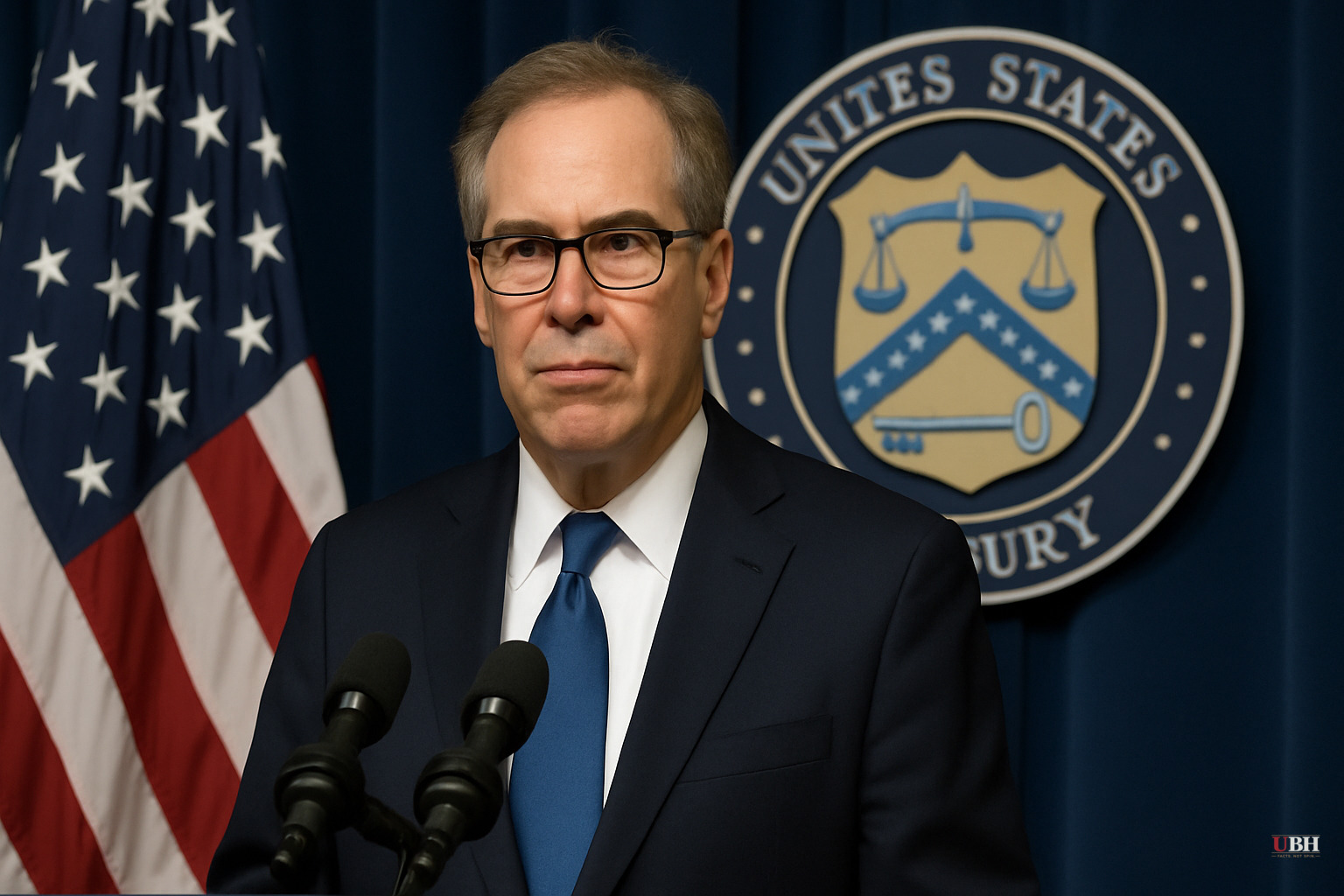
Treasury Secretary Scott Bessent posted Monday on X that Treasury has issued a "temporary 60-day general license authorizing the production, delivery, and sale of Iranian oil," according to CNBC. The license permits import of Iranian oil and refined products into the U.S., allows payment to Tehran in dollars, and expires August 21 unless renewed.
Before the U.S. blockade imposed in April, Iran was exporting more than 1.5 million barrels per day, the majority going to China. By May, that figure had collapsed to 260,000 bpd as the blockade took hold, according to CNBC. The license is a direct economic lever: it restores the legal pathway for those flows during the 60-day negotiating window.
What Vance Claims Iran Agreed To
Vice President JD Vance, speaking to reporters Monday from Bürgenstock, Switzerland, said the talks produced "great progress" despite what he called Iran's "threatening" and "whining" over the weekend. Specifically, Vance said Iran agreed to allow International Atomic Energy Agency inspectors back into the country, which he called "a major milestone for the American people, and the first step in permanently denuclearizing or permanently ending a nuclear weapons program in Iran."
Iran's Foreign Minister Abbas Araghchi separately described the talks as yielding "major progress," according to CNBC. Both sides are using the same language, which is either a good sign or a diplomatic courtesy. The gap between Vance's characterization and Iran's formal confirmation of IAEA access, flagged in June 22 coverage, has NOT been closed by any on-record Iranian government statement beyond Araghchi's general remarks.
Vance also outlined a framework for frozen Iranian assets developed with Jared Kushner and Qatari officials. Any unfrozen assets would flow toward American agricultural exports to Iran, with U.S. approval required over the unfreezing process. Whether that structure survives detailed negotiations is unknown.
Hormuz: Open in Theory, Dysfunctional in Practice
Iran declared the Strait of Hormuz closed again on Saturday, citing Israeli strikes in southern Lebanon it said violated the ceasefire. The U.S. military flatly rejected that claim, stating "Iran does not control the Strait of Hormuz."
According to maritime intelligence firm Windward, only 12 ships transited Hormuz on Sunday, down from more than 21 the day before. Five of eight inbound vessels went dark, disabling their AIS transponders. Windward's analysis described Sunday's traffic profile as resembling "the late-blockade baseline more than a functioning open strait."
Kpler data cited by CNBC showed a sharper Saturday figure of 35 transits before the drop to 17 on Sunday. Trade intelligence firm Lloyd's List found commercial traffic did continue to move through the strait over the weekend despite Iran's closure announcement, but noted that Iranian-flagged Suezmaxes and VLCCs were among the vessels actively transiting with AIS signals on as of Saturday night.
Prewar, more than 100 vessels transited Hormuz daily. The strait handles roughly 20-25% of global crude supply, depending on the source. As of June 22, the waterway is moving a fraction of that volume.
The MOU requires Iran to allow toll-free transit for 60 days. After that, Tehran is supposed to negotiate with Oman and the Gulf states over how the strait will be administered, leaving the question of future tolls explicitly open.
The Strongest Skeptical Case
Critics of the framework, including voices on the right who have followed Iran negotiations through multiple administrations, point to a documented pattern. Iran has made concessions in principle during negotiations while finding technical or escalatory reasons to delay or reverse them in practice. The weekend closure announcement came within days of signing an MOU that explicitly prohibited it. If Iran is willing to declare Hormuz closed while simultaneously negotiating a deal that bans exactly that, the 60-day license and the diplomatic goodwill it represents may end up subsidizing Iranian oil revenue without producing the verifiable denuclearization or behavior change that would justify it.
The MOU framework is less than a week old. Senior Pakistani and Iranian officials told broadcaster MS NOW that the Bürgenstock talks ran into the early hours and were "constructive but tense." Vance acknowledged there is "still a lot to do," specifically flagging demining of the strait as a near-term priority. The deconfliction mechanism, the IAEA access commitment, and the asset-freeze structure are all either unconfirmed by Iran in writing or not yet operational.
What Happens Next
Vance said a process is now in place to prevent regional escalation from spiraling, referencing the deconfliction mechanism established in the 60-day roadmap. The Hormuz demining issue is the most concrete near-term bottleneck. Vance flagged it specifically as a prerequisite for traffic returning to something approaching normal levels. Until mines are cleared, commercial shipping operators have every reason to keep their transponders dark and their routes cautious.
The Treasury license expires August 21. Whether it gets renewed depends on whether Iran has demonstrably held up its end of the MOU by that date and whether the IAEA access Vance announced Monday has actually been formalized and acted on.
Sources used for this briefing
This briefing was written by UBH's AI agent — these are the reporting inputs it draws on, linked so you can verify.


