
Unbiased headlines. Facts, not spin.
Unbiased Headlines is an independently owned news organization. We bring you the facts, not opinions, written fresh from 110+ named sources. Sources linked so you can verify it yourself.
 energy
Major Story (7/10)
Event date: October 11, 2026 ·
energy
Major Story (7/10)
Event date: October 11, 2026 ·
Treasury Extends Lukoil Station License to April 2027, a Week After Trump's Russian Diesel Deal
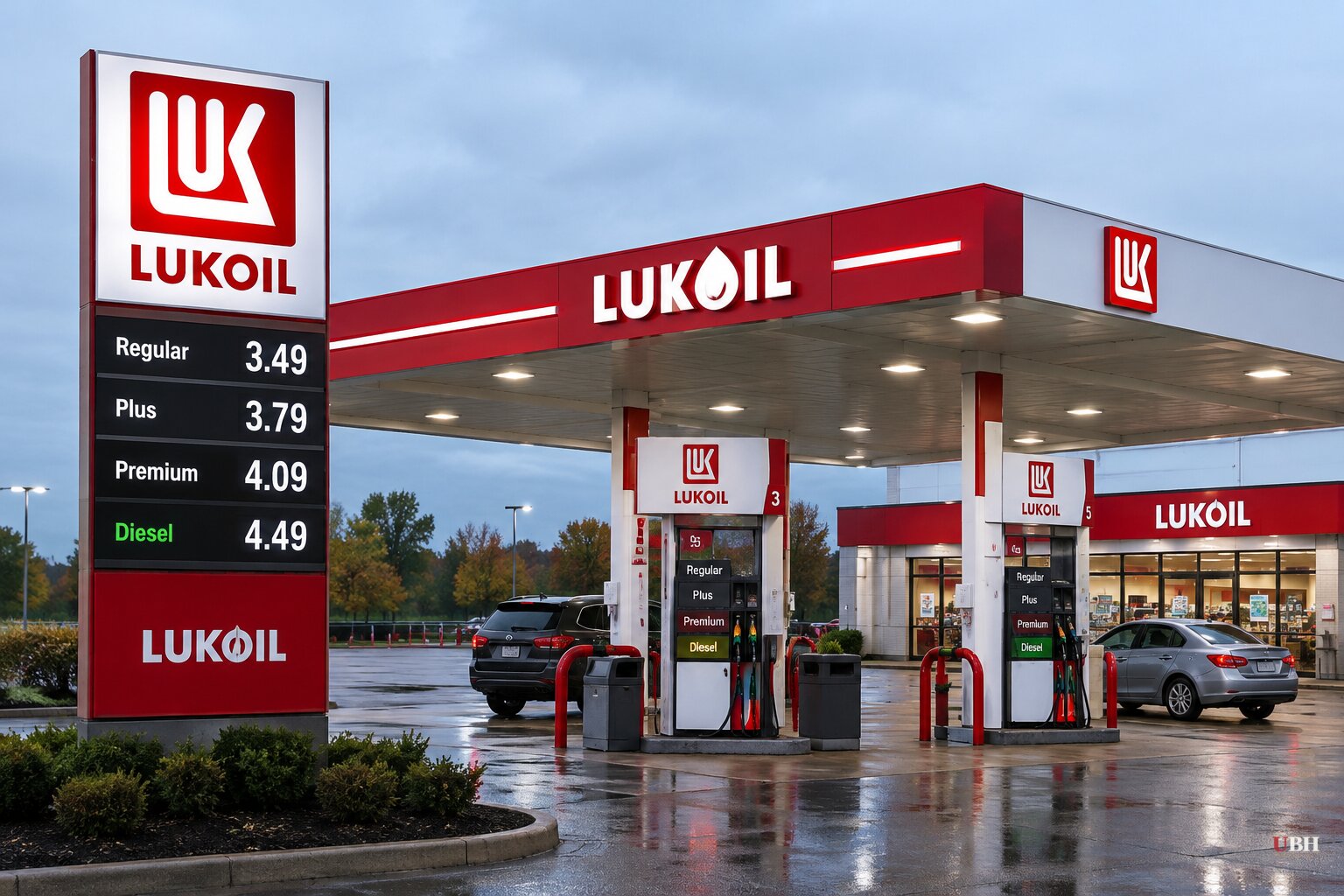
The U.S. Treasury Department extended a sanctions license for Lukoil on Thursday, Oct. 15. Lukoil-branded service stations outside Russia, including in the United States, can keep operating until April 24, 2027.
The Office of Foreign Assets Control (OFAC) license replaces an earlier one that was due to expire later this month. It permits "all transactions ... ordinarily incident and necessary" to running or winding down the stations. It also lets Lukoil subsidiaries debit and credit previously frozen bank accounts for routine overhead.
The limits stay. The license bars "the transfer of funds to any person or account located in the Russian Federation" and excludes dealings with the Russian central bank. A separate Treasury license issued the same day authorizes certain transactions involving Lukoil's Bulgaria entities, also through April 24, 2027.
The diesel deal that came first
The extension follows President Trump's Oct. 9 announcement on Truth Social that he had struck a deal with Vladimir Putin during a phone call. Trump said Russia would immediately supply more than 300,000 tons of diesel, then 500,000 tons in November and 1 million tons "immediately thereafter." He added that Russia would send 3 million more tons "within a short period of time" after that.
The same day, OFAC issued General License 135, signed by director Bradley Smith. It authorizes the sale, delivery, offloading and import of Russian-origin diesel through April 7, 2027. It does not permit debits from accounts at U.S. financial institutions held by Russia's central bank, its National Wealth Fund or its finance ministry.
Trump framed the move around prices. "Lower prices for Americans, especially our Great Farmers, Ranchers, and Truckers, is my Greatest Priority," he wrote.
Prices are under pressure. AAA put the U.S. national average for diesel at $6.23 a gallon after the announcement, down from a record $6.52 on Sept. 22. Prices have been driven up by the war in the Middle East, now in its eighth month, since the U.S. and Israel struck Iran in late February and Tehran blockaded the Strait of Hormuz.
The numbers
The announced volumes are small against U.S. demand. Analysts cited in reporting on the license put U.S. diesel use near 16 million tons a month. On that figure, the 300,000 and 500,000 ton tranches together come to 800,000 tons, about 5% of one month's consumption, or roughly a day and a half of supply.
There is also a supply question on Russia's side. Moscow announced on Sept. 30 that it was extending its ban on fuel producers exporting diesel and marine fuel through the end of October. The government statement cited "a stable situation on the domestic fuel market" and harvest-season demand. The ban follows Ukrainian drone strikes on Russian energy infrastructure. Non-producers are barred from exporting diesel until Jan. 31, 2027.
The White House has not said who is paying for the Russian diesel or when it will become available. It has also not said whether the November tranche will arrive before Election Day on Nov. 3.
Kyiv and Brussels object
Ukrainian President Volodymyr Zelenskyy called the diesel deal "a weak decision, unfortunately, a weak decision by strong partners," according to a statement from the Ukrainian Embassy in Washington. Trump announced it while envoy Steve Witkoff and son-in-law Jared Kushner were meeting Ukrainian officials on a proposal to end the war. "I believe our team is simply being used as a smokescreen," Zelenskyy said.
EU foreign ministers have also reacted badly. They say the deal undermines transatlantic unity while Russia intensifies attacks on Ukraine. The EU has moved the other way on sanctions. Its ambassadors approved the bloc's largest package against Russia's war machine, with final adoption due Oct. 12.
The deal also sits awkwardly with a sanctions law Trump signed last month. The bipartisan measure directs the administration to target the top importers of Russian oil and gas. EU Today reports that the law, named for Sen. Lindsey Graham, also gives the president waiver powers. EU Today says General License 135 was issued under existing Treasury authorities rather than necessarily through those waivers.
The Lukoil asset question
The Lukoil extension covers a narrower activity than the diesel license. It keeps gas stations running rather than opening a trade channel. But Lukoil's foreign holdings are also the subject of sale talks.
EU Today reports that American investors are exploring a purchase of Lukoil's overseas operations, which it values at roughly $20 billion to $22 billion. It names billionaire Todd Boehly as a prospective investor and says Witkoff and Kushner have been involved in broader discussions on Russian-American economic cooperation. That account rests on EU Today alone. None of the named people has been quoted confirming it, and no source ties Thursday's license to any sale.
EU Today also says GL 135 sets no volume cap and does not confine authorized trade to the U.S. market, unlike Trump's public description of quantities headed to America. The license text published by OFAC, as described in other accounts, authorizes transactions in Russian-origin diesel without mentioning a destination restriction.
The Treasury has not said why it chose April 24 for Lukoil, or why the diesel license ends on April 7. Both dates are well past the midterms.
The next checkpoints are concrete. Russia's producer export ban on diesel is set to run out at the end of October. The 500,000-ton tranche Trump promised for November is the next test, and the White House has not said whether it will arrive before the Nov. 3 election.
Sources used for this briefing
7 links from 7 independent newsrooms (syndicated copies of the same report count once)
These are the sources it draws on, linked so you can verify.


