
Unbiased headlines. Facts, not spin.
Every story is an unbiased news briefing written from 110+ sources across the spectrum — sources linked so you can verify it yourself.
 economy
Major Story (8/10)
September 18, 2026 at 12:57 PM
economy
Major Story (8/10)
September 18, 2026 at 12:57 PM
Treasury Drafts Rules That Would Let US Drugmakers Keep Most China Licensing Deals
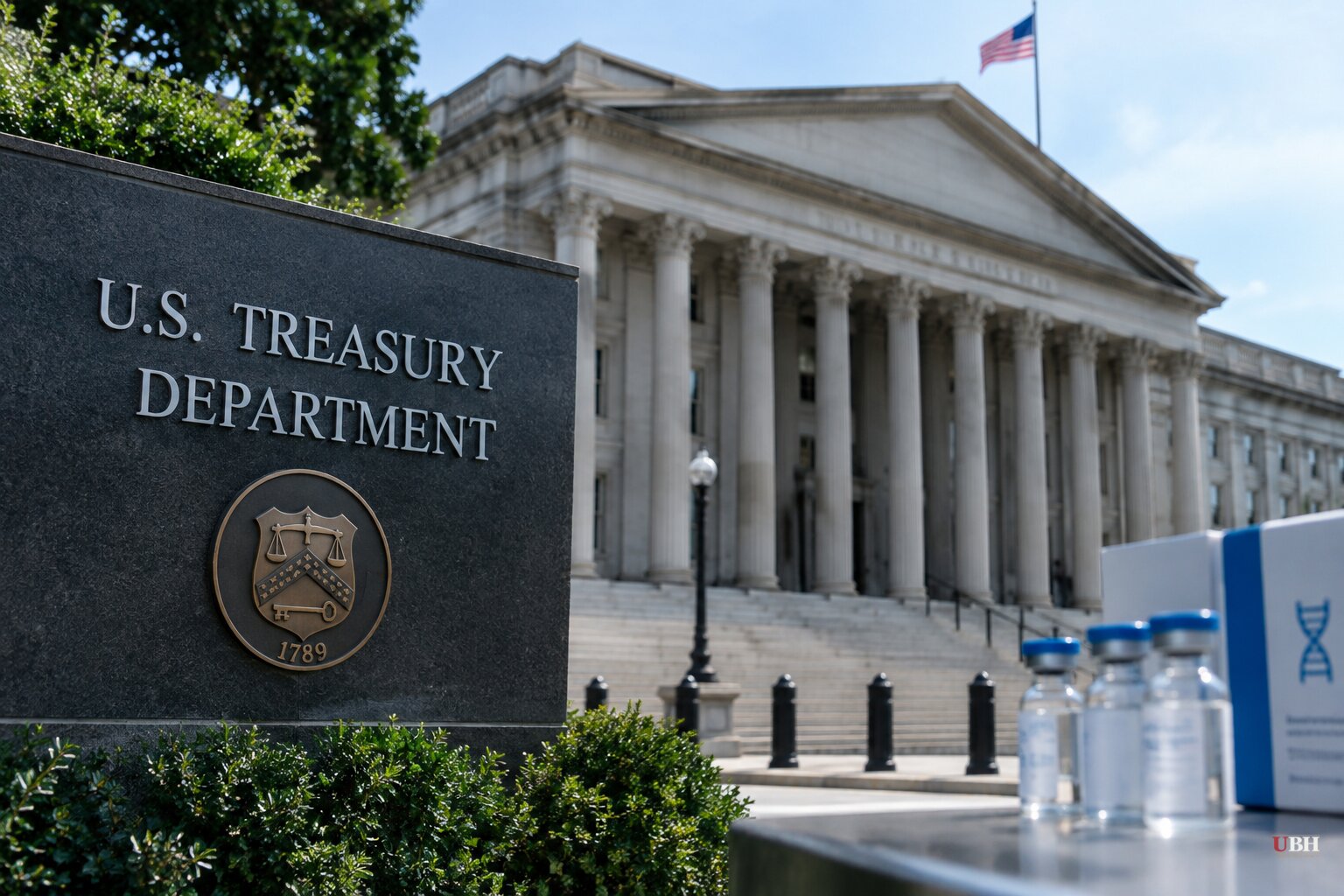
The Treasury Department is drafting rules that would let American pharmaceutical companies keep signing most licensing deals for drugs developed in China, according to Reuters, which cited three people familiar with the matter. The rules aren't finished and could still change, especially if President Donald Trump intervenes personally, the sources said.
If finalized as drafted, the restrictions would apply narrowly, only to investments tied to pathogens or biotechnology that could be weaponized. Everything else, including licensing deals for cutting-edge cancer, obesity, and autoimmune drugs developed by Chinese firms, would remain open for U.S. companies to pursue.
This represents a softer approach than what Washington has done in semiconductors and electric vehicles, where national security rules have choked off Chinese investment and access. Treasury is not expected to announce anything before Xi Jinping meets with Trump in the United States next week, sources told Reuters and NDTV Profit.
Why Pharma Is Different
China has become one of the biggest sources of new drug candidates on earth. In the first half of 2026, Chinese companies accounted for eight of the world's ten largest drug licensing deals, worth a combined $110 billion, according to people familiar with that data cited in the reporting. GlobalData, a research firm, found that Chinese companies were party to nearly half of all U.S. licensed-drug import deals in 2025, a trend that has continued into 2026.
The dollar figures are real. Bristol Myers Squibb signed a partnership with Jiangsu Hengrui Pharma worth up to $15.2 billion this year. Pfizer struck an up-to-$10.5 billion deal with Innovent Biologics covering twelve oncology programs. CSPC Pharmaceutical and AstraZeneca signed the largest deal on record, worth $18.5 billion.
Pfizer CEO Albert Bourla has lobbied Treasury Secretary Scott Bessent and other administration officials against broad restrictions, according to Reuters. "I don't think that's the way to compete with China, to try to slow them down," Bourla said, arguing it shouldn't matter whether a new medicine originated in China or the U.S. as long as it works.
The Pushback
Republican Representative John Moolenaar has pushed Treasury to use the COINS Act to restrict outbound pharmaceutical investment, arguing U.S. capital is directly fueling China's rise in biotech, according to Ground News. Jason Kelly, CEO of Ginkgo Bioworks and a former chair of a congressional biotech advisory committee under the Biden administration, warned Treasury officials that continued reliance on China-developed drugs risks a long-term "strategic dependence" for both the U.S. and European pharma industries.
Smaller and midsize U.S. biotech firms, whose survival often depends on licensing deals with Big Pharma, are expected to oppose loosened rules too, since Chinese competition for that licensing revenue could squeeze them out.
Not every lawmaker buys the security framing. Democratic Representative Jake Auchincloss dismissed the comparison to chip and EV restrictions outright: "These are people who think that you can drag and drop semiconductor policy to biotechnology policy," he said, according to Ground News.
A Related but Different Problem
Fox News published a separate opinion piece arguing China's dominance in pharmaceutical manufacturing is a distinct national security threat. It cites Council on Foreign Relations research and a Johns Hopkins study finding the U.S. makes only about 3% of the world's active pharmaceutical ingredients while China makes roughly 45%, with China supplying more than 60% of the raw components in American antibiotics. That piece also ties Chinese chemical exports to the fentanyl supply chain running through Mexican cartels.
The API and generic-drug manufacturing dependency Fox News describes is about where raw ingredients and finished generics are physically made. The Treasury rules under discussion are about whether U.S. companies can license patented, cutting-edge drug candidates that Chinese biotech firms discover in the lab. Conflating the two makes for a hard case against the specific rule now on the table, since a licensing deal for an oncology drug isn't the same national security exposure as an antibiotic supply chain running through Chinese factories.
Congress did act on the broader concern in December 2025, passing the Biosecure Act, which restricts federal procurement involving biotech products from designated foreign-adversary companies.
Separately, on August 31, Trump announced voluntary "most-favored-nation" pricing deals with nine midsize drugmakers, including Teva, CSL, and Sun Pharma, in exchange for tariff relief, according to the Epoch Times. That deal is about drug pricing, not China investment rules, and brought the total number of companies in Trump's pricing framework to 26.
Whether Treasury's pharma carve-out survives in its current form depends heavily on what happens after Xi and Trump meet next week. Four sources told Reuters that no announcement is expected before that summit, leaving the industry's biggest licensing questions unresolved for at least several more days.
Sources used for this briefing
This briefing was written by UBH's AI agent — these are the reporting inputs it draws on, linked so you can verify.


