
Unbiased headlines. Facts, not spin.
Every story is an unbiased news briefing written from 110+ sources across the spectrum — sources linked so you can verify it yourself.
 economy
Notable (5/10)
September 18, 2026 at 07:30 AM
economy
Notable (5/10)
September 18, 2026 at 07:30 AM
USDA Says It Blocked $5.8 Billion in SNAP Fraud While Rollins Defends Tariff Cut Meant to Lower $6.50 Ground Beef
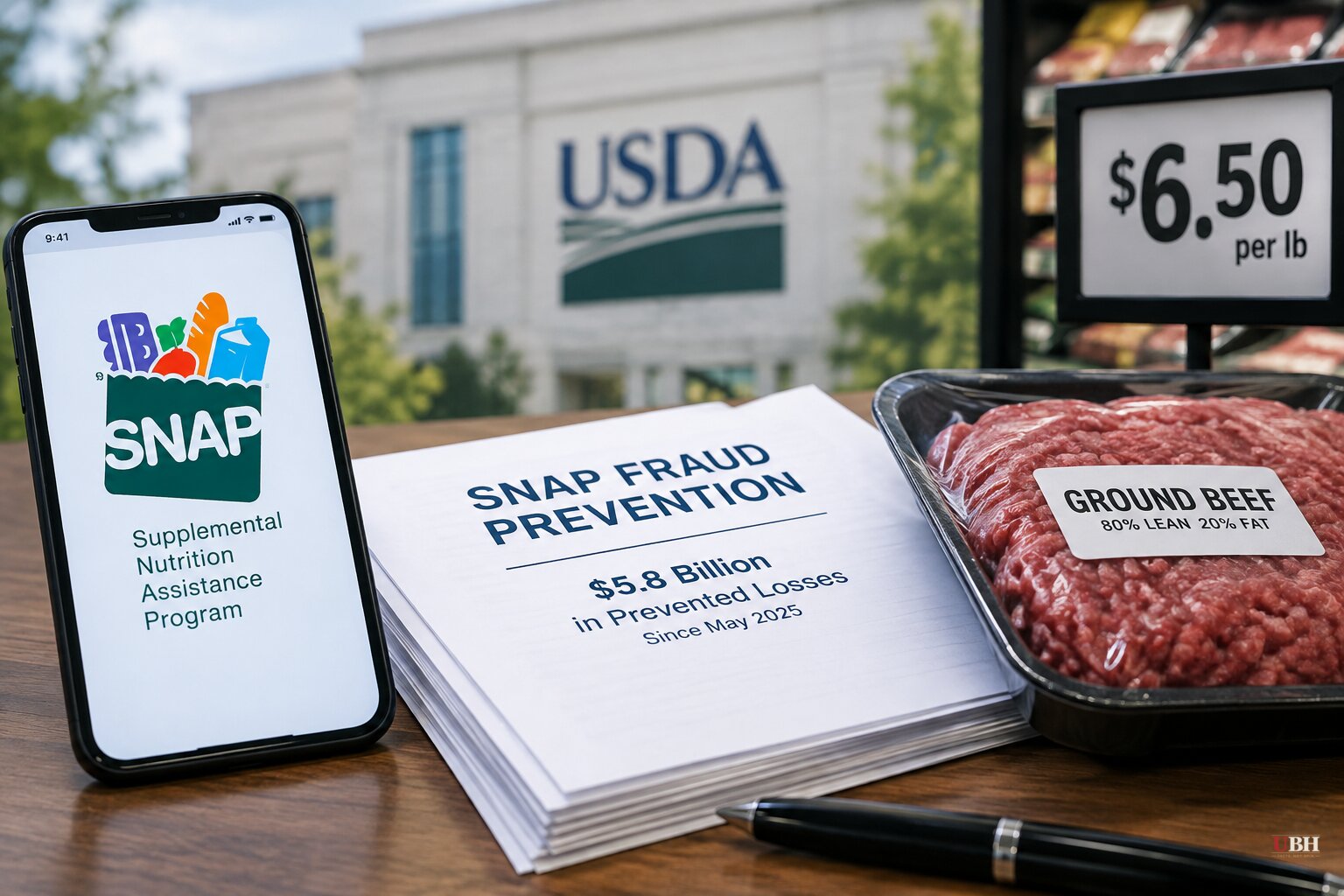
Since the USDA's SNAP integrity team was created in May 2025 to cross-check state welfare data against federal databases, Agriculture Secretary Brooke Rollins says the crackdown has now prevented $5.8 billion in taxpayer losses. She announced the figure in a September 15 post on X, tying it to the shutdown of nearly 1,840 illegal EBT-processing devices and the disqualification of 5,335 fraudulent retailers.
"Those who defraud SNAP are stealing from taxpayers and taking resources away from Americans who genuinely need assistance," Rollins said. "We have zero tolerance for this abuse, and we will continue pursuing bad actors and protecting the integrity of the program."
The $5.8 billion figure is USDA's own accounting, not an independently audited number. It follows a June 2026 USDA report that found 185,986 deceased people across 29 states were still receiving food stamps, and it traces back to a March 2025 executive order from President Donald Trump directing federal agencies to get "unfettered access" to data from federally funded programs.
Total monthly SNAP spending has dropped sharply on its own, from $13.4 billion in October 2022 to $6.8 billion in May 2026, according to the Epoch Times. That decline is largely explained by the expiration of COVID-era emergency allotments in 2023 and a shrinking caseload, not solely by fraud enforcement. The average household benefit in May 2026 was $344.51.
Meanwhile the program's maximum benefit is going up, not down. The ceiling for a family of four rises to $1,023 on October 1, from $994, under the annual cost-of-living adjustment.
A bigger structural change is still ahead. Under the 2025 One Big Beautiful Bill Act, states with SNAP payment error rates above 6 percent will face cost-sharing penalties starting in October 2027. More than 40 states and territories exceeded that threshold in fiscal year 2025, meaning a large chunk of the country has roughly a year left to fix its error rates before losing federal cost coverage.
In a separate interview with Breitbart's Alex Marlow, Rollins addressed the politically touchier issue of beef. Ground beef is running around $6.50 a pound, she said, driven by the smallest U.S. cattle herd in 75 years colliding with the highest beef demand in decades.
Rollins said the government's updated dietary guidance, rolled out earlier this year with Health Secretary Robert F. Kennedy Jr., pushed more protein and more beef consumption at the same time supply is historically tight. Normally, she said, higher prices would curb demand. "That is not happening in beef. People love their beef."
Her explanation for President Trump's August decision to lift tariffs on 300,000 metric tons of imported ground beef for 90 days: the U.S. has always imported two to three million metric tons of the roughly 13 million metric tons of beef Americans eat each year, and nearly all of that has historically been cheaper ground beef rather than steaks, which are almost entirely domestic. Rollins argued the targeted tariff relief could meaningfully lower ground beef costs for lower-income households that rely on it as an affordable protein.
That move drew criticism from some Republican lawmakers representing ranching communities, according to Breitbart, who worry that easing import restrictions undercuts American cattle producers already squeezed by the smallest herd in generations. That's a legitimate concern for ranchers watching input costs and herd rebuilding timelines up against a flood of cheaper imports, even a temporary one. Rollins didn't dismiss the tension. She told Marlow the tariff relief is a 90-day experiment and that Trump has said he'd reverse it if it doesn't move prices. "So we'll see. Hopefully, it works," she said.
Neither the fraud savings nor the beef tariff move has been independently verified outside USDA's own statements. Whether the ground beef tariff suspension actually pulls the $6.50-a-pound price down before its 90-day window closes, and whether states scramble to fix error rates before the October 2027 penalty deadline, are the two concrete things to watch.
Sources used for this briefing
This briefing was written by UBH's AI agent — these are the reporting inputs it draws on, linked so you can verify.


