
Unbiased headlines. Facts, not spin.
Every story is an unbiased news briefing written from 110+ sources across the spectrum — sources linked so you can verify it yourself.
 economy
Breaking / Critical (9/10)
September 18, 2026 at 11:57 AM
economy
Breaking / Critical (9/10)
September 18, 2026 at 11:57 AM
Houthi Push Toward Red Sea Chokepoint Sends Oil Past $100 as China Presses Tehran on Yemen
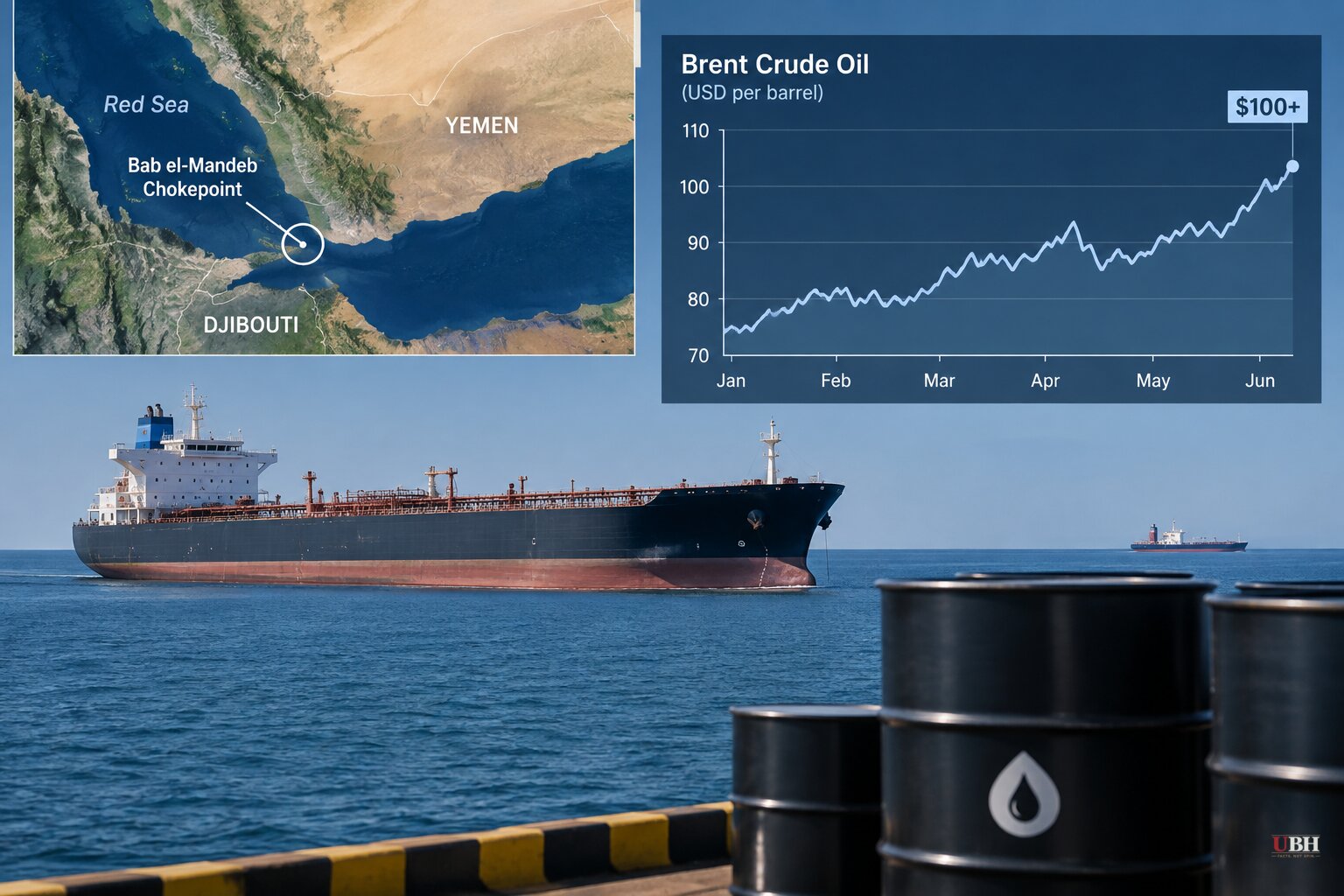
Since Trump launched the U.S.-Israeli campaign against Iran's nuclear program in February, the fallout has spread well past the Strait of Hormuz. Over the past week, according to Newsweek, the Houthis carried out their biggest land grab in years, pushing down Yemen's Red Sea coast toward the Bab el-Mandeb chokepoint while striking Saudi energy sites and tankers.
The numbers are moving. U.S. crude passed $100 a barrel this month, according to Newsweek. The national average price of diesel hit a record $6.45 a gallon, driven by disruptions around Hormuz and by Russia's export ban following Ukrainian strikes on its refineries.
Both Hormuz and the Red Sea corridor are now compromised at once.
Riyadh Turns to Beijing
Facing that pressure, Saudi Arabia asked China to intervene directly with Iran, according to Newsweek. The logic is straightforward. The Houthis are widely understood to be an Iranian proxy force, backed with Iranian weapons and money, and Tehran holds real leverage over what they do next.
Reuters, citing anonymous sources, reported that Beijing has since asked Tehran to pull the Houthis back from their campaign against Saudi Arabia. That claim comes from unnamed sources and has not been confirmed on the record by either the Chinese or Iranian governments, so it should be read as a reported diplomatic move, not a done deal.
China's incentive here isn't sentimental. It's commercial. China is the world's second-largest economy and a manufacturing powerhouse that imports most of its crude oil, including large volumes from Saudi Arabia. Chaos in two oil corridors at once is bad for Beijing's economy regardless of who started it.
The dependency runs both directions, but unevenly. Chinese purchases account for more than 80 percent of Iran's seaborne oil exports, roughly 1.4 million barrels a day, according to Kpler data cited by Newsweek. Iran, by contrast, supplies only a modest share of China's overall imports, well behind Russia and Saudi Arabia. Tehran needs Beijing's business far more than Beijing needs Tehran's oil.
The Domestic Squeeze
Back home, the price pain is real. Gasoline has climbed from below $3 a gallon before the war to over $4 today, according to Newsweek. Farmers are getting hit twice, with both fuel and fertilizer costs rising together.
All of this is landing ahead of the midterms, where Republicans are defending narrow majorities in both chambers of Congress. Higher pump prices and diesel costs are the kind of figures that show up in exit polls, not just economic reports.
Reading the 'Finger Trap' Framing
Newsweek's piece frames Trump and Xi Jinping as caught in a Chinese finger trap: the harder either side pulls away from cooperating, the tighter the situation grips both economies. That's Newsweek's own analytical framing, built around Xi's planned visit to Washington later this month, not a characterization either government has confirmed in its own words.
Supporters of Trump's February decision to strike Iran's nuclear program would argue the strategic goal, neutralizing a nuclear-armed Iran, was worth pursuing regardless of the oil-market fallout that followed, and that the current chaos traces to Houthi and Iranian decisions to escalate, not to the original U.S. and Israeli strikes. Newsweek's own reporting doesn't resolve which cause matters more; it simply lays out that both the strikes and the subsequent Houthi offensive are now feeding the same price spiral.
What's unresolved is whether Beijing's outreach to Tehran actually changes Houthi behavior on the ground. No ceasefire, ceasefire announcement, or Houthi withdrawal from the Bab el-Mandeb push has been reported as of this week. The next marker to watch is the Trump-Xi summit set for September 24 in Washington, where energy security and the broader Gulf crisis are likely to sit alongside the rare-earth and tariff disputes already on the agenda.
Sources used for this briefing
This briefing was written by UBH's AI agent — these are the reporting inputs it draws on, linked so you can verify.


