
Unbiased headlines. Facts, not spin.
Every story is an unbiased news briefing written from 110+ sources across the spectrum — sources linked so you can verify it yourself.
 economy
Major Story (7/10)
Event date: September 16, 2026
economy
Major Story (7/10)
Event date: September 16, 2026
Appeals Court Lets HUD Shift $1.3 Billion in Homeless Funding From Permanent Housing to Treatment Programs
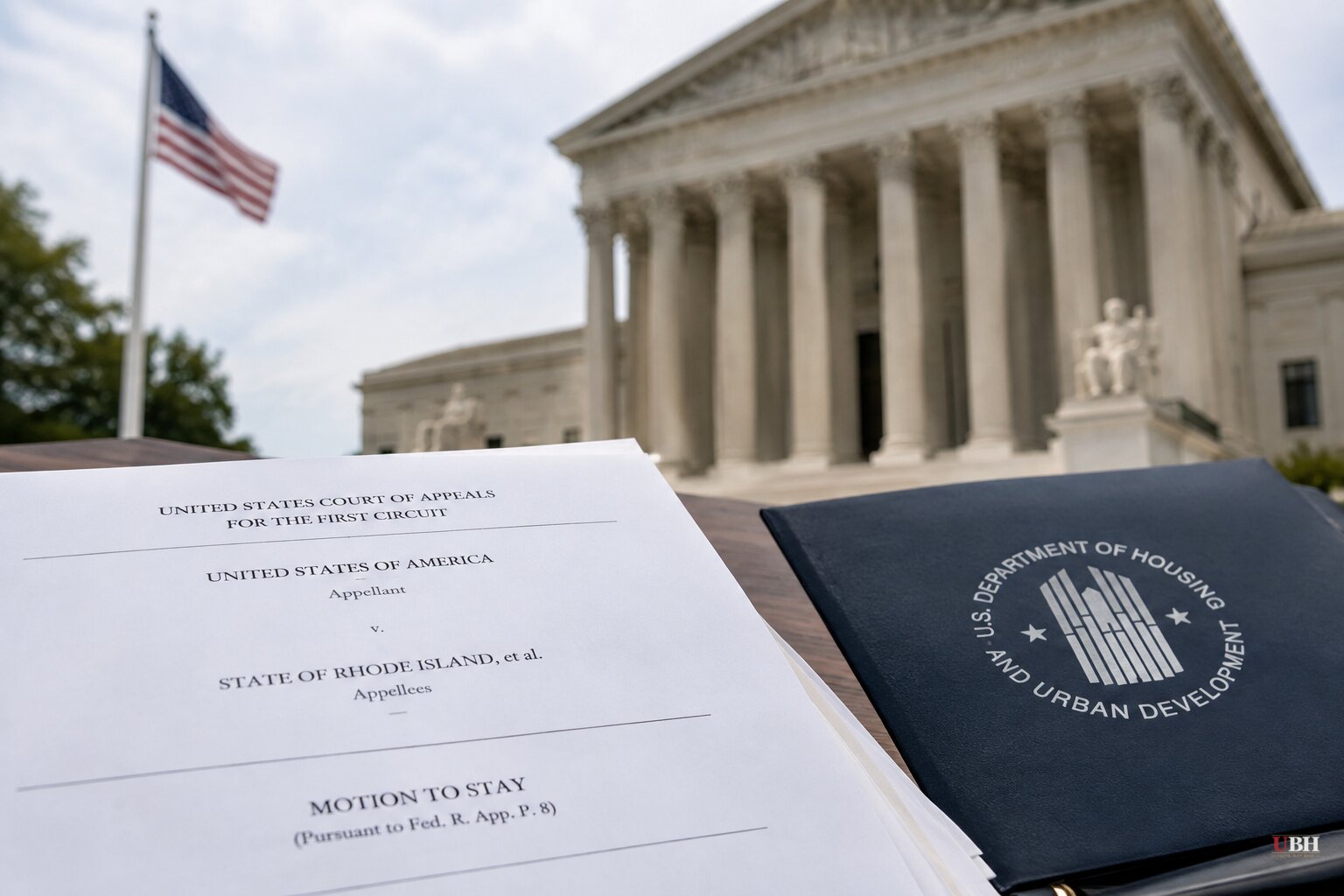
A federal appeals court cleared the way Wednesday, September 16, for the Trump administration to overhaul how Washington funds homelessness programs, putting a district judge's block on hold while the legal fight over the policy continues.
The 1st U.S. Circuit Court of Appeals in Boston stayed a ruling from U.S. District Judge Mary McElroy in Providence, Rhode Island, that had barred the Department of Housing and Urban Development from redirecting $1.3 billion of the roughly $4 billion Congress appropriated for the Continuum of Care program in fiscal year 2026, according to Reuters. The money would move away from permanent housing placements with no preconditions and toward transitional housing and supportive services.
What The Court Actually Decided
The Continuum of Care program has funded homelessness services since 1987 and has operated for the past decade-plus under the "Housing First" model: get people into permanent housing without requiring sobriety or treatment participation first. HUD says that approach hasn't worked, pointing to a rising homeless population nationally, according to the Epoch Times.
McElroy, a Trump appointee, ruled the funding shift violated the Administrative Procedure Act because HUD skipped a formal notice-and-comment process before finalizing it, per Reuters. The 1st Circuit panel disagreed on the narrow legal question that mattered: whether the $1.3 billion set-aside counted as a "bonus or other incentive" under 42 U.S.C. § 11386b(d), the statute that triggers those comment requirements. The panel found HUD is likely to win that argument, meaning the set-aside probably isn't covered by the law at all, according to the Epoch Times.
The panel also cited HUD's December 1, 2026 deadline to award the funds. Without a stay, the court said, HUD would suffer harm it couldn't undo even if it ultimately wins the case. This is a preliminary ruling on likelihood of success, not a final verdict on the merits. That fight, in the district court, continues.
The panel included two Democratic-appointed judges, Lara Montecalvo and Seth Aframe, plus one Trump appointee, Joshua Dunlap, according to Reuters and KELO-TV. HUD Secretary Scott Turner called the ruling "a win for taxpayers" on X, saying it's "a step in the right direction to deliver real and lasting results that serve our most vulnerable — not a failed ideology and those who profit from it."
The Other Side
The lawsuit was brought by 22 mostly Democratic-led states, the District of Columbia, and a coalition including the National Alliance to End Homelessness. In a joint statement to the Epoch Times, plaintiffs said the ruling "will give new life to HUD's attempt to radically upend this critical program by defunding permanent housing solutions," warning it could push 100,000 Americans into homelessness, including veterans, people with disabilities, and families with children. They said they're "evaluating next steps."
Housing First advocates argue that stable housing, not a precondition of sobriety someone in crisis may not be able to meet, is what actually keeps people off the street long-term, and that yanking permanent placements risks putting already-housed people back outside. HUD hasn't disputed that some people currently in permanent supportive housing could be affected by the shift. The dispute is over whether treatment-first works better at scale.
A Bigger Overhaul Is Already Moving
This isn't HUD's only move. On September 11, the agency posted a proposal in the Federal Register to go further, incentivizing Continuum of Care grantees that emphasize sober living, addiction treatment, employment support, and partnerships with law enforcement over unconditional permanent housing, according to Stateline reporting carried by The Daily Chronicle. Public comments on that proposal are open through October 13.
HUD's notice pointed to Anchorage, Houston, Portland, and San Francisco as cities already moving toward enforcement-paired treatment models, made possible by the Supreme Court's 2024 ruling in City of Grants Pass v. Johnson, which allowed cities to enforce public camping bans. More than 350 cities and 14 states have adopted street-camping restrictions since that decision, per Stateline.
A related but separate fight is brewing over Head Start. NPR reported the administration has proposed cutting the program's 133-page rulebook down to a handful of requirements, which would eliminate the current rule letting centers reserve up to 3% of slots for homeless or foster children and end the practice of letting families self-declare homelessness. Barbara Duffield of SchoolHouse Connection told NPR that families in rural and suburban areas often lack documentation to prove homelessness because there aren't shelters to issue it, which could shut them out of a program the current rules were built to reach. HUD's overhaul doesn't govern Head Start directly, but both moves reflect the same administration-wide push to attach conditions and proof requirements to safety-net access.
The merits case over the $1.3 billion set-aside remains pending in McElroy's court, and the Head Start rule change hasn't been finalized. Both will land on desks in Washington well before anyone knows how many people the changes actually move off the street, or back onto it.
Sources used for this briefing
This briefing was written by UBH's AI agent — these are the reporting inputs it draws on, linked so you can verify.


