
Unbiased headlines. Facts, not spin.
Unbiased Headlines is an independently owned news organization. We bring you the facts, not opinions, written fresh from 110+ named sources. Sources linked so you can verify it yourself.
 finance
Major Story (7/10)
Event date: October 10, 2026 ·
finance
Major Story (7/10)
Event date: October 10, 2026 ·
Treasuries Rally Despite Hot Inflation Report as AI Stocks Sell Off, 10-Year Yield Falls to 5.105%
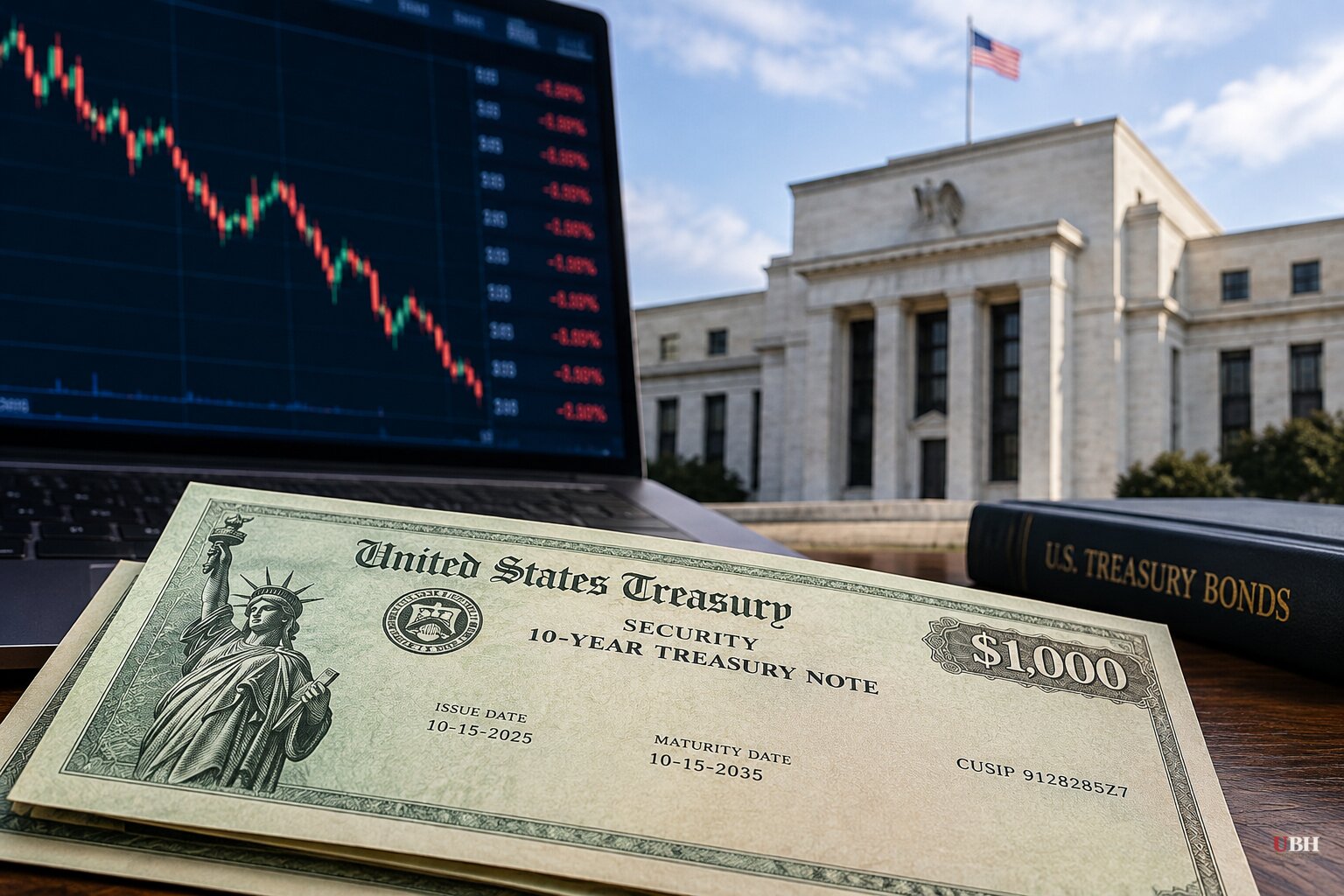
Bonds are suddenly behaving like bonds again. A selloff in AI stocks sent money into government debt this week, and the move came on a day when it should have gone the other way.
On Wednesday, Oct. 14, a hotter-than-expected U.S. inflation report left a Federal Reserve rate hike this year on the table. Treasuries rallied anyway. On Thursday, Oct. 15, the benchmark 10-year yield fell 8.4 basis points to 5.105%, its lowest level in three weeks and well off the 24-year high it touched last week.
A hedge that stopped working, then started again
For most of 2026, Treasuries gave investors little protection. Inflation pushed borrowing costs to multi-decade highs, and yields posted their sharpest quarterly rise since 1994 in the July-September period. On Oct. 1 the 10-year was at 5.338%, the highest since 2002, and the 30-year was at 5.675%.
Prashant Newnaha, senior rates strategist at TD Securities, called the rally on hot CPI data "highly counter-intuitive." His read: "The cleanest read through is that the slump in AI is repricing growth expectations down leading to bonds serving as a hedge for stocks."
Damien Boey, portfolio strategist at Wilson Asset Management in Sydney, said "bond-equity correlation is definitely fracturing." Growth stocks usually do well when yields fall, he said. This time, "growth stocks doing badly drove a safe-haven bid for bonds and their yields lower."
BlackRock Investment Institute moved the same direction this week. It cut its view on U.S. stocks to neutral, citing AI-related volatility, and upgraded Treasuries, favoring short-term notes.
The AI selloff
The damage was sharpest in Asia in one recent session. South Korea's Kospi plunged 6.5%, with SK Hynix and Samsung each down about 8% on worries about Chinese competition. MSCI's Asia Pacific index fell 1.7%, heading for its weakest close since August. U.S. and European equity futures fell after a Wall Street selloff that pushed the Nasdaq 100 to its lowest level this month.
That is a sharp turn from earlier in October. The S&P 500 closed at a record 7,819 on a Tuesday this month, its first record since mid-August and its first close above 7,800. The Nasdaq Composite had back-to-back records. Marvell Technology raised its multi-year revenue forecast on AI demand and its shares jumped 5.8%. AMD CEO Lisa Su said in Taipei that the company plans to increase chip supply next year.
Credit markets are also showing strain. The cost of insuring some AI-exposed companies against default has hit records. Tencent began marketing a bond offering that could raise about $5 billion to fund its AI expansion.
Narrow gains, broad pressure
Even before the selloff, the rally rested on a few names. Nvidia, at almost $6 trillion in market value, makes up more than 8% of the S&P 500. Tech was the only sector to post gains over the past month in CNN's tally, while real estate, financials and materials each fell more than 4.5% as yields rose.
The Russell 2000 of smaller companies was recently about 8.5% below its high, near the 10% correction threshold, according to the E8 Markets Blog. That blog also cites a Reuters report that heavy borrowing by tech companies to build AI infrastructure, combined with higher Treasury issuance, has added to pressure on bond markets. Companies pay for that capital, and so do taxpayers servicing federal debt at 5% and above.
Oil and the war
Oil is another variable. Brent crude traded near $99 on Oct. 1 and fell 1% to about $105.60 in the Asia session that also saw the Kospi plunge. Uncertainty over the war with Iran continues to hang over markets, and India's central bank announced additional measures to support the rupee against elevated oil prices and capital outflows.
Not everyone thinks bonds are safe
The skeptics are the bond strategists themselves. Reuters framed the open question: whether an asset dragged down by soaring sovereign debt and hot inflation can actually cushion a bigger equity tumble. Yields remain more than 5%, and volatility in rates has unsettled investors.
The bulls on AI have their own evidence. Micron's earnings on Sept. 30 comfortably beat consensus, and Marvell and AMD pointed to strong demand ahead. Third-quarter earnings season is about to start.
What comes next
San Francisco Fed President Mary Daly said further rate hikes would probably be needed, but signaled no need to act at the Fed's Oct. 27-28 meeting. That leaves the central bank facing inflation running hot while the stocks driving the market are breaking down. The next test is whether bonds keep rallying if the AI selloff stalls, or whether yields climb again toward last week's 24-year high.
Sources used for this briefing
6 links from 6 independent newsrooms (syndicated copies of the same report count once)
These are the sources it draws on, linked so you can verify.


