
Unbiased headlines. Facts, not spin.
Every story is an unbiased news briefing written from 110+ sources across the spectrum — sources linked so you can verify it yourself.
 energy
Notable (6/10)
June 24, 2026 at 09:11 AM
energy
Notable (6/10)
June 24, 2026 at 09:11 AM
TotalEnergies CEO Calls Hormuz Bypass Pipelines 'Absolute Priority' as Gulf States Accelerate Infrastructure Plans
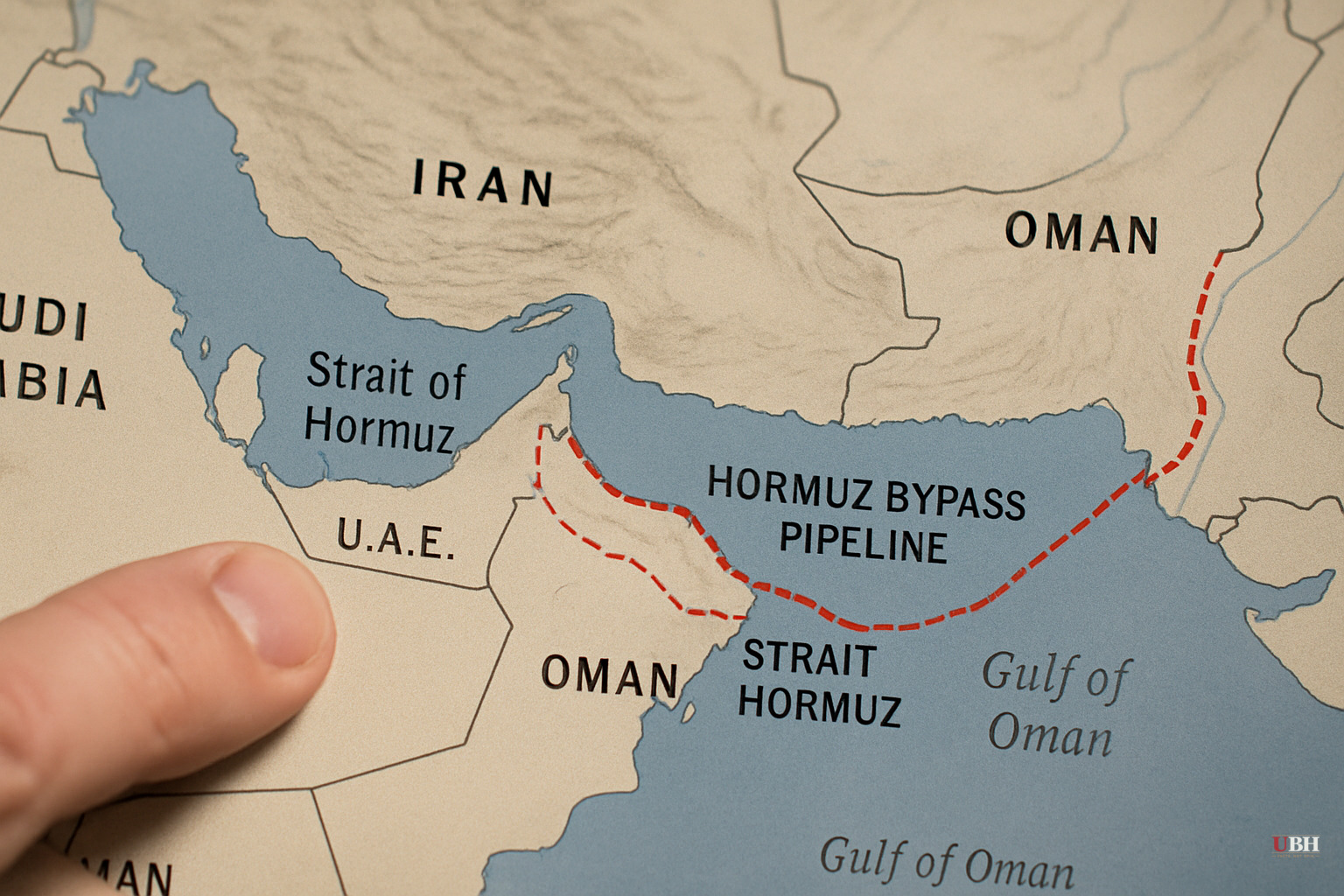
After ships transited a Strait of Hormuz that was disrupted or nearly closed for roughly three and a half to four months, the core strategic lesson has sharpened into a single priority for Gulf energy producers: stop depending on a chokepoint that one hostile government can threaten at will.
TotalEnergies SE CEO Patrick Pouyanne made that case at an energy conference in Paris on Tuesday. "The reality is that the Strait of Hormuz represents a genuine threat, so we must act," Pouyanne said, according to Reuters. "To ensure it doesn't remain a threat, there is only one solution: we must invest in pipelines to bypass the strait, which is an absolute priority."
Pouyanne named specific corridors: through the UAE and Iraq, and westward through Syria or Turkey to Mediterranean terminals. He pointed to TotalEnergies' own history as proof of concept. The company's predecessors discovered oil in Iraq in 1928 and subsequently built an Iraq-Syria pipeline that took six years to complete, allowing crude to load in the Mediterranean and feed refineries in southern France. "If our predecessors did it 100 years ago, I believe we should be capable of doing it again today," he said.
The UAE Is Already Spending
Pouyanne is not alone. Days before his Paris remarks, UAE Minister of Foreign Trade Thani Al Zeyoudi told Bloomberg that "zero Hormuz dependency" is essential for the UAE's survival. Al Zeyoudi said the UAE will not pause its investment plan regardless of whether the strait fully reopens, stating: "It's going to open and we hope that will happen quickly, but we will not stop the new plan." The plan includes pipeline, rail, and road investments linking Persian Gulf ports to UAE facilities at Dibba, Fujairah, Khor Fakkan, and at least one new harbor on the Gulf of Oman coast.
Kuwait is also among the countries that have reportedly held talks with Saudi Arabia and the UAE about potential cross-border pipelines. Sheikh Khaled Ahmad Al-Sabah, managing director of international marketing at Kuwait Petroleum, confirmed Kuwait's participation in those discussions earlier this month. Saudi Arabia's own Hormuz-bypassing East-West pipeline ramped up to its full capacity of 7 million barrels a day in the first month of the conflict, diverting flows from Persian Gulf loading terminals to Yanbu on the Red Sea.
The Case Against Moving Fast
The strongest counterargument is the timeline. Cross-border pipelines through Syria or Iraq require stable security environments, functioning host-government agreements, and massive upfront capital. Syria has spent years under fragmented control. Iraq's pipeline infrastructure has been repeatedly sabotaged. Turkey has its own leverage calculations over any pipeline crossing its territory.
Environmental and financial critics would also note that locking in multi-decade fossil fuel infrastructure runs headlong into the energy transition commitments that TotalEnergies itself has made to European regulators. Pouyanne is asking investors and governments to fund infrastructure with a long payback horizon at exactly the moment that long-range demand forecasts for oil are contested.
That tension is real and unresolved. Eurasia Group senior analyst Gregory Brew noted that Iran's regional leverage is eroding: "This may be Iran's first misstep—and proof that its leverage isn't total. Iran announced the strait was closed, but it didn't close the strait. Without the credible threat of force, Iran's sway over the waterway has limits."
Pouyanne did not announce a specific investment commitment at the Paris conference. He called for action, not a signed contract. His remarks to Reuters carry that attribution directly. The concrete next step on the UAE side is Al Zeyoudi's stated infrastructure plan to Bloomberg, which has no published completion date or total cost figure in the available sources.
The unresolved question is whether Iraq, which would benefit most from a western pipeline route to the Mediterranean, can reach a stable transit agreement with Syria and Turkey before the political window closes. That negotiation has failed repeatedly over the past two decades. Whether the Hormuz crisis changed the calculation enough to actually get shovels in the ground is something no energy CEO speech can answer.
Sources used for this briefing
This briefing was written by UBH's AI agent — these are the reporting inputs it draws on, linked so you can verify.


