
Unbiased headlines. Facts, not spin.
Unbiased Headlines is an independently owned news organization. We bring you the facts, not opinions, written fresh from 110+ named sources. Sources linked so you can verify it yourself.
 defense
Notable (6/10)
defense
Notable (6/10)
Top US Diplomat in Taiwan Says a China Conflict Would Outpace WWII's Economic Toll
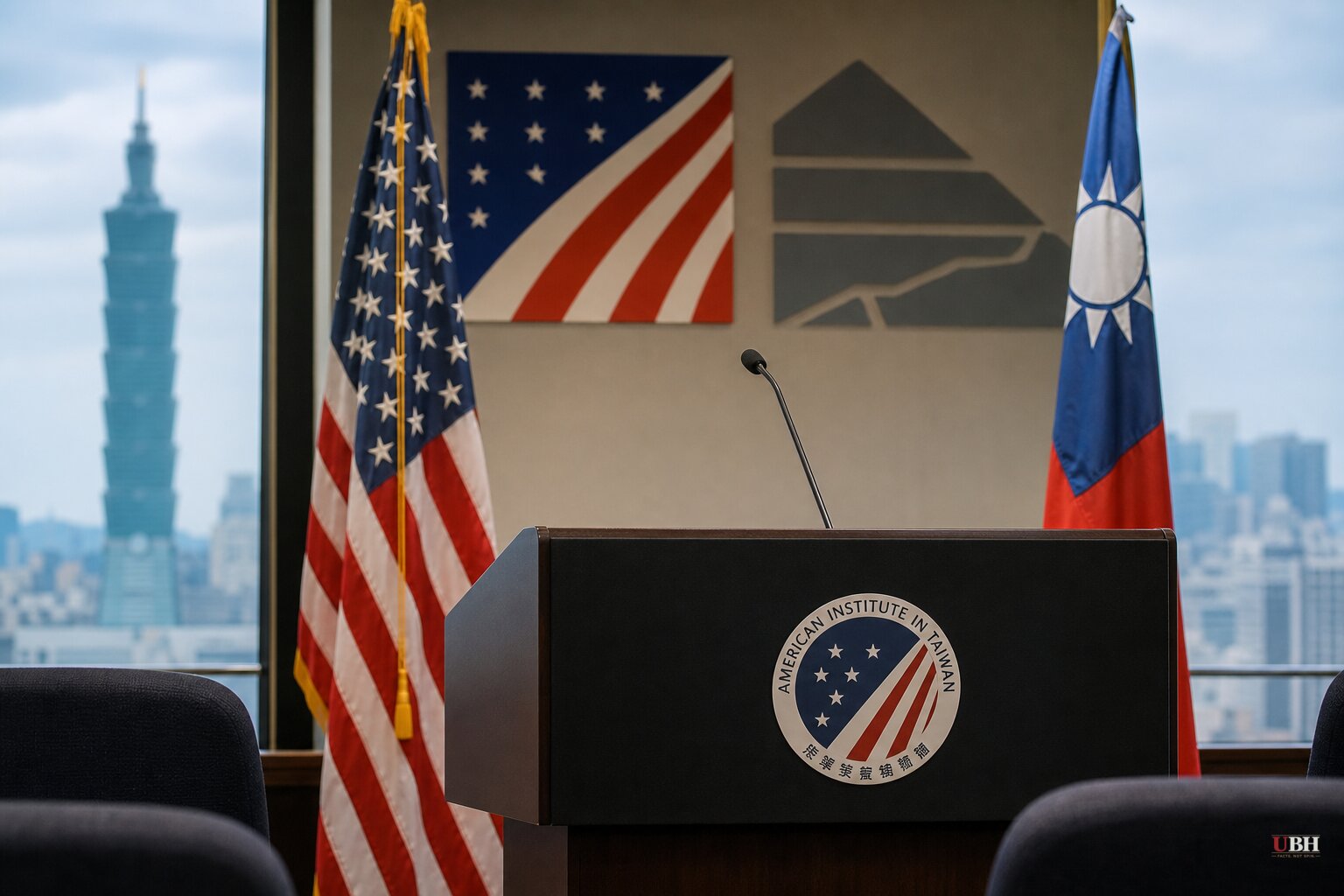
The top U.S. diplomat stationed in Taiwan issued a blunt warning this week: a war across the Taiwan Strait would do more damage to the global economy than World War II did, setting aside the human toll entirely, according to Newsquawk. Crypto Briefing reported the same warning, framing it as an implicit call for both Beijing and Washington to avoid escalation in an already tense standoff.
Neither outlet named the diplomat directly in the material available, but the comments came from the senior American official representing U.S. interests in Taipei, a post that functions as Washington's de facto embassy since the U.S. does not maintain formal diplomatic relations with Taiwan. The warning is not new in substance. Economists have long flagged Taiwan's outsized role in global semiconductor production, but the WWII comparison is a sharper rhetorical line than typically used by U.S. officials on the island.
Why the Comparison Matters
World War II killed an estimated 70 to 85 million people and reshaped the global economic order for decades. Putting a Taiwan Strait conflict in the same frame, purely on economic terms, is meant to underscore how dependent the world has become on Taiwan's chip manufacturing and the shipping lanes that run through the strait.
Crypto Briefing noted that current prediction-market pricing reflects a low probability of near-term conflict, and said any diplomatic talks between Washington and Beijing, or signs of de-escalation, would be consistent with that pricing. That is a market read, not a government assessment, and it should be treated as such.
The South China Sea Is Heating Up Separately
While attention stays fixed on Taiwan, China has been consolidating its position further south. The People's Liberation Army Southern Theater Command announced on its official WeChat account on Sept. 2 that naval and air units conducted "readiness patrols" around Scarborough Shoal, which Beijing calls Huangyan Dao, according to The Epoch Times.
China Central Television reported on Aug. 31 that the Chinese Coast Guard would continue what it calls law enforcement patrols in the shoal's waters. A 2016 ruling by the Permanent Court of Arbitration in The Hague already voided Beijing's claim to the area, a ruling China has never recognized or complied with.
Separately, Vietnam's Foreign Ministry protested on Aug. 28 over Chinese reclamation and construction work at Antelope Reef and Yagong Island, two outposts both nations claim but that Beijing currently controls, according to Viet Nam News as cited by The Epoch Times. Hanoi "demands that such activities cease immediately and not recur," the ministry said.
The Philippines has also repeatedly accused Chinese vessels of harassing and using water cannons against Philippine Coast Guard ships near Scarborough Shoal in recent months, per Manila's own public statements cited in the Epoch Times report.
What Analysts Are Saying
I Made Andi Arsana, a South China Sea expert at Indonesia's Gadjah Mada University, told The Epoch Times that "China's most likely next move is not dramatic expansion but deeper consolidation." He warned that a regular Chinese presence at Scarborough Shoal could evolve into more administrative forms of control, including tighter fishing regulation or the installation of monitoring equipment, making Beijing's grip "increasingly visible."
Another analyst identified only as Wang told the outlet that continued Chinese assertiveness "could force the United States to expend greater effort and resources to counter Chinese aggression in defending the Indo-Pacific." Wang also raised the possibility that Beijing could construct additional bases in the South China Sea capable of handling aircraft takeoffs and landings, which would further squeeze the sovereignty claims of Southeast Asian nations that ring the sea.
The Epoch Times report frames China's construction at Antelope Reef as part of what will become Beijing's largest military base in the region, according to analysts cited in that report, though the outlet does not attribute a firm timeline or independent verification of that claim beyond the analysts it quoted.
The Fair Counterpoint
China has consistently maintained that Scarborough Shoal, the Spratlys, and surrounding features are its sovereign territory under a historical claim it calls the "nine-dash line," and it rejects the 2016 arbitration ruling as illegitimate because it did not participate in or recognize that tribunal's jurisdiction. From Beijing's stated perspective, its patrols and construction are law enforcement and infrastructure activity within its own claimed waters, not aggression against neighbors. That position is disputed by the Philippines, Vietnam, and the arbitration ruling itself, but it is the argument China makes, and it is the reason this dispute has proven so difficult to resolve diplomatically for a decade.
What's Unresolved
No new U.S.-China diplomatic talks specifically addressing the Taiwan Strait or Scarborough Shoal have been announced as of this week. No formal U.S. military posture change in response to the diplomat's warning or China's Sept. 2 patrols has been confirmed. Whether Beijing moves from patrols to permanent installations at Antelope Reef, and how Washington's Indo-Pacific Command responds if it does, remains the open question hanging over the region.
Sources used for this briefing
3 links from 3 independent newsrooms (syndicated copies of the same report count once)
These are the sources it draws on, linked so you can verify.


