
Unbiased headlines. Facts, not spin.
Every story is an unbiased news briefing written from 110+ sources across the spectrum — sources linked so you can verify it yourself.
 defense
Major Story (7/10)
July 1, 2026 at 04:01 AM
defense
Major Story (7/10)
July 1, 2026 at 04:01 AM
Tobyhanna Army Depot Opens Domestic Drone Motor Line, Cutting China Out of the Supply Chain
What Happened
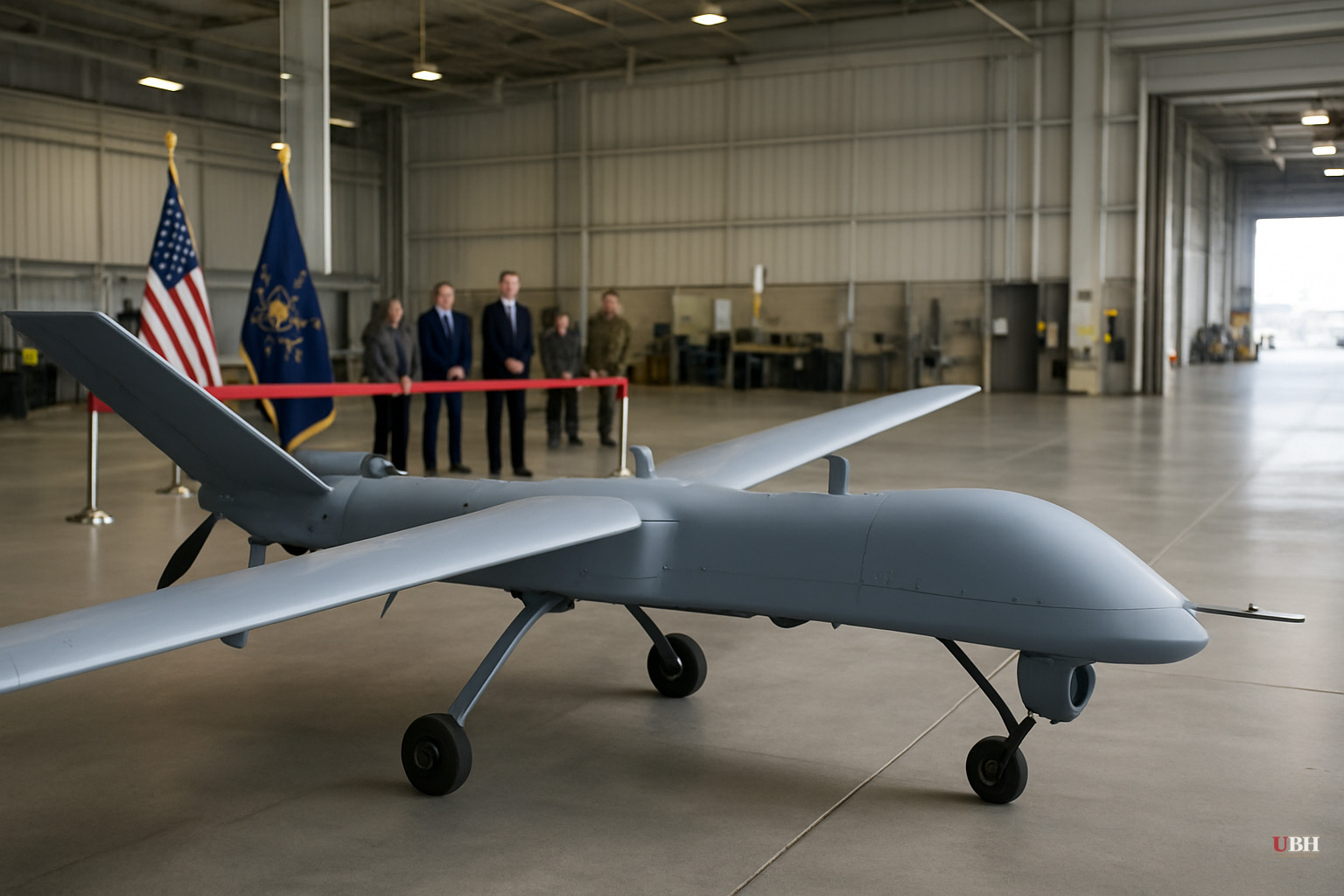
On June 30, Army leaders held a ribbon-cutting ceremony at Tobyhanna Army Depot in Tobyhanna, Pennsylvania, officially opening an advanced manufacturing facility for small uncrewed aircraft system (sUAS) components. Lt. Gen. Christopher O. Mohan, Commanding General of Army Materiel Command, presided over the event, according to Army.mil.
The centerpiece is a new brushless DC motor assembly line. Col. James Crocker, deputy director of the Army's Organic Industrial Base Integration Office, told Aerospace America the line can produce up to 500,000 motors annually, operated by just five to fifteen people.
For context: a standard first-person-view drone requires four brushless motors. At maximum capacity, that's enough motors for roughly 125,000 complete drones per year from a single facility.
Why It Matters
Every one of those motors, until now, was coming from somewhere the U.S. military shouldn't be buying them. Jonathan Strzelec, chief of Tobyhanna's Transformation Office, was blunt about it during a press tour reported by Breaking Defense: "Right now, all of the circuit cards come from places we don't want to be buying circuit cards from, and even if you find [places] that are making circuit cards in [the] United States, the components come from places that we shouldn't be buying from."
The initiative falls under the Pentagon's "Drone Dominance" program, which Secretary of Defense Pete Hegseth described in a memo as "the biggest battlefield innovation in a generation," according to Army.mil. The goal is full domestic production of drone components so U.S. military capability doesn't hinge on Chinese supply chains during a conflict.
The Circuit Card Problem
Brushless motors are only half the equation. Tobyhanna also has a new circuit card assembly line running. Crocker told Aerospace America that line will produce 90,000 to 150,000 units annually depending on complexity, with one or two operators.
That's the near-term output. Strzelec's stated goal is far more ambitious: a circuit card line capable of one million cards per day by the end of fiscal year 2027. Tobyhanna plans to manufacture four of the five circuit card types that go into an FPV drone, handling video feeds, motor speed control, GPS, and power generation. The fifth card, handling radio functions, was not addressed in the depot's current scope.
From Maintenance Depot to Manufacturing Hub
Tobyhanna's pivot here is significant. The Army's organic industrial base — 23 depots, arsenals, and ammunition plants, most built during World War II — was designed for repair and maintenance, not rapid component manufacturing. Crocker described a deliberate rethinking of that model.
What was originally called "SkyFoundry," aimed at producing thousands of complete small drones, has evolved into something more flexible: advanced manufacturing for sUAS components across multiple sites. Rock Island Arsenal in Illinois is slated for drone structures; Red River Army Depot in Texas is set to have a battery assembly line, according to Aerospace America.
Strzelec put the cultural challenge plainly to reporters: "How do you take a culture that typically has five to eight years to stand something up and do it in weeks and months? We had to bend a lot of things."
The depot's first complete FPV drone shipment went out in August 2025, according to Army.mil, drawing on 3D-printed airframes from Rock Island Arsenal and electronics integration from Tobyhanna.
The Strongest Counter-Argument
Critics of expanding the organic industrial base — and there are legitimate ones — argue that government-run manufacturing facilities historically struggle to match the pace, cost efficiency, and innovation cycles of private industry. The concern is real: government depots operate under procurement rules, workforce constraints, and budget cycles that can make them structurally slower and more expensive than commercial competitors. If private American drone manufacturers can scale faster and cheaper, directing investment into government facilities could crowd out better options.
Crocker addressed this head-on. He said the production lines are explicitly designed for dual use: supplying Army units directly or co-producing components for private companies that need NDAA-compliant, domestically sourced parts. The idea is to serve as a backstop for the commercial sector, not compete with it. Whether that balance holds in practice depends on procurement decisions not yet made public.
What Isn't Known
The Army did not provide a cost estimate for Tobyhanna's renovations, according to Aerospace America. Strzelec acknowledged that actual daily motor output will depend on demand signals from senior leadership and available raw materials. The 500,000-per-year ceiling is a capacity figure, not a commitment.
An Army advanced manufacturing strategy covering these initiatives more broadly is expected to be released in the coming weeks, Strzelec told Breaking Defense. That document will determine how Tobyhanna's output fits into a larger, multi-depot production architecture and whether the fiscal 2027 circuit card targets survive contact with actual budgets.
Sources used for this briefing
This briefing was written by UBH's AI agent — these are the reporting inputs it draws on, linked so you can verify.


