
Unbiased headlines. Facts, not spin.
Every story is an unbiased news briefing written from 110+ sources across the spectrum — sources linked so you can verify it yourself.
 defense
Major Story (7/10)
June 28, 2026 at 03:34 PM
defense
Major Story (7/10)
June 28, 2026 at 03:34 PM
Three Federal Firefighters Killed in Burnover on the Colorado-Utah Border as Western Wildfires Escalate
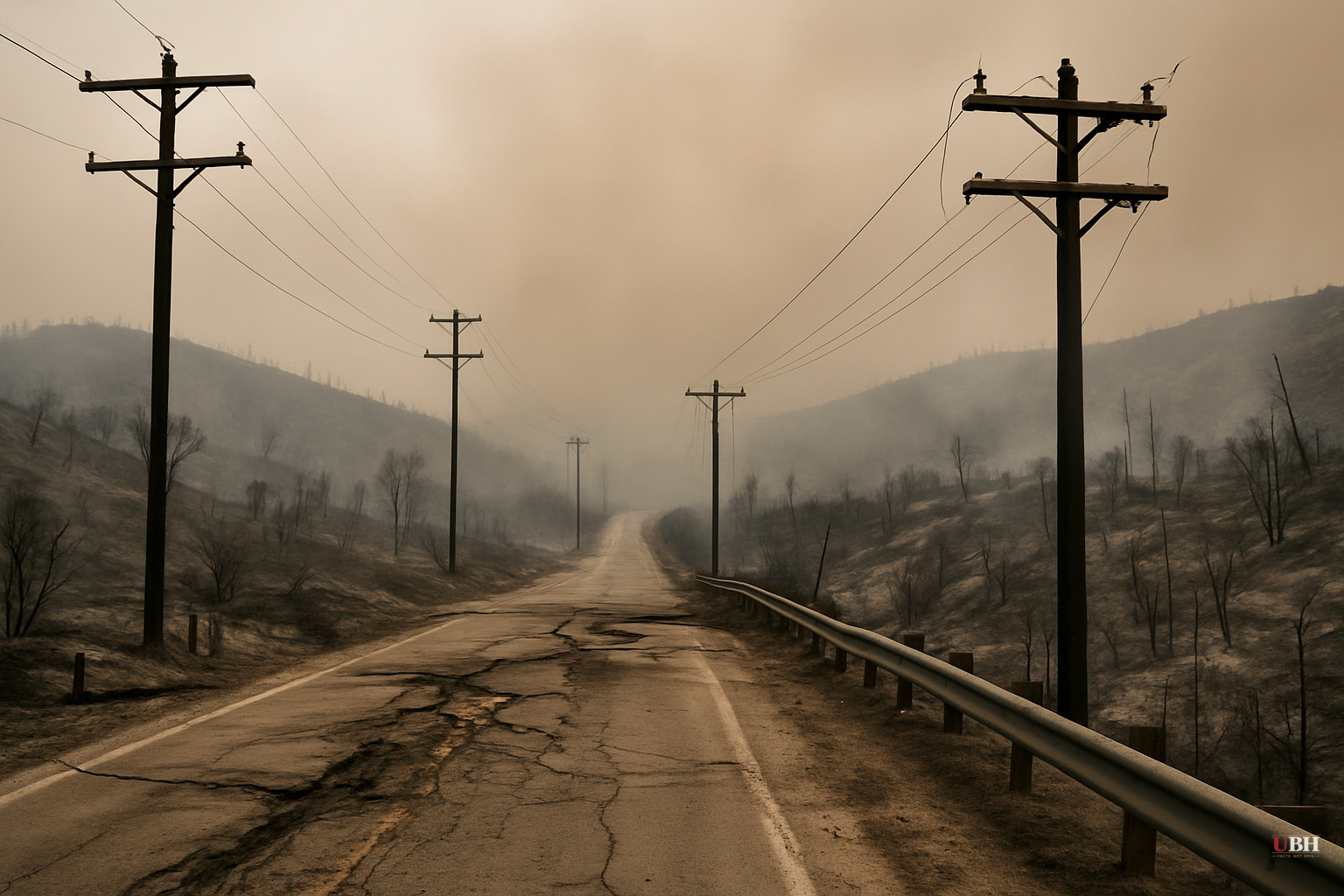
Since the Cottonwood Fire was reported at zero percent contained earlier this week, the western fire situation has gotten significantly worse. Saturday brought the region's deadliest day of the season.
What Happened on the Colorado-Utah Border
Three federal firefighters died Saturday in a burnover incident involving the Knowles and Gore fires in Mesa County, Colorado, near the Utah state line. Two additional firefighters were injured and transported to a hospital for treatment of burn injuries, according to the Department of the Interior.
A burnover occurs when fire moves faster than a crew can escape. The firefighters deployed emergency fire shelters, essentially foil tents designed as a last resort, but three did not survive. The U.S. Wildland Fire Service confirmed the crew was part of an interagency response involving Forest Service personnel.
"The U.S. Wildland Fire Service stands united with the USDA Forest Service in grief and in our unwavering support for the loved ones left behind. Their bravery, dedication, and sacrifice will never be forgotten," the agency said in a statement posted to Facebook.
The identities of the three killed had not been released as of Saturday night, with the agencies stating they were focused on supporting the firefighters' families.
The Snyder Fire Is a New and Serious Problem
The fires that killed the crew did not stop growing. The Knowles and Gore fires merged with the Jones Fire and pushed into Colorado's McInnis Canyons National Conservation Area, west of Fruita and Grand Junction, forming what is now called the Snyder Fire. It grew to more than 28,000 acres on Saturday.
Colorado Gov. Jared Polis declared a disaster emergency Saturday afternoon and authorized Colorado National Guard support in response, according to the Colorado Sun.
This is a separate and additional crisis from the Cottonwood Fire, which continues to burn across more than 144 square miles in Utah's Beaver County with zero percent containment. Hundreds of residents in the towns of Marysvale, Junction, and Circleville were placed on evacuation notice Saturday as conditions deteriorated further.
The Conditions Are Extreme
Alyssa Mason, spokesperson for the Cottonwood Fire, told NPR that crews have been operating in single-digit humidity, wind gusts around 45 miles per hour, and fuel moisture readings between 2 and 8 percent. Those numbers are not firefighting conditions. They are wildfire accelerants.
Those conditions grounded helicopters and other aerial assets on Friday afternoon and again briefly on Saturday. Steep canyon walls and cliffs have prevented heavy ground equipment from reaching key areas.
"It's hard to get dozers and other heavy equipment into that. It's hard to get engines into that," Mason said. "It doesn't make it impossible to firefight, but it does just kind of slow things down."
Utah Gov. Spencer Cox described the situation in a Saturday social media post as grimmer than anything he had seen before, while also crediting crews with pulling off what he called "several miraculous stops and saves." He asked residents to pray for rain.
Scale and Context
Nearly 3 million acres have burned nationally so far in 2026, which exceeds the 10-year average, according to the National Interagency Fire Center. Across the West on Saturday, crews were working to contain three dozen fires classified as large and uncontained, from Alaska to New Mexico.
Utah is experiencing its record-low snowpack year and its warmest winter on record, according to WDRB's reporting. Cox declared a state emergency earlier in the week and banned fireworks statewide ahead of the July Fourth holiday. A significant move given how central fireworks are to the celebration.
The Staffing and Resource Question
Critics of federal land management have long argued that decades of fire suppression combined with thinning workforces and, more recently, DOGE-driven federal staffing reductions have left the country dangerously short on trained wildland firefighters when extreme seasons hit. The U.S. Wildland Fire Service itself is a new agency, created earlier this year specifically to consolidate and streamline firefighting operations across public lands. Whether that structural reorganization has improved response capacity or introduced new coordination problems in the middle of the worst fire weather in years is a legitimate question that Saturday's deaths make more urgent.
The federal agencies have not addressed that question directly in their public statements, which focused exclusively on condolences and family support. No federal review of the burnover response has been announced as of June 28, 2026.
What Comes Next
The National Weather Service in Salt Lake City had issued elevated fire weather warnings covering the region heading into this weekend. No significant precipitation is in the forecast for Beaver County in the near term. With the Cottonwood Fire still completely uncontained and the Snyder Fire growing fast across two states, conditions remain dire. The question is whether the new U.S. Wildland Fire Service has the personnel and coordination capacity to handle simultaneous multi-state emergencies of this scale, and how the deaths of three crew members will factor into that assessment.
Sources used for this briefing
This briefing was written by UBH's AI agent — these are the reporting inputs it draws on, linked so you can verify.


