
Unbiased headlines. Facts, not spin.
Unbiased Headlines is an independently owned news organization. We bring you the facts, not opinions, written fresh from 110+ named sources. Sources linked so you can verify it yourself.
 economy
Major Story (8/10)
Three Fed Officials Call for More Rate Hikes Days After Holding at 3.75% to 4%
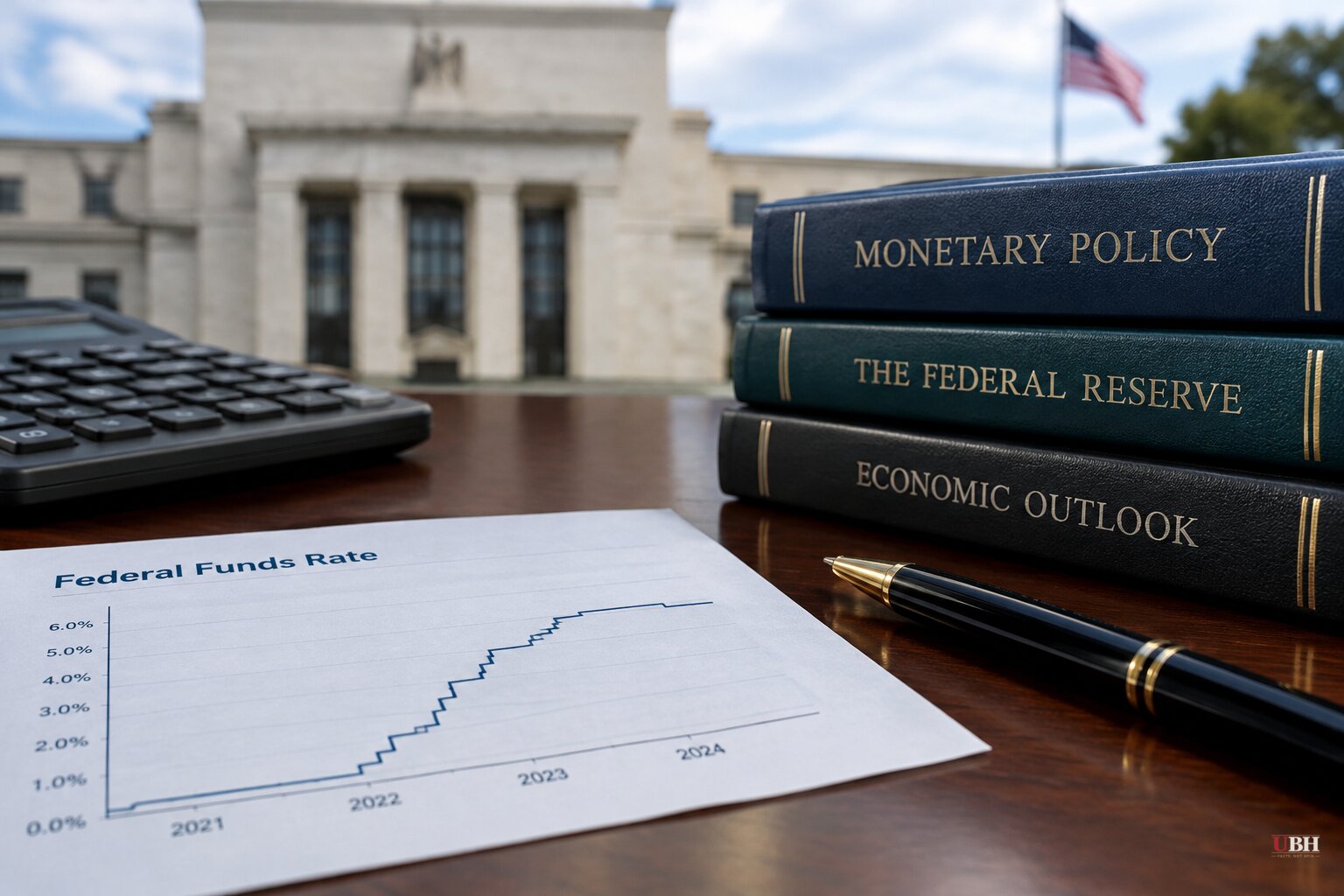
Since the Federal Reserve raised rates in September for the first time in three years, then held steady on Wednesday, Oct. 28, the central bank's own officials have been quiet. That ended Friday, Oct. 30, when the post-meeting blackout lifted and three Fed presidents said more tightening is coming.
The benchmark rate sits at 3.75% to 4%. Logan, Musalem and Barkin all said it needs to go higher.
Logan: two more hikes, then a pause
Logan, who votes on the FOMC this year and backed Wednesday's hold, said in a speech at Davidson College that the committee "needs to implement at least two more 25-basis-point rate increases." She called the current level of price pressure, and the time inflation has run above 2%, "unacceptable."
She estimates the fed funds range is at least 50 basis points below the level that would begin to restrain inflation. After two more hikes, she said, "it would make sense in my view to pause and examine economic and financial developments."
Logan also said the Fed need not move at every meeting. "Skipping a meeting does not change the monetary policy destination," she said. She told the audience that holding this week came amid volatile markets and gave the public time to adjust to higher borrowing costs.
Musalem: soon, and in small steps
Musalem, who has no vote this year, spoke to the Shadow Open Market Committee in New York. "I judge that additional firming of monetary policy will be necessary, and soon," he said.
His argument is about timing. "Incremental adjustments made earlier are usually less disruptive than larger and abrupt actions taken later," he said. He added that moving in smaller steps while inflation expectations are anchored gives the Fed a better chance of avoiding damage to jobs and growth.
Musalem described the economy as "resilient," citing Thursday's GDP report showing 3.4% growth, the AI buildout and financial conditions he said "remain accommodative." He called the labor market "remarkably stable and balanced," with unemployment at 4.2%.
Barkin: direction is clear, pace is the question
In a SiriusXM Business Radio interview, Barkin said, "inflation's high, demand's solid, unemployment's relatively low, and so I think the direction of travel is pretty straightforward." Then he added: "The question though is pace."
Barkin said a gradual approach makes sense when the Fed is "not much behind the curve."
The inflation numbers behind it
The Fed's preferred gauge, the PCE price index, rose 3.6% in September, up from 3.4% in August. It had run 3.8% in May and 3.5% in June before easing. Inflation has been above the 2% target since March 2021, according to the Fed.
Higher energy prices drove much of this year's increase. The Fed said Wednesday that inflation "remains elevated," and Breitbart's account of the statement notes that price pressures have lately spread to a broader range of goods and services.
The committee's Wednesday vote was split. Governor Lisa Cook and Cleveland Fed President Beth Hammack dissented, preferring an immediate quarter-point hike.
The case for patience
Not everyone at the Fed is in a hurry. Governor Christopher Waller said in an Oct. 8 speech that he expects more hikes but that "the hikes do not need to come at consecutive meetings, but they should be in place in an acceptable period of time." New York Fed President John Williams has said he is penciling in one more hike this year and none next year.
The labor data gives patience some support. September payrolls rose just 29,000 against a consensus forecast of 90,000, down from 133,000 in August. Jay Woods of Freedom Capital Markets said the debate is "about the pace of tightening, not necessarily its direction," and that the September hike needs time to work through the economy.
Still, unemployment is 4.2%, which Musalem noted is the median of FOMC participants' long-run projections.
A new meeting format from Warsh
At Wednesday's press conference, Chair Kevin Warsh announced that beginning next year one of the Fed's eight meetings will focus on broader economic questions and monetary strategy rather than setting rates. No post-meeting statement will follow that session. Warsh said he expects such strategy meetings to expand to twice a year in 2028.
What comes next
Fed funds futures put the odds of a quarter-point hike in December at roughly 76%, according to CME's FedWatch tool. Traders also expect another hike in March.
Logan will vote at that December meeting. Her speech suggests that even a hawk is open to skipping a meeting so long as the two-hike destination holds. Whether December delivers the first of those hikes, or a skip, now depends on the next inflation and jobs reports.
Sources used for this briefing
7 links from 7 independent newsrooms (syndicated copies of the same report count once)
These are the sources it draws on, linked so you can verify.


