
Unbiased headlines. Facts, not spin.
Unbiased Headlines is an independently owned news organization. We bring you the facts, not opinions, written fresh from 110+ named sources. Sources linked so you can verify it yourself.
 economy
Notable (6/10)
Alaska Air Group Cuts About 200 Jobs, Warns of Up to $700 Million Loss as Jet Fuel Costs Surge
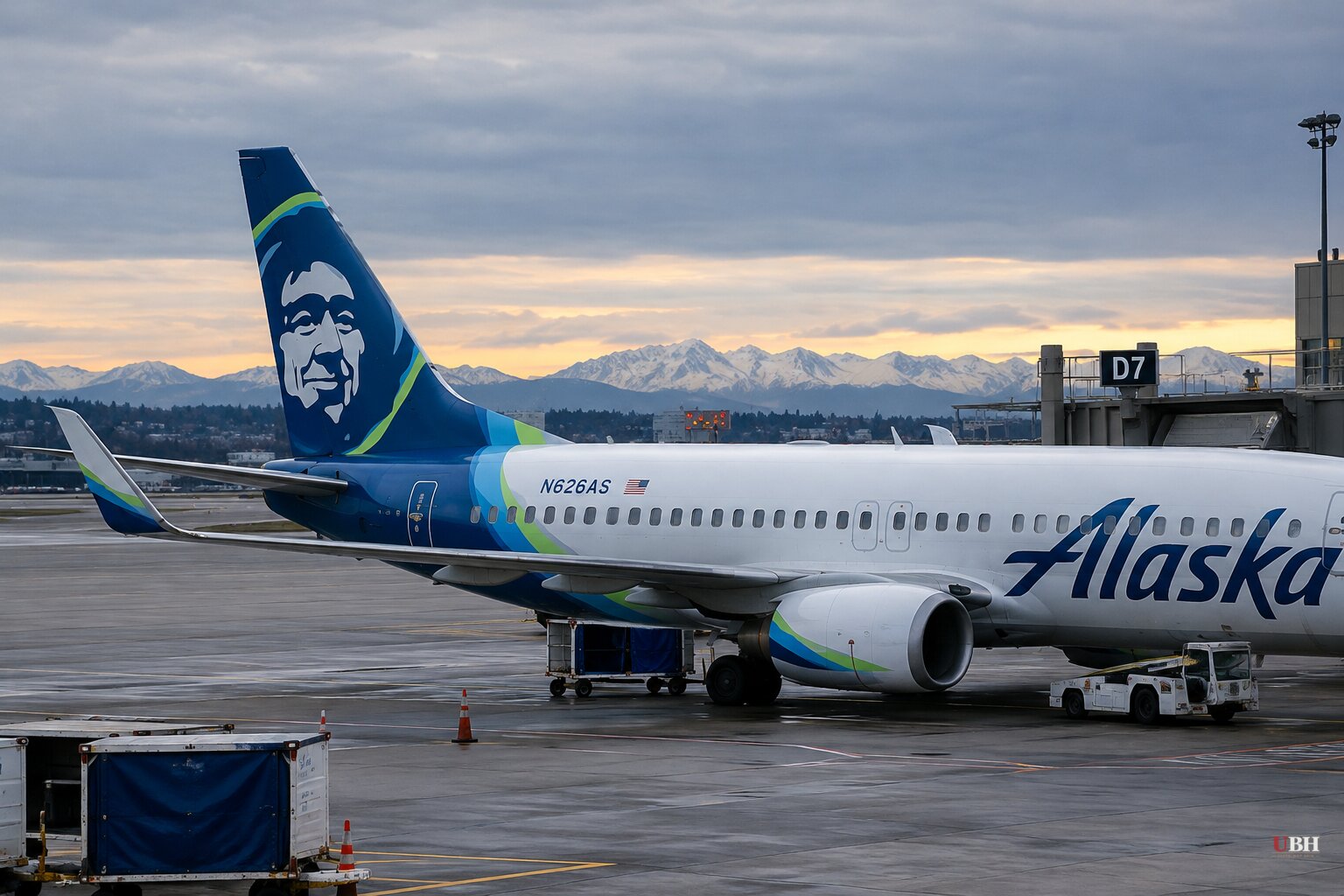
Alaska Air Group said Friday, Oct. 30, that it will eliminate about 200 non-contract positions. CEO Ben Minicucci told employees the company could lose as much as $700 million this year if current conditions persist.
That would be Alaska's first adjusted pretax loss outside the pandemic since 2003.
The cuts
The reductions hit less than 1% of the company's roughly 32,500 employees, a company spokesperson said. Of the 200 jobs, 125 are in Washington state and 48 are in Hawaii.
No frontline or non-management jobs are affected. Pilots, flight attendants, airport guest service workers and maintenance employees are not part of the cuts. The eliminated roles are nonunion, back-office positions.
Affected employees will work through Nov. 13. They will keep getting paid through Dec. 31, along with severance and other support, according to the memo.
At Hawaiian Airlines, CEO Diana Birkett Rakow told staff that of the 48 affected positions, 40 will be eliminated outright and eight employees will be offered other jobs within the airline. Two senior leaders, Jim Landers, head of Hawaii operations, and Shelly Parker, head of guest operations, will retire at the end of the year. Their positions will be eliminated after they leave.
Minicucci's memo
"Despite having the right strategy and strong momentum, fuel prices and geopolitical challenges are putting significant financial pressure on our business," Minicucci wrote.
He also pointed the finger inward. "We must return to the financial discipline that has long been a key competitive advantage," he said, adding that overhead expenses had "grown at a disproportionate rate to revenue" in recent years.
He said Alaska will keep investing in its fleet, guest experience, capacity and network even as it tightens spending.
The fuel math
Alaska last week forecast a full-year adjusted loss of $5 to $5.50 per share. It cited $1.8 billion in additional fuel costs compared with its original annual plan.
The carrier now expects fourth-quarter fuel costs of $4.65 to $4.85 per gallon. Its initial 2026 plan assumed $2.50.
Revenue is not the problem. Third-quarter revenue rose 14% from a year earlier. But the adjusted pretax margin fell to 1.1% from 4.6% a year ago.
Alaska lost $416 million in the first nine months of the year, compared with a $79 million profit in the same period of 2025, according to The Seattle Times. MyNorthwest has also reported that the company planned to borrow as much as $1 billion as fuel costs strained its finances.
An industry-wide squeeze
The war involving Iran has pushed oil prices up, and airlines are feeling it. Labor Department data show US airfares rose an average of nearly 23% year over year in the seven months through September.
That still has not been enough. Delta Air Lines, American Airlines and Southwest Airlines have each cut their 2026 earnings forecasts.
Alaska is the one putting a specific loss figure and a layoff count on the table.
Expansion continues
The cuts come as Alaska pushes into premium and international travel following its acquisition of Hawaiian Airlines. Strategy includes premium cabins, loyalty programs and a bigger long-haul network out of Seattle.
The airline plans new nonstop flights from Seattle to Athens, Paris, Osaka and Tahiti next spring. It still expects to fly slightly more over the next few months than it did a year ago, with most of the growth on international routes. Alaska has not announced any route cuts.
The $700 million figure is conditional. Minicucci said it applies "if current conditions persist," which ties the outcome to where jet fuel prices go from here. A $700 million loss is not a forecast of insolvency, and Alaska remains a large carrier with billions in revenue.
It is unresolved how long the elevated fuel prices will last. If fourth-quarter costs land inside the $4.65 to $4.85 range, Alaska's first non-pandemic adjusted pretax loss in over two decades becomes the working assumption, and the company will have to show whether overhead trims of 200 jobs are enough to close the gap.
Sources used for this briefing
7 links from 7 independent newsrooms (syndicated copies of the same report count once)
These are the sources it draws on, linked so you can verify.


