
Unbiased headlines. Facts, not spin.
Unbiased Headlines is an independently owned news organization. We bring you the facts, not opinions, written fresh from 110+ named sources. Sources linked so you can verify it yourself.
 economy
Major Story (8/10)
Event date: October 28, 2026 ·
Sánchez Says Trust in High-Speed Rail 'Has Been Broken' as Puente Rejects Calls to Resign After Toledo Crash
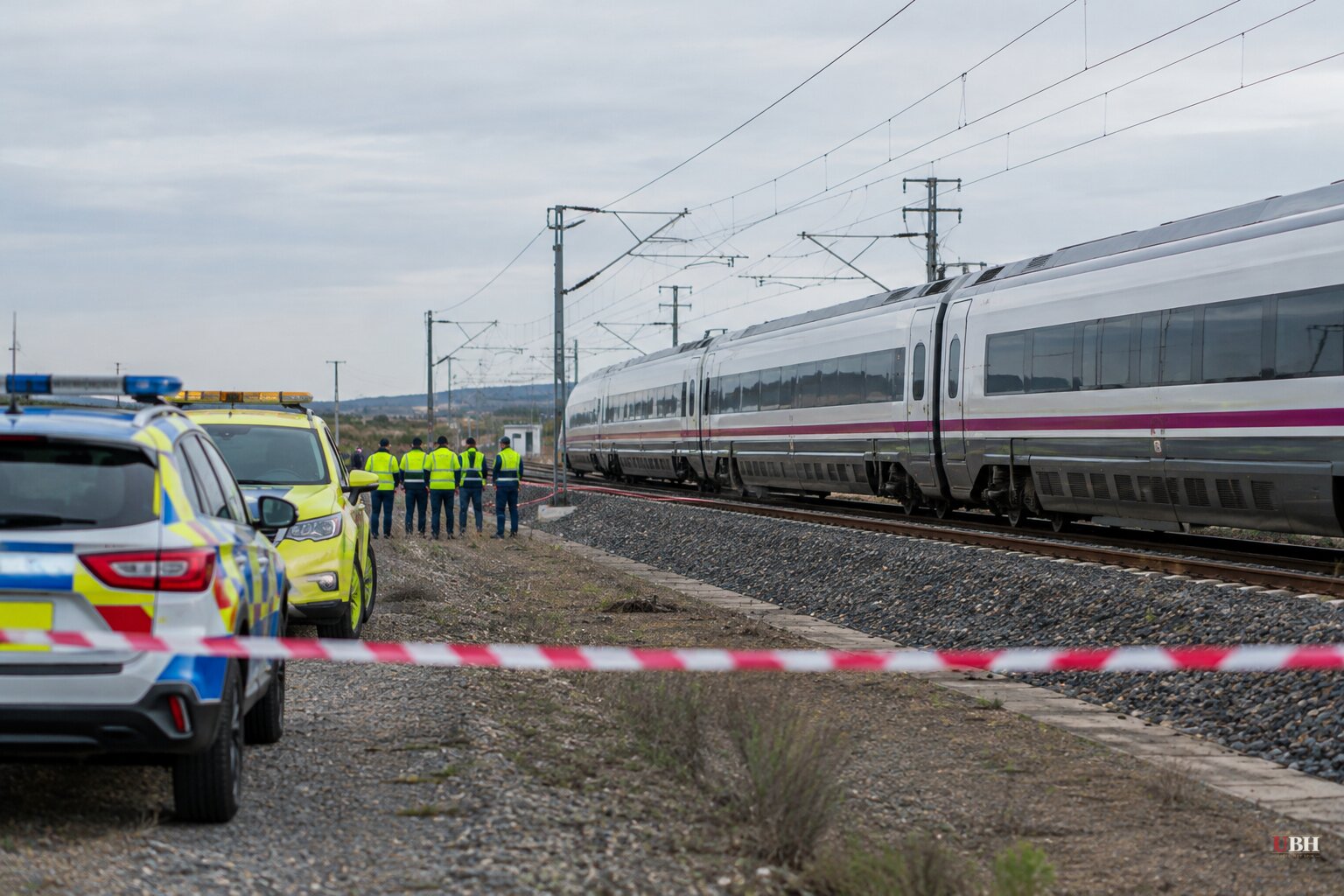
Since the Oct. 28 collision between a Renfe and an Iryo train near Urda in Toledo province, the toll has stood at at least 69 dead and more than 100 injured. On Friday, Oct. 30, the argument moved from the wreckage to the government.
Sánchez: 'Trust has been broken'
Prime Minister Pedro Sánchez said "trust in high-speed rail has been broken." He called it "unacceptable for a country like Spain, which has such a powerful high-speed rail system, to experience two accidents of this nature and magnitude within a single year."
The other accident was the January collision near Adamuz in Andalucía, which killed 46 people. It also involved one Renfe train and one Iryo train on the same Madrid-Andalucía corridor.
Sánchez said his government's job goes beyond diagnosing causes. "It must also offer solutions to ensure that a tragedy of this scale doesn't happen again," he said.
He also said the state is "working tirelessly" to get information to victims' families. The dead and injured include people from at least 23 foreign countries, and Sánchez said people of as many as 27 nationalities may be among them. The U.S. State Department has said several American citizens were hurt.
Puente stays put
Puente is under growing pressure to resign. At a press conference shortly after Sánchez spoke, he dismissed the calls.
"My duty now isn't to talk about whether or not I carry on with my job; it's to solve the problems, clarify what happened and offer clear explanations," he said.
He added that if the investigation finds failures of organisation or control, "we will act accordingly," and that if individuals are found responsible, "action will be taken."
He once again placed the likely origin of the failure inside the Madrid control centre of Adif, the state infrastructure operator. That is the same body that reports to his ministry.
What Puente says happened
Puente said the LZB signalling system, which automatically halts a train when the line ahead is occupied, went down before the crash. He said such outages are not at all uncommon.
Once the system is down, he said, control and decision-making revert to humans, as in other transport sectors.
His earlier account was more specific. A computer fault stopped the safety system across roughly 39 miles of track around 8:30 a.m. The Renfe train was then authorised to proceed without speed restrictions despite a red signal staying in place.
Between 8:36 and 8:52 a.m. it covered about 25 kilometres (16 miles) at roughly 200 km/h (124 mph) before hitting the stationary Iryo train, according to Puente. He called the control centre's decision "inexplicable" and said the Renfe engineers were not to blame.
No official investigative finding has been published. The speed and sequence of events come from the minister's own account.
Election clock
Spain votes on Nov. 29. The People's Party cancelled campaign events after the crash, and Sánchez cleared his agenda on the day.
Santiago Abascal, an opposition leader, has been blunt about the government's record. "Tragedy again," he said. "Rage again over the neglect, the ruin, and the betrayal suffered by the Spanish people."
The government's position is that the cause lies in a specific control-room decision after a signalling fault, and that it will act on whatever the investigation finds. Abascal's framing is that two disasters in a year point to neglect by the government itself.
The European railway agency says more than 90% of Spain's rail network has the highest level of safety control systems available. Before 2026, Spain had one of the lowest rail fatality rates in the European Union, according to that agency's data.
What is still open
Puente's own description raises a design question that no official has answered publicly. If LZB outages are routine, as he says, what stopped a controller from clearing a train at full speed toward a stopped one?
Adif has not released its own account of the control-centre decision. Puente says individuals will face action if the investigation finds them responsible, but no one has been named. The line between Madrid and Andalucía was suspended after the crash, and the government has not given a date for full service to resume.
Sources used for this briefing
7 links from 7 independent newsrooms (syndicated copies of the same report count once)
These are the sources it draws on, linked so you can verify.


