
Unbiased headlines. Facts, not spin.
Unbiased Headlines is an independently owned news organization. We bring you the facts, not opinions, written fresh from 110+ named sources. Sources linked so you can verify it yourself.
 economy
Major Story (7/10)
Event date: October 25, 2026 ·
EU Adds €2 Handling Fee to Non-EU Parcels on Sunday, Stacked on the €3 Duty
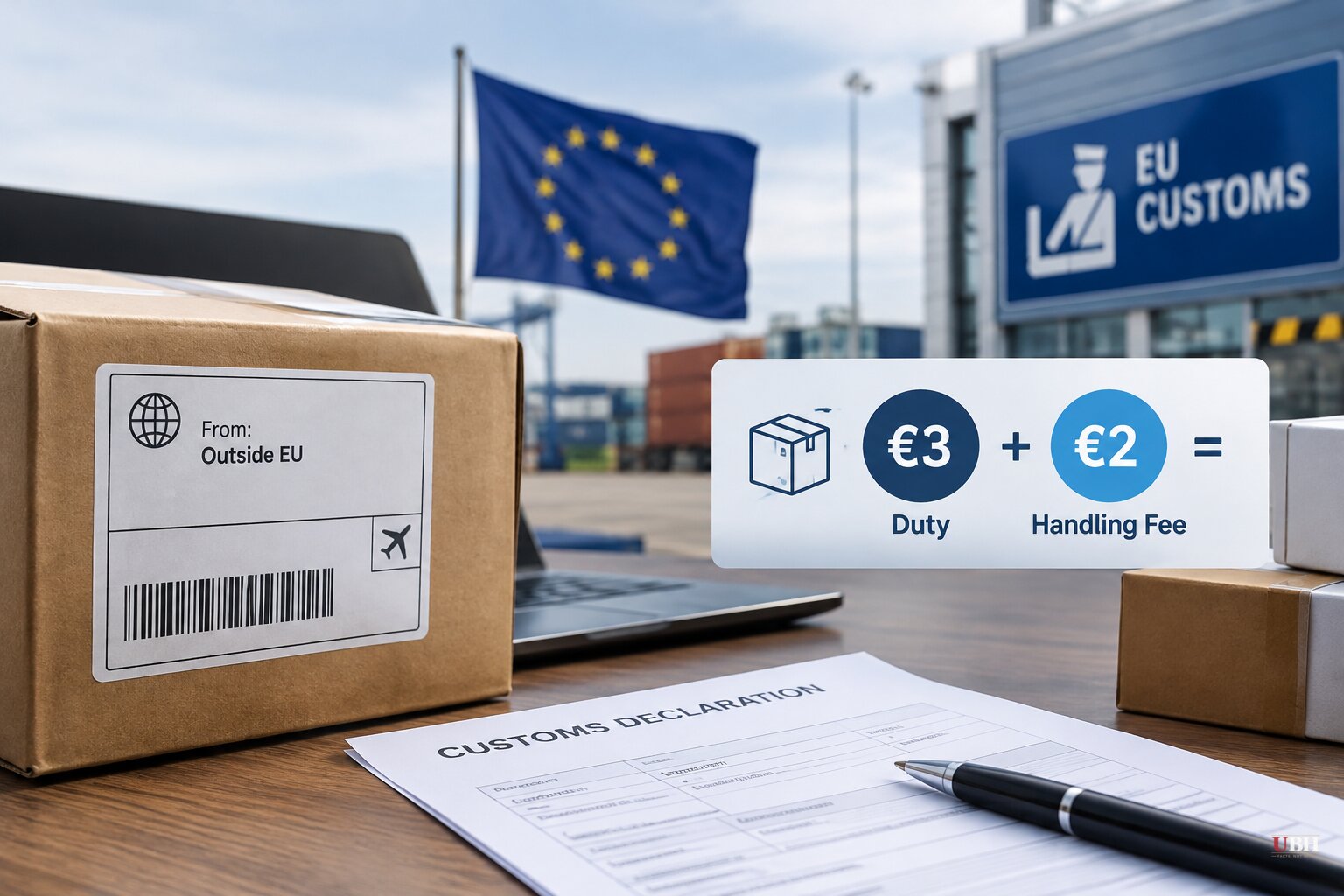
The European Union starts charging a €2 handling fee on goods shipped from outside the bloc to EU consumers on Sunday, Nov. 1. It applies no matter what the goods are worth.
The fee stacks on the €3 customs duty that has applied since July 1 to low-value parcels of €150 or less. Together they replace what used to be a duty-free channel for cheap online orders.
How the fee works
The fee is not strictly per parcel. Logistics firms DHL and Spring GDS both describe it as €2 per customs declaration line. A line groups goods with the same tariff classification and country of origin, so one box can carry several lines and several fees.
One small-business guide gives an illustration: a €10 parcel of three different small items has carried €9 in duty since July. From Sunday the same parcel carries €15, plus VAT.
The rules, as laid out by the carriers and the regulation's text:
- The fee applies to B2C distance sales whether the goods are worth more or less than €150.
- For goods above €150, normal customs duty rates apply instead of the €3 duty, but the €2 fee still applies.
- The fee is non-refundable, including on returns and faulty goods, and it counts toward the base on which VAT is calculated.
- It hits shipments that arrive on or after Nov. 1, even if the customer ordered earlier.
- Product Identifier requirements also become mandatory for these shipments on the same date.
Who pays depends on the billing setup. Under DHL's Duty Tax Paid service the shipper covers it. Under Duty Tax Unpaid the EU recipient does. Platforms, sellers or carriers remit it, and the 27 member states collect it.
The legal basis is Commission Delegated Regulation (EU) 2026/2152, published in the Official Journal on Oct. 22. Its text says the fee "shall apply from 1 November 2026."
The €3 duty is temporary, the €2 fee is not
The €3 duty runs only until 2028, when a new EU customs IT system is due to become operational. The €2 fee has no end date.
An EU official gave the Commission's reasoning for the split: the duty is about a "level playing field," because all goods entering the EU should pay the due amount. The fee, the official said, covers the cost of control, since e-commerce "represents a disproportionate cost for our customs authority."
What the numbers show
The Commission says small-parcel imports fell 60% between July and September, after the €3 duty took effect. About 5 million parcels still enter the EU every day.
In 2024, 91% of those shipments came from China, according to the Commission. It also says 5.8 billion parcels worth less than €150 entered the EU last year, up 26% from the year before, and estimates most were undervalued to dodge duties.
A Commission document seen by Reuters estimates the combined charges could raise €6 billion a year for the EU budget from 2028 to 2034. The figure had not been reported before. It already assumes fewer low-value parcels as retailers adjust.
A Commission spokesperson declined to comment on the estimate. A separate Commission official told reporters Friday, Oct. 30, that they could not prejudge the revenue.
So the fee is officially a customs-cost charge, while the Commission's own internal projection counts the broader package as a multibillion-euro budget line.
Who is targeted and who objects
The measures aim at Chinese platforms such as Temu, Shein and AliExpress. Dirk Gotink, the European Parliament member leading the bloc's customs reforms, called the new fee a response to "a highly toxic business model of low value non-compliant e-commerce imports from China." He said the revenue gives Europe "the means to reverse decades of underinvestment" in customs authorities.
Enforcement is running on a separate track. The Commission fined Temu €200 million in May over dangerous baby toys and faulty chargers. It is investigating Shein over illegal products. In September it proposed legislation requiring an EU-based economic operator to be legally responsible for non-compliant goods sold through online marketplaces.
The platforms are pushing back. AliExpress, owned by Alibaba, said it is expanding local warehousing in response, but warned the charges would hurt low-income households in Europe and "exacerbate the cost-of-living crisis."
PDD Holdings, Temu's owner, said in August the changes would have a considerable impact on parts of its business. It did not quantify that. Temu has been offering some shoppers a discount on the fees, according to screenshots seen by Reuters.
Shein gets about a third of its revenue in Europe. Its sales there were already falling before the fees, as it raised prices and cut advertising.
China's Global Times quoted an unnamed Chinese expert calling the fee "protectionism in disguise" that will push costs onto consumers. That is a claim, not a measured result.
The EU's move follows a similar step by the U.S. last year to end duty-free treatment of low-value online orders.
Who gets the money
Under current rules, EU countries keep 25% of the fees and 75% goes to the EU budget. The Commission estimates that from 2028, about 90% would go to the EU and 10% to member states.
That split could change. Negotiations over the 2028 to 2034 EU budget are still ongoing, and member states can push to keep more of the proceeds.
Sources used for this briefing
7 links from 6 independent newsrooms (syndicated copies of the same report count once)
These are the sources it draws on, linked so you can verify.


