
Unbiased headlines. Facts, not spin.
Unbiased Headlines is an independently owned news organization. We bring you the facts, not opinions, written fresh from 110+ named sources. Sources linked so you can verify it yourself.
 economy
Major Story (7/10)
China's Economy Is on Pace for Its Growth Target While Stocks Sit More Than 20% Below June Peak
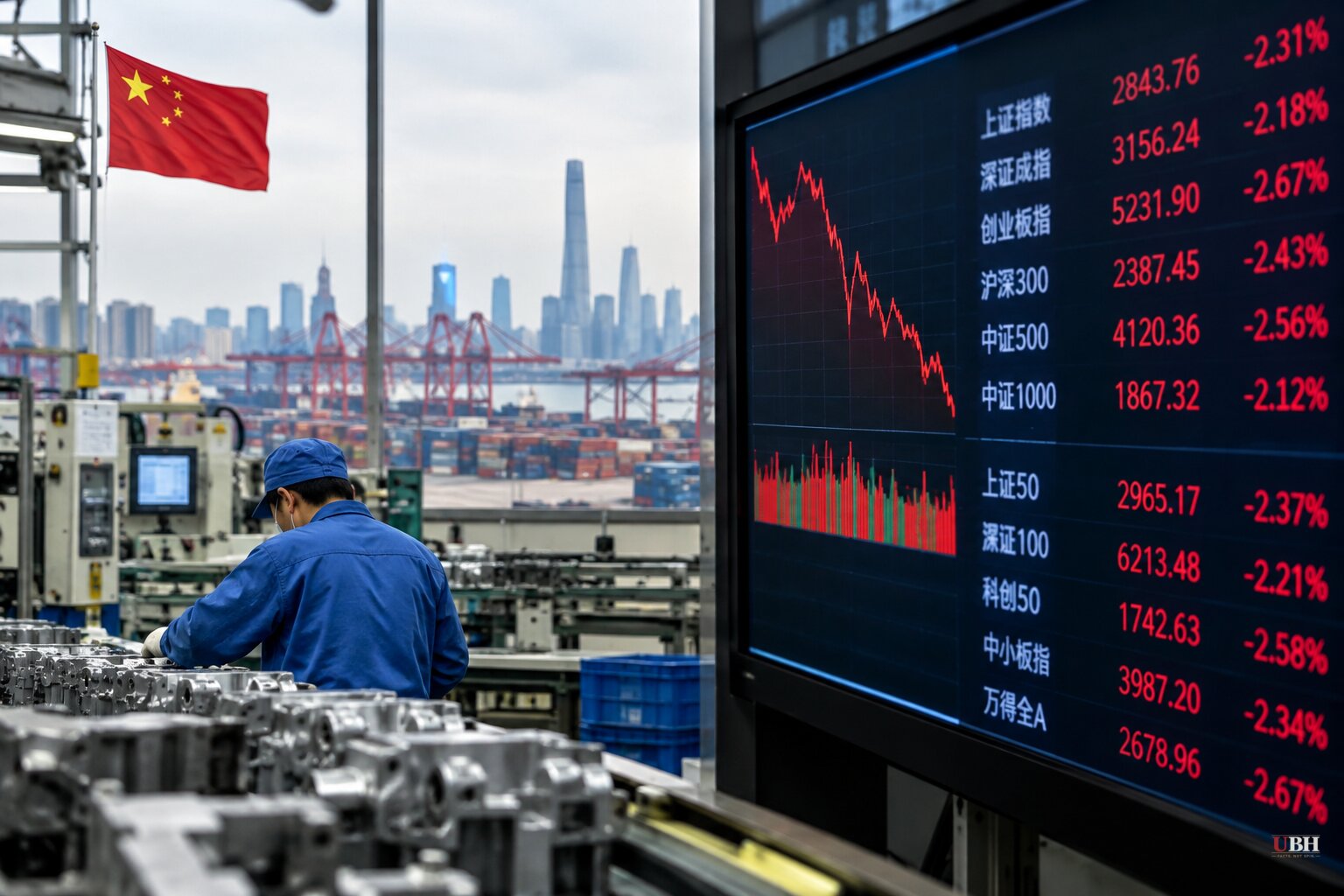
China's headline numbers look fine. Almost everything underneath them looks worse.
Third-quarter GDP rose 4.5% from a year earlier, up from 4.3% in the second quarter, according to the National Bureau of Statistics. Growth for the first nine months reached 4.6%. Both figures sit inside Beijing's annual target of 4.5% to 5%.
Economists polled by Reuters expect China to hit the full-year goal without extra stimulus. Exports were strong and industrial output was solid.
A two-speed factory sector
The strength is concentrated in advanced manufacturing. Profits in computer and electronic equipment surged in September, helped by soaring chip prices tied to the global AI boom and by state support for tech self-reliance. Traditional sectors such as furniture saw profits tumble.
Makers of goods sold at home are squeezed by weak demand and rising input costs. Auto sales fell for a 12th straight month in September, pushing automakers to look overseas.
The official manufacturing PMI for October, released by the National Bureau of Statistics on Saturday, Oct. 31, came in at 49.3, down from 50.1 in September and below the median forecast of 50 in a Reuters poll of 23 economists. A reading below 50 signals contraction. The private RatingDog PMI, compiled by S&P Global, is due Nov. 2 and is forecast at 51.6, down from 52.1.
Consumers and property
The household side is the weak spot. Retail sales grew just 1.1% in September. Fixed-asset investment fell 7.2% in the first three quarters, and real estate development investment dropped 20.6%. Infrastructure investment shrank 4.2% in the first nine months.
China's Ministry of Finance said Oct. 23 that revenue from land-use rights transfers fell 27.9% in the first nine months to 1.61 trillion yuan, about $241 billion. Deed tax revenue dropped 14.2%. Land appreciation tax revenue fell 13.6%.
Local governments leaned on land sales for years. That funding is shrinking while the debts built during the property boom remain. Reuters reports that households are reluctant to spend because the tech boom has not raised their incomes and the property slump continues to erode their wealth.
Stocks in a bear market
China's main indexes have fallen more than 20% since peaking in June. The CSI 300 closed more than 20% below its June high on Oct. 22. Shanghai's STAR50, which tracks homegrown AI and chip leaders, is down more than 40% from its June peak, according to CNN.
The pain has hit former favorites. Unitree, the humanoid robot maker that jumped 600% in its August Shanghai debut, has seen its shares halve. Memory chipmaker CXMT, which became Shanghai's most heavily weighted stock three months after listing, is down nearly 30% from its August peak. Hong Kong's Hang Seng is down more than 12% this year.
Bloomberg data show Beijing put about $19 billion into exchange-traded funds last week, its largest such intervention since early 2025. Natixis economist Gary Ng blamed the selloff on "a repricing of crowded AI trades, weak domestic demand, and the lack of stimulus."
Morningstar's Lorraine Tan said any measure aimed at sentiment "tends to be short-lived if there are no policies to address underlying key issues." She pointed to excess capacity in many sectors and the lack of fiscal spending this year.
U.S.-based economist Li Hengqing told The Epoch Times that state-backed funds appear to be propping up prices. He said that could stabilize the market only temporarily and could shift risk onto taxpayers. "The regime is supporting the market not to protect stock investors, but to protect Xi Jinping's image and the political line he has put forward," Li said. Beijing has not publicly described the ETF purchases in those terms.
Are the GDP numbers reliable?
Some outside analysts doubt the official growth figures. In an Oct. 19 commentary, Derek Scissors, a senior fellow at the American Enterprise Institute, questioned the credibility of China's GDP data, citing slowing growth in the M1 money supply.
The official data show growth inside the target range, and the Reuters economist poll takes that data as a base. The two views point in different directions, and the PMI and other October readings will add to the record.
What Beijing is doing
The Fifth Plenum of the 20th Central Committee met Oct. 26 to Oct. 29. Analysts interviewed by The Epoch Times expected it to focus on Party discipline and personnel ahead of the 2027 national congress. SCMP reports that leaders reaffirmed the economic targets, and that analysts expect the 10 largest provincial economies to carry national growth through the end of the year and into 2027.
On policy, officials have steered cheaper credit toward infrastructure and technology. They also allocated 550 billion yuan, about $82.5 billion, in unused government debt quotas to ease local government strain.
The National Development and Reform Commission is drafting an implementation plan for its 2026-2030 strategy to expand domestic demand. An NDRC official said earlier this month that the agency will speed up its issuance. No publication date has been announced.
The Saturday PMI showed factory momentum slipping as the domestic side stays soft.
Sources used for this briefing
6 links from 6 independent newsrooms (syndicated copies of the same report count once)
These are the sources it draws on, linked so you can verify.


