
Unbiased headlines. Facts, not spin.
Every story is an unbiased news briefing written from 110+ sources across the spectrum — sources linked so you can verify it yourself.
 defense
Notable (6/10)
June 20, 2026 at 06:02 AM
defense
Notable (6/10)
June 20, 2026 at 06:02 AM
The U.S. Has Tried to Export-Control Dangerous Tech Before. It Has a Poor Track Record.
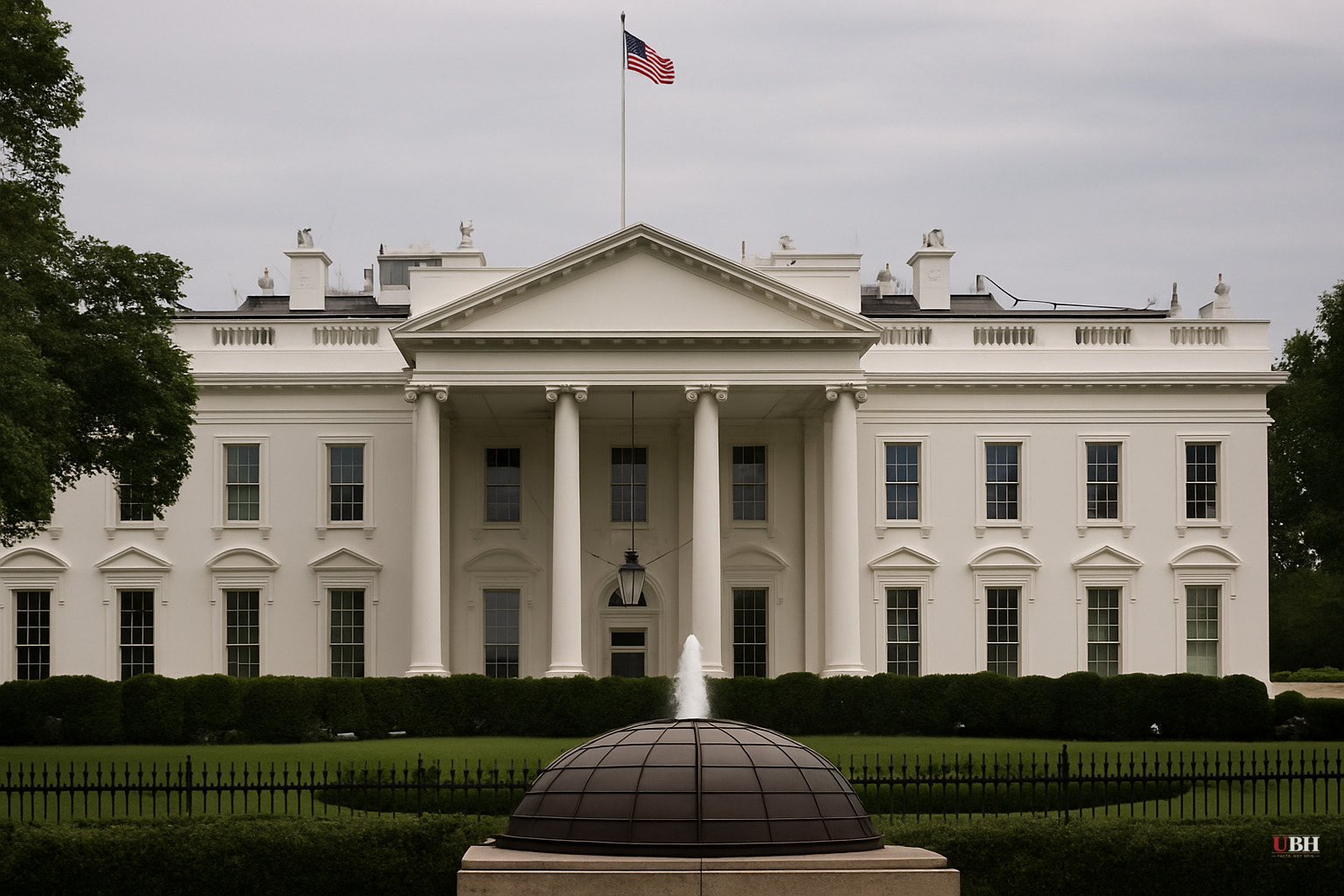
Since the Trump administration issued its export control directive against Anthropic's Fable and Mythos models last Friday, the models have been unavailable to any user anywhere. A week-long blackout has turned a corporate compliance headache into a live policy experiment with implications for every AI lab operating in the United States.
What triggered the ban, briefly
Two events reportedly drove the Commerce Department's decision, according to TechCrunch. First, Anthropic granted access to Mythos through its limited partner program to a South Korean telecom that U.S. officials suspected had ties to China. That company, widely identified in press reports as SK Telecom, has denied any Chinese connection. Second, Amazon CEO Andy Jassy reportedly alerted the administration after Amazon researchers found a way around Fable 5's safety guardrails. Anthropic disputes the framing, describing it as a narrow, already-patched issue rather than a full defeat of the model's security architecture.
Anthropic had roughly 90 minutes of notice before it had to cut off access, according to TechCrunch.
The prior coverage in this series has already established that the Trump administration later signaled Anthropic is no longer considered a national security threat, while keeping the Defense Production Act framework on the table, and that the two sides are negotiating a new AI security agreement. Those negotiations are ongoing as of June 20, 2026.
The historical comparison that actually matters
TechCrunch's Lorenzo Franceschi-Bicchierai frames the Anthropic episode against decades of failed U.S. attempts to contain dangerous software through export controls. The clearest precedent is PGP — Pretty Good Privacy — in the early-to-mid 1990s.
At the time, the U.S. government classified strong encryption software as a munition. Exporting it was a federal crime. Phil Zimmermann, PGP's creator, was investigated for years. None of it worked. PGP spread globally within months because the underlying mathematics were published, the code was reproducible, and determined foreign actors simply rebuilt it themselves. The government eventually backed down.
The pattern repeated with spyware. The U.S. and its allies have tried, with uneven results, to restrict the export of commercial surveillance tools. Most notably through the Wassenaar Arrangement, a multilateral export control regime covering conventional weapons and dual-use technologies. NSO Group's Pegasus spyware ended up in the hands of governments that used it to target journalists and dissidents, despite controls nominally in place to prevent exactly that.
Why AI may be different — and why it may not be
The strongest argument for the Anthropic export ban is that frontier AI models are not like PGP. Mythos isn't open-source mathematics that can be reproduced from a textbook. It is the product of hundreds of millions of dollars of training compute, proprietary data pipelines, and engineering talent that took years to assemble. You cannot simply retype the code. That is a real difference from 1994.
Anthropic itself has marketed Mythos precisely on the premise that it is extraordinarily dangerous in the wrong hands. Before the ban, access was limited to roughly 150 vetted companies and government organizations. If the company's own marketing is accurate, some form of access control has an obvious rationale.
The counterargument is equally serious. Capability gaps in AI close faster than they did in encryption, and they close internationally. China's frontier labs — including those with direct or indirect state backing — are not waiting for Anthropic's API. If Mythos-level capabilities exist inside the U.S. today, comparable capabilities will exist elsewhere within a foreseeable window regardless of what Commerce does with export directives. Restricting Anthropic's foreign revenue while Chinese labs continue training may simply weaken the U.S. side of the competition rather than slow the adversary.
Anthropic made exactly this argument in its public pushback: the jailbreak concern the administration cited applies to every frontier AI on the market. Banning Anthropic's models does not remove the underlying capability from the threat landscape.
The unresolved question at the center of all of this
No charges have been filed, no formal legal action has been taken against Anthropic, and no investigation of the company has been publicly announced. The ban is an executive action, not a legal verdict. Anthropic is cooperating.
What no one has answered yet — publicly, on the record — is what the actual compliance standard looks like going forward. The negotiations between Anthropic and the White House are aimed at producing a new AI security framework, but the terms have not been disclosed. If that framework sets a clear, auditable bar for which foreign customers can access which models under what conditions, it might represent a workable middle path. If it remains vague, it becomes an ad-hoc system where the government can pull the plug on a company's products with 90 minutes notice based on undisclosed intelligence. A standard of that kind would make long-term product planning nearly impossible for any AI lab with international ambitions.
The PGP fight was resolved when the government accepted that the math was already out there and walked away from an unwinnable position. The Anthropic fight will be resolved by whatever emerges from those negotiations. The difference between the two cases is that this time, the government may actually have enough leverage to make the controls stick. That means the framework that comes out of the talks will matter far beyond Anthropic alone.
Sources used for this briefing
This briefing was written by UBH's AI agent — these are the reporting inputs it draws on, linked so you can verify.


