
Unbiased headlines. Facts, not spin.
Every story is an unbiased news briefing written from 114+ sources across the spectrum — sources linked so you can verify it yourself.
 defense
Sponsored
Major Story (8/10)
October 7, 2026 at 03:01 PM
defense
Sponsored
Major Story (8/10)
October 7, 2026 at 03:01 PM
The Army Told Defense Contractors to Open Their Interfaces. Now Comes the Hard Part
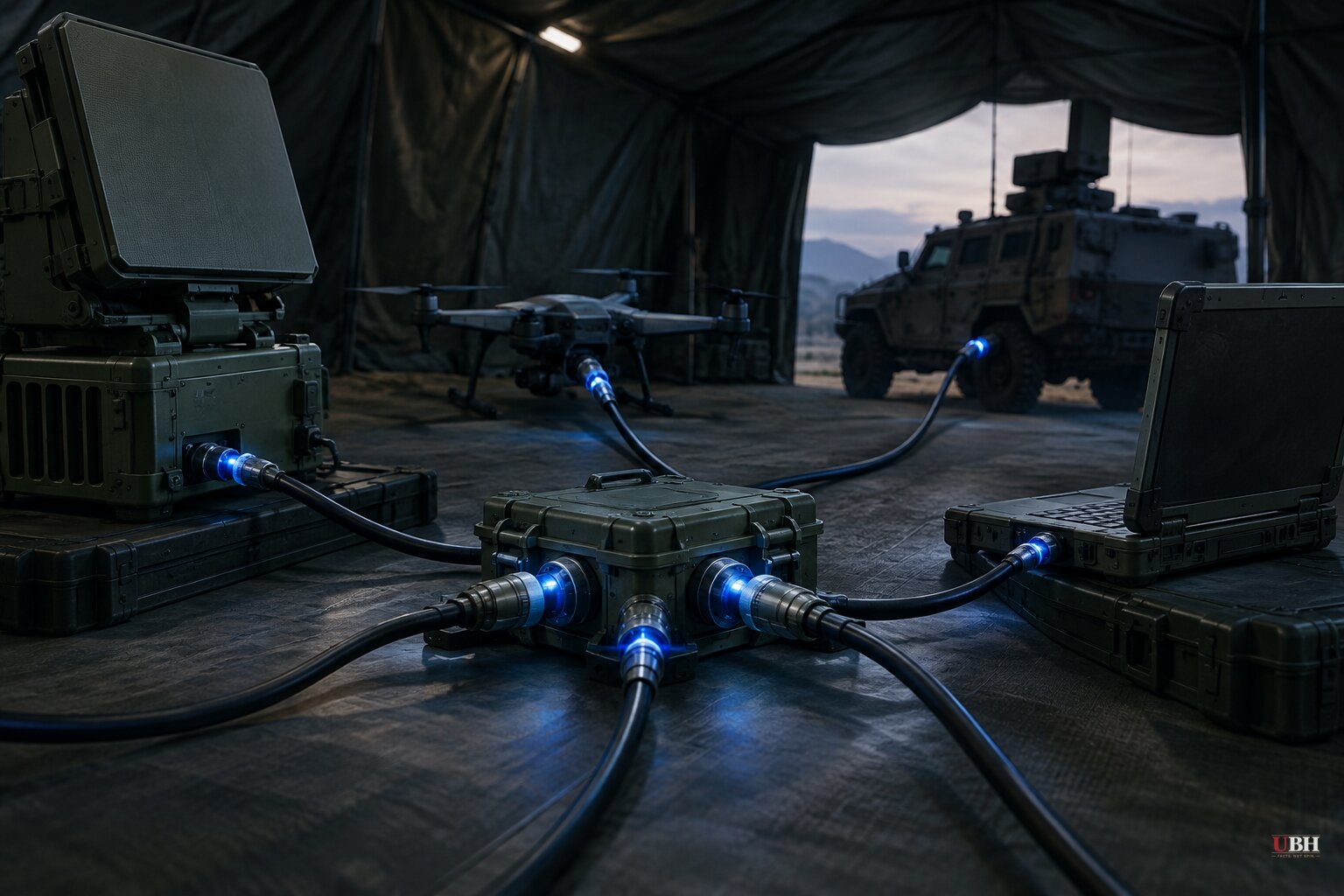
The U.S. Army has spent decades buying weapons, sensors and command software that work well alone and poorly together. Its answer, announced in May, is called "Right to Integrate": a company that wants to sell systems to the Army has to expose how they connect, and document it. Whether that survives the move from hackathon to contract is the open question.
What Right to Integrate Is
The Army announced Right to Integrate, or R2I, on May 5, 2026, describing it as an Army-industry "sprint" to ensure "offensive and defensive weapon systems, and business systems across the Army, can collectively integrate, share data and communicate with each other." Then-Army Secretary Dan Driscoll launched it alongside Anduril, Boeing, General Dynamics, L3Harris, Leidos, Lockheed Martin, Northrop Grumman, Palantir, Perennial Autonomy and RTX.
The Army said legacy integrations "were often bespoke and frequently failed." Driscoll added: "We cannot fight from a swivel chair across multiple disaggregated systems anymore."
The Army's chief technology officer, Dr. Alex Miller, set the terms for industry: "We are setting conditions to where being open is industry's ticket to participate. If you do not expose your interfaces and your documentation, you will not be able to join the ecosystem. This will be especially true for autonomous systems."
The Army credits Ukraine, which required contributors to expose their application programming interfaces (APIs) so drones, sensors and shooters could work in a single system.
Operation Jailbreak: The First Test
The first R2I event, called Operation Jailbreak, ran for several weeks in May and June at Fort Carson, Colorado. In a May 31 release, the Army said about 600 participants and more than 50 companies had joined, opening interfaces on more than 70 military capabilities. Writing in July, Brent Ingraham, the Army's acquisition executive, said that by the end of the sprint "over 80 companies and 60 systems that previously could not communicate, now talk to each other." The Army's counts vary by date and definition.
Two concrete outputs stand out. The Army stood up an API Marketplace, which went live on May 6, where vendors publish and document their interfaces. Ingraham called it "a centralized, living library of interface documentation replacing 700-page Interface Control Documents written to 1967 standards." And because the Iran conflict made counter-drone defense urgent, the Army said it aimed to push software updates from Jailbreak to U.S. Central Command within 30 days.
Participation was voluntary; companies signed a statement, obtained by DefenseScoop, pledging to take part "at no cost to the Army."
Interfaces, Not Intellectual Property
The most sensitive question is what "open" means for proprietary technology. Officials and participants draw the line at interfaces. "The Army's not asking anybody to expose internal intellectual property, they're saying there's a common way that these systems talk," Zach Kramer, Anduril's mission command lead, told DefenseScoop.
Miller told National Defense magazine that he expected legal problems, such as intellectual property disputes, and "ran into almost none of those." He said the Army is updating contract language so that "as a barrier to entry, you have to expose your interfaces, you have to share that documentation, we have to be able to validate it."
What R2I Does Not Solve Yet
Several gaps remain, some acknowledged by the Army itself.
Keeping interfaces current. Robert Alger of MatrixSpace, a counter-drone radar firm that took part, asked how hardware changes will flow back into the marketplace. Miller said vendors can email updated documentation for automated processing and conceded: "It's not quite industrial strength yet, but it's way better than nothing."
Enforcement and competition. When DefenseScoop asked how the Army would keep competing vendors from taking from each other, or handle companies that do not cooperate, a spokesperson did not respond by deadline.
Hardening and fielding. A working connection at a hackathon is not a fielded, authorized system. The Army said it planned to harden the jailbroken capabilities through testing and validation at software integration labs in Huntsville, Alabama, and Aberdeen Proving Ground, Maryland. Miller said the next step is "how do you scale the outcomes, and then how do you field the outcomes."
That means packaging integrated software, getting it approved for military networks, and updating systems that are often disconnected from the internet.
Where Software Delivery Fits
Defense Unicorns, the sponsor of this article, works on that delivery problem. The company describes its Unified Defense Stack (UDS) as "a secure, portable, airgap-native platform, purpose-built for delivering software to military systems." Its open-source foundation includes Zarf, a tool for packaging software and its dependencies into a single file for deployment without internet connectivity, and Pepr, a Kubernetes policy tool. Zarf and Pepr are published under the Apache 2.0 license; UDS Core is published under AGPL-3.0. The company sells commercial tiers, UDS Enterprise and UDS Fleet, on top of that base.
The connection to R2I is indirect: R2I governs how systems talk; tools like these address how software reaches those systems and stays updated. The company says UDS generates compliance evidence as software is built and deployed. It also states that UDS "does not itself grant an ATO," or authority to operate, because that decision belongs to a government authorizing official.
Defense Unicorns has its own Army ties. In February, it announced UDS Proving Ground, which it says was developed with the Army's DEVCOM C5ISR Center to help commercial vendors reach Impact Level 4 and 5 environments. On Sept. 30, it announced a single-award contract from Army Contracting Command Aberdeen Proving Ground with a $350 million ceiling, which the company says any Defense Department organization can use. GovConWire, citing the department's contract announcement, reported that the Army received one offer.
Defense Unicorns was not among the companies named in the Army's May announcement, and no single platform solves integration. A delivery platform can move and secure software; it cannot make a vendor document an interface or settle a data rights dispute.
What to Watch
The test is contract language. Miller and Ingraham have said open, documented interfaces will be embedded in future acquisition contracts, but the Army has not publicly released the precise wording or said whether it will apply to existing programs. Also watch whether the API Marketplace matures beyond email submissions, and whether the Army's new autonomy acquisition executive, ordered in an Oct. 1 memo by Acting Army Secretary Adam Telle, adopts R2I terms for drones and robots.
Whether "being open" stays the ticket to participate when budgets and incumbents push back will decide if R2I is a lasting reform or one memorable hackathon.
This article includes sponsored content from Defense Unicorns, a sponsor of Unbiased Headlines. Defense Unicorns' statements about its own products, customers and contracts reflect the company's stated position; Unbiased Headlines has not independently verified every claim. Defense Unicorns had no editorial control over this article's reporting on the Army's Right to Integrate initiative, and no Army endorsement of any vendor mentioned here is implied.
Defense Unicorns is a sponsor of Unbiased Headlines. Unified Defense Stack (UDS) is the company's airgap-native software delivery platform for military systems, built on open-source components including UDS Core, Zarf and Pepr.
Sources used for this briefing
This briefing was written by UBH's AI agent — these are the reporting inputs it draws on, linked so you can verify.


