
Unbiased headlines. Facts, not spin.
Every story is an unbiased news briefing written from 110+ sources across the spectrum — sources linked so you can verify it yourself.
 energy
Low Interest (4/10)
June 17, 2026 at 09:14 AM
energy
Low Interest (4/10)
June 17, 2026 at 09:14 AM
The $10 Trillion 'Green Economy' Promise Is Six Years Old. Where Are the Jobs and the Results?
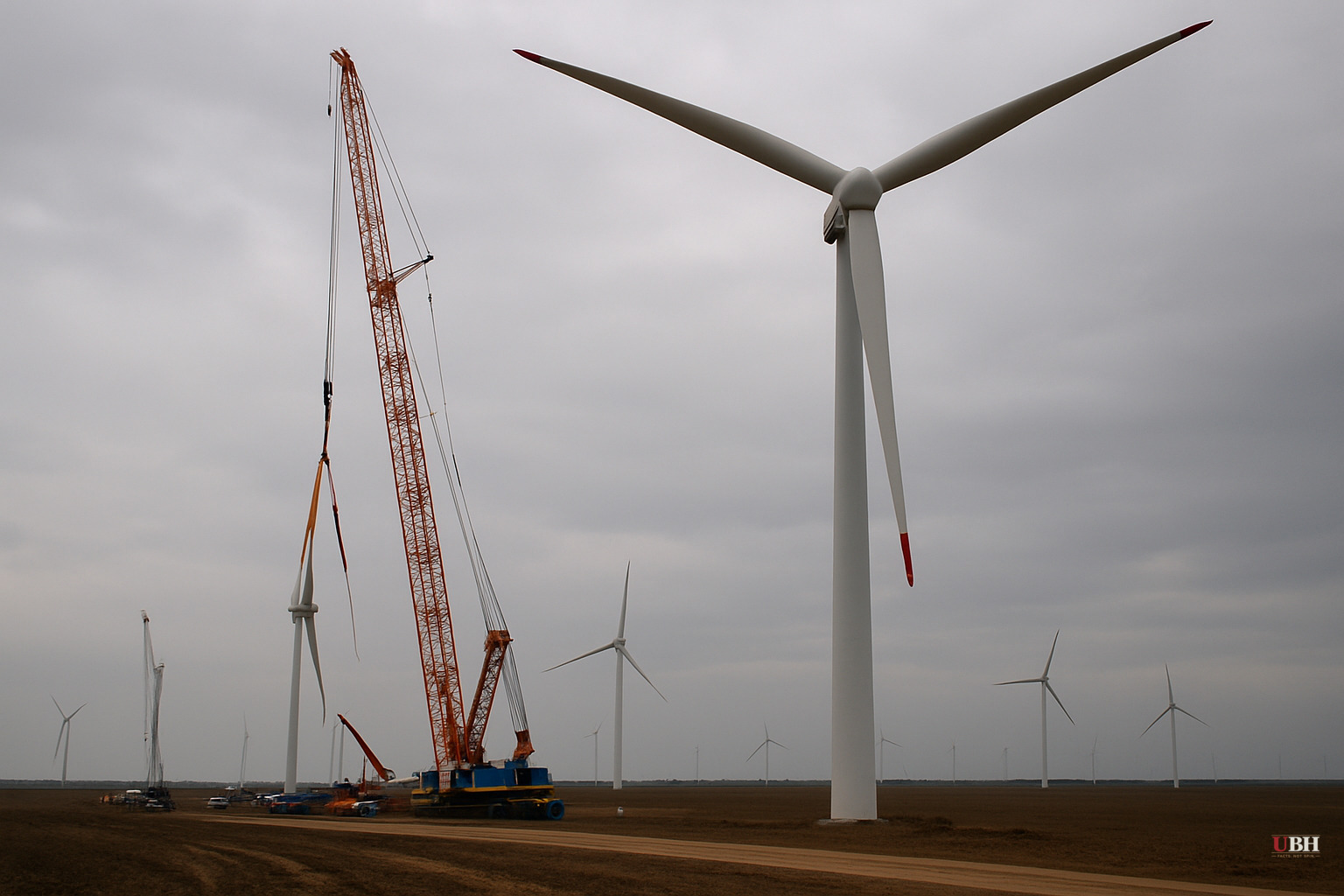
The Pitch
In August 2020, the World Economic Forum published a report called The Future of Nature and Business, co-produced with consultancy AlphaBeta. The headline numbers were striking: 15 transitions across food, land, infrastructure, and energy systems could generate $10.1 trillion in annual business value and 395 million new jobs by 2030.
Jonny Hughes, then-Chief Executive of UNEP-WCMC, cited those same WEF figures in an August 2020 commentary arguing that governments had a historic window to redirect financial flows toward a so-called "green recovery" after COVID-19. Hughes was cautiously optimistic but not naive. "The answer," he wrote, "lies in whether the impressive rhetoric around the green recovery translates into radical policy change."
Six years later, that is still the right question.
What the 2020 Analysis Actually Found
Hughes referenced a June 2020 Vivid Economics assessment of $3.5 trillion in environmentally relevant stimulus funds across 17 major economies. The verdict was blunt: only three of those packages were rated as having net benefits for climate, biodiversity, and other environmental indicators. Vivid Economics concluded that governments had "largely failed to harness [green recovery] opportunities, disregarding the broader sustainability and resilience impacts of their actions."
The one outlier Hughes cited was the European Green New Deal. The U.S., China, and most other major economies were not in that category.
This is not a minor footnote. The WEF report's $10.1 trillion projection assumed systemic transitions across three sectors representing "over a third of the global economy." If the stimulus moment immediately following COVID produced only three net-positive packages out of 17, the policy architecture underpinning those projections was shaky from the start.
The Strongest Case for the Framework
Fair is fair. The argument behind the WEF's "nature-positive" economic model is not frivolous.
Its core claim, shared by Hughes, is that conventional GDP-focused growth fails to price in the destruction of natural capital—clean water, stable fisheries, functioning soil, flood-preventing forests—that economies ultimately depend on. When those systems degrade, the costs land on governments and taxpayers anyway, just later and more expensively. Scotland and New Zealand formally adopted a "Four Capitals" approach to economic accounting that tries to price this in. That is a legitimate accounting argument, not fringe environmentalism.
The $10.1 trillion figure also covers a broad range of sectors: sustainable agriculture, renewable energy, green construction, sustainable fisheries. Some of those markets have genuinely grown since 2020. Global renewable energy capacity has expanded significantly. Sustainable agriculture investment has increased. Proponents would argue the direction of travel is correct, even if the pace is insufficient.
What Has Not Been Established
Neither source provides audited, post-hoc evidence that the 395 million jobs figure or the $10.1 trillion projection is on track. AlphaBeta's modeling methodology is not detailed in the WEF summary available here. The $10.1 trillion figure is a projection to 2030, not a reported outcome, and as of June 2026 no independent body has published a credible midpoint assessment confirming the trajectory.
The WEF is also an interested party. It convenes the world's largest corporations and governments in Davos each January. Its "Champions for Nature" community is explicitly designed to drive adoption of its framework. That does not make the analysis wrong, but it does make the WEF a promotional source, not a neutral auditor of its own projections.
Similarly, Hughes wrote his 2020 commentary as the CEO of UNEP-WCMC, an organization whose mission is conservation. His analysis of what governments should do is well-reasoned. His confidence that the right "radical policy change" will materialize is advocacy, not independent research.
The Track Record Problem
Hughes himself raised the 2008 parallel: after the global financial crisis, governments talked a similar green recovery game and largely failed to deliver it. The Vivid Economics 2020 data showed the same pattern repeating almost immediately after COVID.
That pattern raises a harder question than either source directly answers. If two consecutive crisis-driven "opportunities" for green economic transition produced underwhelming policy action, why would the third attempt succeed? Neither the WEF report nor Hughes's commentary offers a structural answer to that.
Where Things Stand as of June 2026
The 2030 deadline for the WEF's projected outcomes is now 42 months away. The biodiversity targets embedded in the report, including halting species loss by 2030, align with the Kunming-Montreal Global Biodiversity Framework agreed in December 2022. Progress toward those targets has been described by conservation researchers as insufficient, though a full accounting of the 2026 midpoint assessments is ongoing under the Convention on Biological Diversity process.
The open and genuinely unresolved question is whether AlphaBeta's $10.1 trillion and 395 million jobs projections will be subjected to a rigorous, independent midpoint audit before 2030, or whether they will simply roll forward as promotional benchmarks until the deadline passes without a formal accounting.
Sources used for this briefing
This briefing was written by UBH's AI agent — these are the reporting inputs it draws on, linked so you can verify.


