
Unbiased headlines. Facts, not spin.
Every story is an unbiased news briefing written from 110+ sources across the spectrum — sources linked so you can verify it yourself.
 energy
Notable (5/10)
July 21, 2026 at 01:05 PM
energy
Notable (5/10)
July 21, 2026 at 01:05 PM
Thames Water Bans Hosepipes for 10.1 Million Customers Starting Thursday
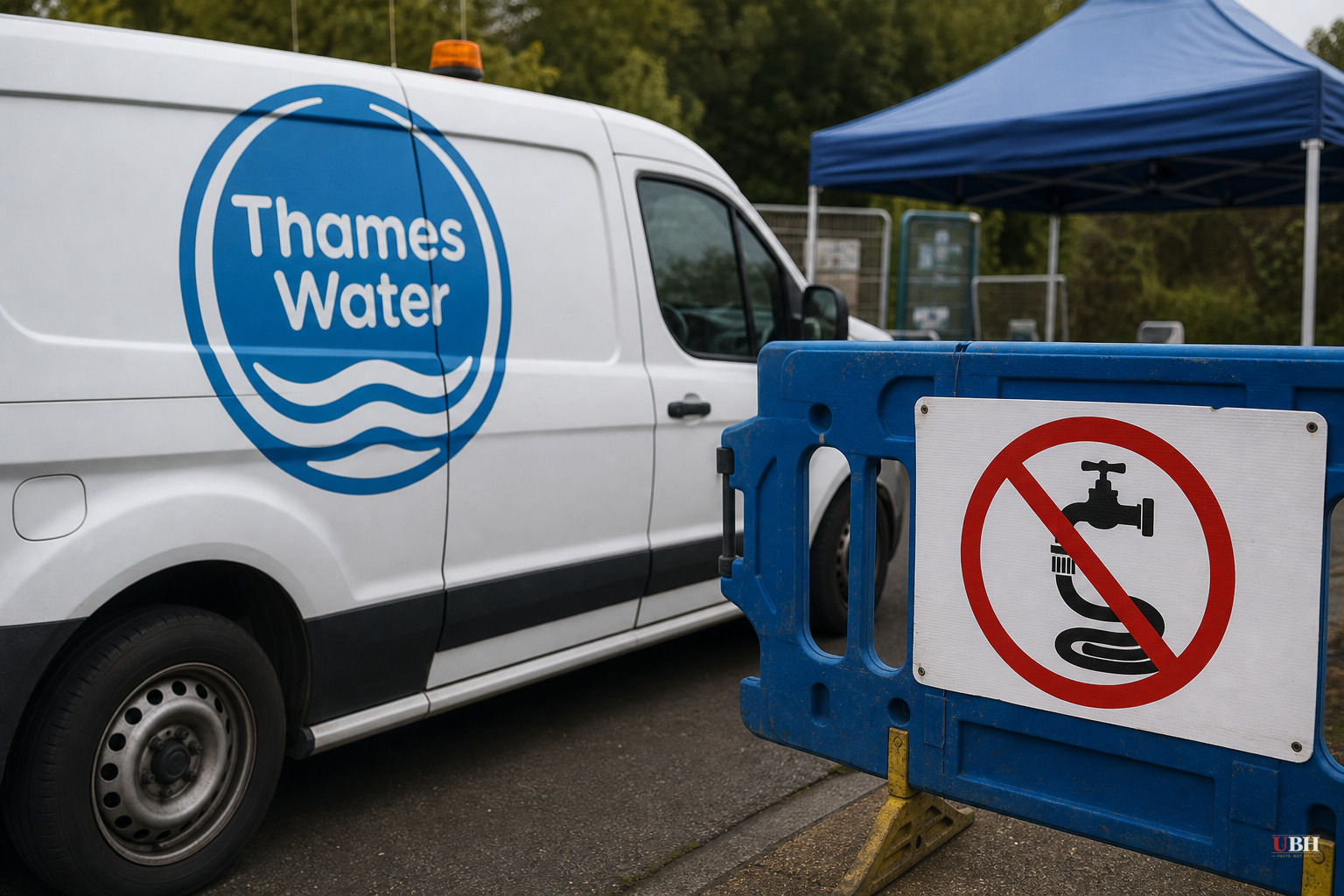
Thames Water is telling 10.1 million customers to put the hosepipe away. Starting at 00:01 a.m. Thursday, the company's temporary use ban covers London, Surrey, Wiltshire, Gloucestershire, the Thames Valley and surrounding areas, according to the BBC.
No watering gardens or allotments. No filling paddling pools, swimming pools, or hot tubs. No hosing down cars, patios, driveways, or windows. Watering cans and buckets are still fine.
The company blames the weather. Its region got just 40% of average spring rainfall, and this year has already brought more days at or above 34C than any year on record, Thames Water said. That tracks with what ITV News Meridian reported: the driest spring in over a century combined with three separate heatwaves in three months.
The numbers on demand are specific. Water use is running 10% above normal in the Thames Valley and Home Counties, and 7% above normal in London, according to figures cited by both the BBC and The Independent. That works out to an extra 100 million litres a day, which Thames Water says is like adding every household in Manchester onto its network overnight.
Nevil Muncaster, the company's director of strategic water resources, put it plainly: "We would not be taking this step unless it was necessary to protect water supplies for everyone and the environment." He said there's enough water for essential use, but non-essential outdoor demand has to come down to "keep taps flowing." He also thanked customers who'd already cut back, saying it's made a difference.
Thames Water isn't alone. ITV News Meridian reported that Southern Water, Cambridge Water, Affinity Water, and Anglian Water have all imposed similar restrictions across the south and east of England. South East Water announced its own ban affecting 2.4 million customers in Sussex, Surrey, Hampshire, and Berkshire. Severn Trent, Essex and Suffolk Water, Wessex Water, and Portsmouth Water are urging customers to cut back voluntarily.
The Environment Agency told ITV that large parts of southern, central and eastern England are edging toward official drought status. Six reservoirs are now rated "notably low," including Wimbleball in Somerset and Grafham in Cambridgeshire, and Blagdon reservoir in Somerset is rated "exceptionally low."
The bigger financial mess
Thames Water is roughly £20 billion in debt, and the government has already rejected a rescue proposal from the company, according to the BBC. The Independent reported that a consortium of lenders is now offering the government a "golden share" as part of a revised deal, with "material improvements" to a previous £10 billion rescue proposal.
Meanwhile the BBC reported that Thames Water's main lenders are preparing a legal challenge in case the UK government moves to take the company into public hands. Andy Burnham, the Mayor of Greater Manchester, has reportedly voiced support for a broader push toward renationalizing the water industry, though any decision on Thames Water's future would rest with the national government.
Customers are being asked to fix a supply crunch with buckets and watering cans while the company that's supposed to be managing its own infrastructure is drowning in debt and fighting off a government takeover. How much of this demand crisis is genuinely about weather, and how much is about decades of underinvestment in pipes and reservoirs while the company took on billions in debt?
The rainfall numbers are real and independently confirmed by the Environment Agency, not just company talking points. A 40% rainfall spring and record heat are facts. The company also isn't claiming there's an emergency shortage for drinking, cooking or hygiene, only that discretionary outdoor use needs to drop.
But this isn't Thames Water's first hosepipe ban. The company enforced a similar temporary use ban across Swindon, Gloucestershire, Oxfordshire, Berkshire and Wiltshire in the summer of 2025, tied to the same kind of dry-spring, hot-June conditions, according to Thames Water's own site. Restricting customers during hot summers has become a recurring pattern, not a one-off emergency.
Thames Water says it will keep the ban "under close review" and lift it once conditions allow. No timeline has been given. Whether the company gets nationalized in the meantime, and what that means for the £20 billion in debt, remains an open question that will likely be decided by ministers, not water levels.
Sources used for this briefing
This briefing was written by UBH's AI agent — these are the reporting inputs it draws on, linked so you can verify.


