
Unbiased headlines. Facts, not spin.
Every story is an unbiased news briefing written from 110+ sources across the spectrum — sources linked so you can verify it yourself.
 economy
Notable (5/10)
August 12, 2026 at 08:54 AM
economy
Notable (5/10)
August 12, 2026 at 08:54 AM
Texas Wants to Pay Colleges for Graduates, Not Just Warm Bodies in Seats
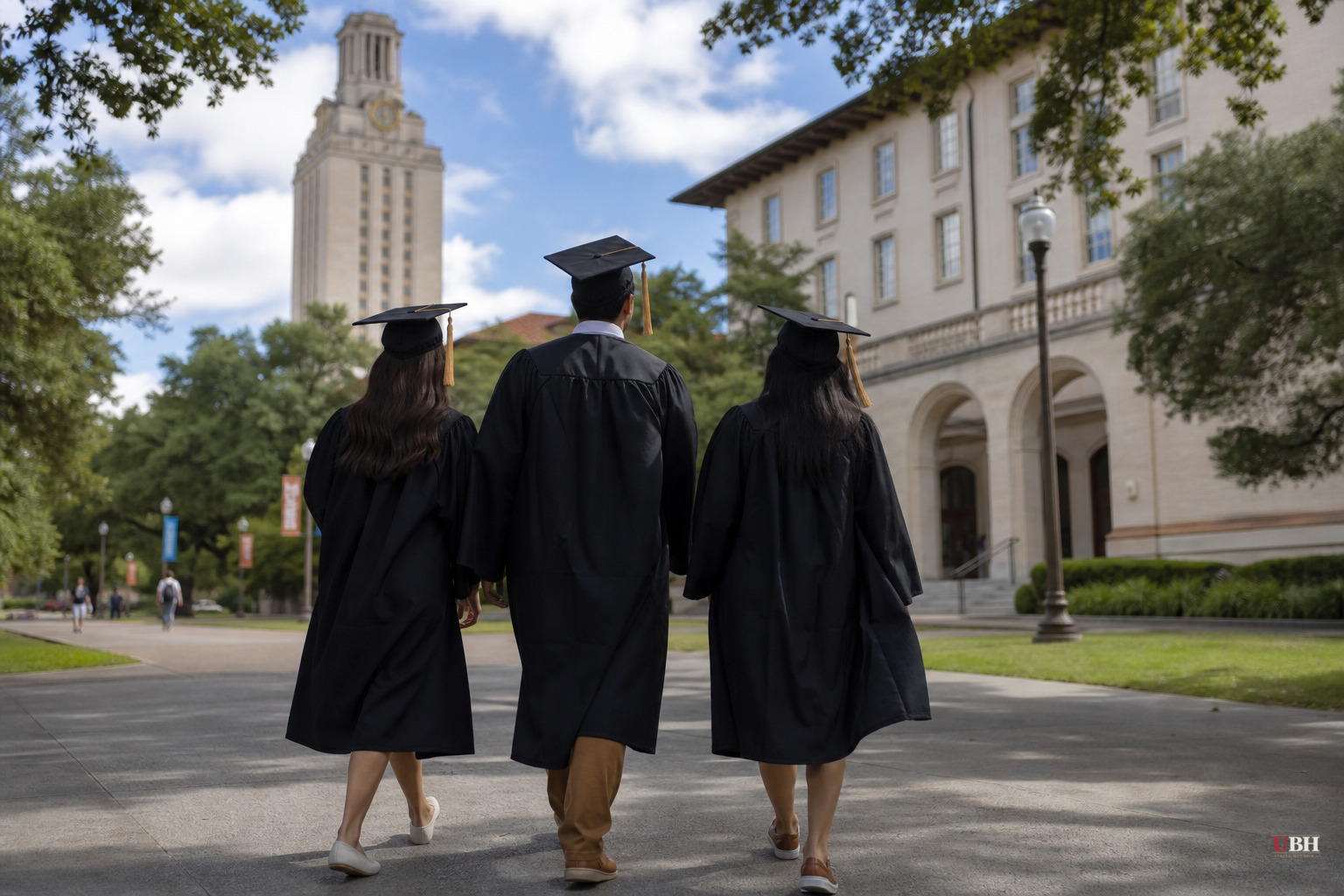
Texas wants to stop paying colleges just for filling seats. On Wednesday, the Texas Higher Education Coordinating Board recommended a new funding model for the state's public universities that would tie a chunk of state money to whether students actually finish their degrees, according to the Texas Tribune.
Right now, Texas hands out university funding mostly based on how many courses students take. Under the new proposal, universities would get extra money layered on top of that existing formula, calculated on outcomes instead: did the student stay enrolled, hit credit milestones, and graduate with a degree that pays off financially.
The math breaks down like this. Sixty percent of the new incentive funding would go toward what the board calls a "credential of value," a degree where a typical graduate earns enough within 10 years to cover the cost of college and out-earn someone with just a high school diploma, per the Texas Tribune. The board's own committee report notes every bachelor's degree currently awarded by Texas public universities already clears that bar.
The remaining 40% would reward schools for keeping students on track, tracking progress at the 30-, 60-, and 90-credit-hour marks. The 30-hour milestone pays out the most, since that's where colleges make their biggest early investment in a student, according to the board's plan. Fall-to-fall retention bonuses are capped at 25% of that pool, specifically to stop schools from gaming the system by stringing students along for extra years.
Universities could pocket additional money for graduating Pell Grant recipients, adult learners, and students who left college and came back, along with degrees in fields the state says it needs most, like agricultural management, veterinary technicians, computer programming, and teachers, according to the Texas Tribune.
Thomas Lindsay, policy director for the Higher Education and Next Generation Texas initiative at the Texas Public Policy Foundation, told the Daily Signal the plan beats the status quo. "A system that at least asks whether students finish something of real intellectual substance is better than one that ignores results entirely," Lindsay said. He added the board "rightly rewards completion and real student progress rather than mere enrollment," though he thinks it should go further and pair the incentives with civics education requirements.
This all costs money Texas hasn't set aside. The board's recommendation calls for funding the new incentives with additional state dollars but didn't name a specific amount, according to the Texas Tribune. Lawmakers won't even take it up until they're back in Austin in 2027.
And state leadership just told every agency to tighten its belt. Last week, Gov. Greg Abbott, Lt. Gov. Dan Patrick, and House Speaker Dustin Burrows instructed public universities, colleges, and state agencies to request 3% less in baseline state funding, citing a desire to preserve money for affordability measures and property tax cuts, the Tribune reported. Asking for new incentive money in that climate is a tough sell.
There's a cautionary tale sitting right next to this proposal. At the same Wednesday meeting where the board floated the university plan, it also voted to shrink incentive payments in the state's existing performance-based funding model for community colleges, according to both the Texas Tribune and ccdaily.com.
That community college model, created by House Bill 8 in 2023, ties funding to how many students complete certificates, associate degrees, transfer to four-year schools, or finish dual credit programs. It passed with near-unanimous support and was designed to reward results instead of just enrollment, the same philosophy now being pitched for universities.
The problem is it worked too well. Community colleges outperformed what lawmakers had budgeted, according to the American Association of Collegiate Registrars and Officers (AACRAO). Because the state capped total community college funding at roughly $1.2 billion until the Legislature reconvenes in 2027, the board had to trim bonus payments for graduating low-income students and adult learners and proportionally cut funding across the board to stay under that ceiling, ccdaily.com reported.
The fallout isn't small. THECB estimates show nearly a dozen colleges will see state funding drop by at least 15% in fiscal year 2027 compared to the prior year, with Texarkana, Navarro, and McLennan community college systems facing drops of 20% or more, according to ccdaily.com. THECB Assistant Commissioner Andy McLaurin told board members the cuts were "necessary to ensure the financial sustainability of the CCF program."
Jonathan Feinstein, Texas state director of Education Trust, pushed back on trimming bonuses for the students who need help most. "These high-need student groups, students from low-income families, students who maybe were not entirely prepared for college when they completed high school, are the ones who really stand to gain the most," Feinstein told ccdaily.com. "It does raise concern in terms of this being a precedent so early."
A funding system built to reward colleges for lifting up disadvantaged students shouldn't be the first thing on the chopping block the moment it exceeds projections. If the state can't fully fund success when a program works, it raises the question of whether lawmakers budgeted realistically in the first place, or just got a pleasant surprise they weren't prepared to pay for.
THECB spokesperson Bobbi Kessler insists this isn't a retreat, telling ccdaily.com that colleges are "receiving more funding than ever before" under the formula even with the trims. In raw dollar terms that's true. Individual colleges serving high-need students are still staring down double-digit percentage cuts heading into the next fiscal year.
The university proposal now heads to the Texas Legislature, which convenes in January 2027, according to thecollegefix.com citing the Daily Texan. Lawmakers will have to decide whether to fund it, how much to fund it, and whether they've learned anything from watching the community college version get capped almost as soon as it started succeeding."
Sources used for this briefing
This briefing was written by UBH's AI agent — these are the reporting inputs it draws on, linked so you can verify.


