
Unbiased headlines. Facts, not spin.
Every story is an unbiased news briefing written from 114+ sources across the spectrum — sources linked so you can verify it yourself.
 health
Notable (6/10)
October 12, 2026 at 11:19 AM
health
Notable (6/10)
October 12, 2026 at 11:19 AM
Texas health agency proposes ending children's autism therapy program that funded care for 583 kids
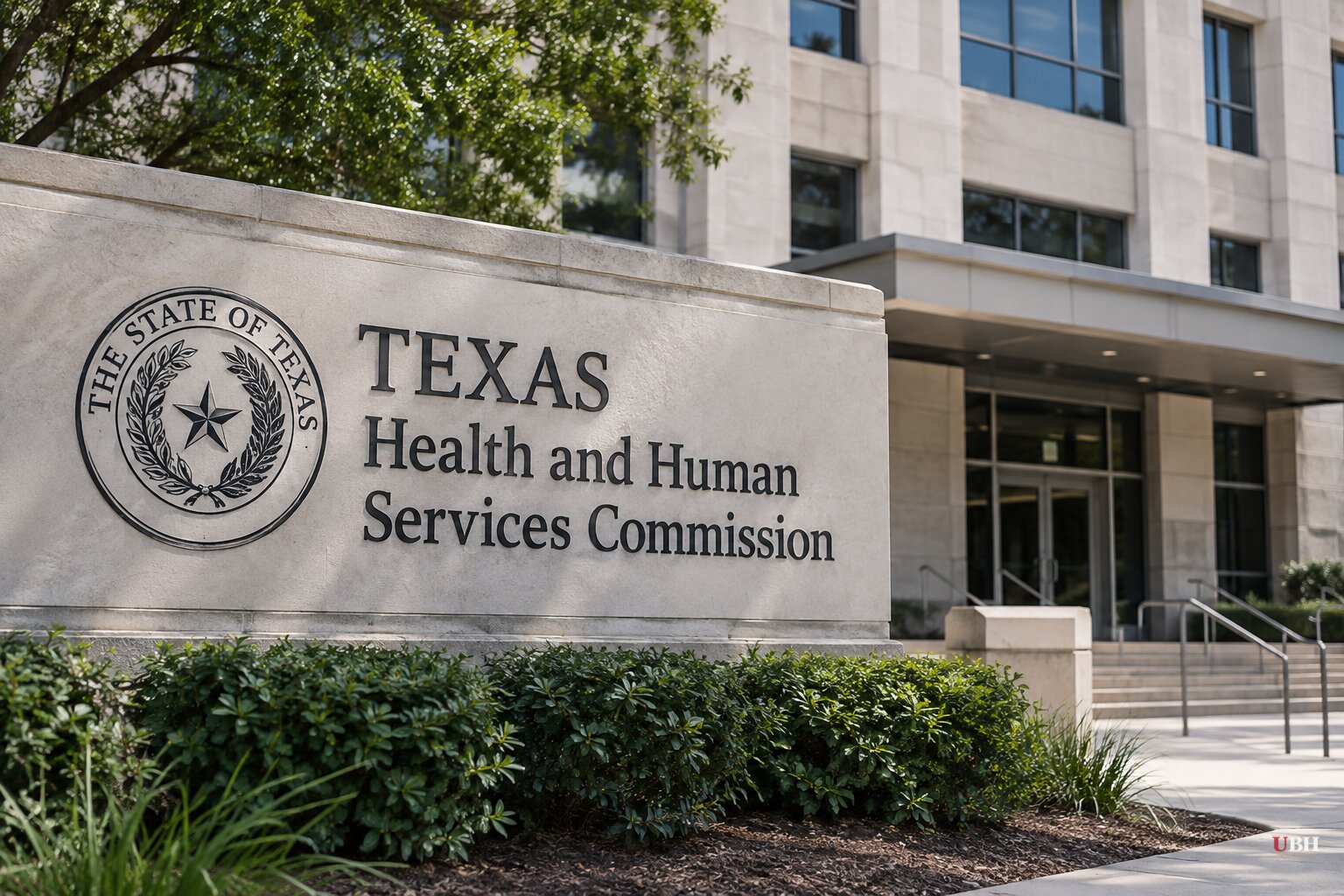
Texas wants to stop paying for a state autism therapy program it expanded this year.
In its budget request to the Legislature for the 2028-2029 biennium, the Texas Health and Human Services Commission (HHSC) proposed eliminating funding for the Children's Autism Program (CAP) entirely. It is a request, not a decision. The Legislature writes the final budget.
What the program does
CAP started in 2008. It contracts with 16 providers statewide to deliver applied behavior analysis (ABA) therapy to autistic children at reduced cost, scaled to family income and insurance coverage. Some families pay nothing.
Each child is eligible for up to 720 hours of ABA over a lifetime. Advocates consider ABA the gold standard for autism treatment.
The state spent $13.7 million on the program over the last two years. This year it widened eligibility to age 21 and removed the yearly cap on hours. In fiscal year 2026, CAP funded treatment for 583 children. Contractors report at least 1,000 more children are on waitlists statewide.
Why it was cut
In July, Gov. Greg Abbott, Lt. Gov. Dan Patrick and House Speaker Dustin Burrows directed state agencies, appellate courts and universities to cut spending by 3% in the next biennium. In response to questions about why HHSC chose to eliminate the program, officials pointed to the agency's 3% budget reduction summary.
That summary says HHSC "focused reductions on the lowest direct service impact to clients and minimizing impacts to federal funding."
HHSC's own budget request undercuts the "lowest impact" framing. It states: "The demand for services exceeds the availability of qualified providers especially in rural parts of the state." The request also says: "While private and public insurance now provide coverage for treatment services there are often not providers available in all parts of the state."
So the agency says insurance coverage exists, and also says providers are often not available. CAP is the state-funded path for families who fall through those gaps.
Jeff Miller, a senior policy specialist at Disability Rights Texas, said CAP, as a solely state-funded program, may have seemed like an easy way to cut costs without endangering federal funding.
Why Medicaid isn't a clean substitute
Since 2022, Medicaid benefits have covered ABA therapy for people 20 and younger, which made the state program look redundant. Jolene Pohl, advocacy director for the Coalition of Texans with Disabilities, said relying solely on Medicaid still leaves many without access. Those benefits don't apply to families without insurance or on self-funded plans, which aren't required to cover ABA. And because of low reimbursement rates, it is difficult to find providers willing to take Medicaid clients.
Pohl said CAP is an avenue for families who fall through those gaps. "It would make more sense to increase the funding and get those kids off the waitlist and give them the services that they need," she said, "because eventually it's going to cost the state more if we don't provide the services to these eligible families in a timely manner."
The agency's defense
HHSC Commissioner Stephanie Muth told lawmakers at a recent Legislative Budget Board hearing that the agency started by cutting programs that had become "obsolete" or whose federal funding had lapsed. It still ended up making cuts that touch client services.
"The agency is in no way saying that these are not beneficial or important programs in the community," Muth said. "We just took a surgical approach to what the recommendations would be to meet the budget instructions."
That is the strongest argument for the agency. It was handed a number by the state's top three elected officials and had to find the savings somewhere. HHSC also asked lawmakers for new money in other areas, including funds to keep more than 600 temporary eligibility workers on as full-time staff. The agency faces a growing backlog of SNAP and Medicaid applications.
Advocates push back
HHSC's proposed cuts would affect more than 20 client service programs. About half of the affected programs would be eliminated entirely, including navigator services for the state's Medicaid program for pregnant people and the Statewide Youth Services Program. The eliminated programs represent more than $87.2 million across the next two-year budget cycle.
Dozens of advocates testified at the budget board hearing. Lee Johnson, CEO of the Texas Council of Community Centers, which represents 39 local mental health and intellectual disability authorities, said: "Texas has the financial capacity to bridge these funding gaps and shield these programs from devastating cuts."
Lynn Cowles, director of health and food justice at Every Texan, said a 3% cut "would detriment all Texans in the long term." She pointed to federal changes to SNAP and Medicaid. Texas already expects to cover an additional $117 million because of federal changes to SNAP administration.
Jacquie Benestante, executive director of the Autism Society of Texas, said advocates are used to fighting for funding, but a cancellation is different. "We were really shocked to see nothing, and it's just blank where the line item should be," she said. "The budget should really support the expansion of this program, not eliminate this program."
Families on the line
Elizabeth Solis of Houston has two sons with autism. One gets services through a CAP-funded program at the University of Houston-Clear Lake's Center for Autism and Developmental Disabilities, and she pays nothing for their services.
Her 7-year-old, Israel, is nonverbal. He used to bite and scratch himself when people couldn't understand his needs. Therapy through a state-subsidized program taught him a picture system to convey what he wants.
"If the doors just completely close to access that at all, you just feel like it's all caving in on you, like 'how am I going to get some help?'" she said.
Emily Pena's 5-year-old daughter, Lila Rodriguez, is on Medicaid, but Pena still struggled to find a provider. She eventually found the CAP-funded program at the university's autism center. Lila was nonverbal when first diagnosed. Pena said the program, which Lila attended two or three times a week until she graduated in June, let her enjoy "somewhat of a normal childhood."
The center's director, Dorothea Lerman, said its CAP-affiliated programs served 41 families last year, with another 200 families on the waitlist. In Texas, wait times for CAP-partnered programs are measured in years, not weeks.
What happens next
HHSC's request goes to lawmakers ahead of the 2027 legislative session. Budget writers can restore CAP, fund it at a lower level, or let it end.
HHSC said that if the Legislature agrees to eliminate the program, children would still receive services through the end of August 2027. The sources do not say what happens to the 583 children in treatment or the 1,000-plus waiting after that.
Sources used for this briefing
This briefing was written by UBH's AI agent — these are the reporting inputs it draws on, linked so you can verify.


