
Unbiased headlines. Facts, not spin.
Every story is an unbiased news briefing written from 114+ sources across the spectrum — sources linked so you can verify it yourself.
 health
Low Interest (4/10)
Event date: September 23, 2026
health
Low Interest (4/10)
Event date: September 23, 2026
Spanish Study Puts Antarctic Chinstrap Penguin Methane at 490,000 Tonnes a Year
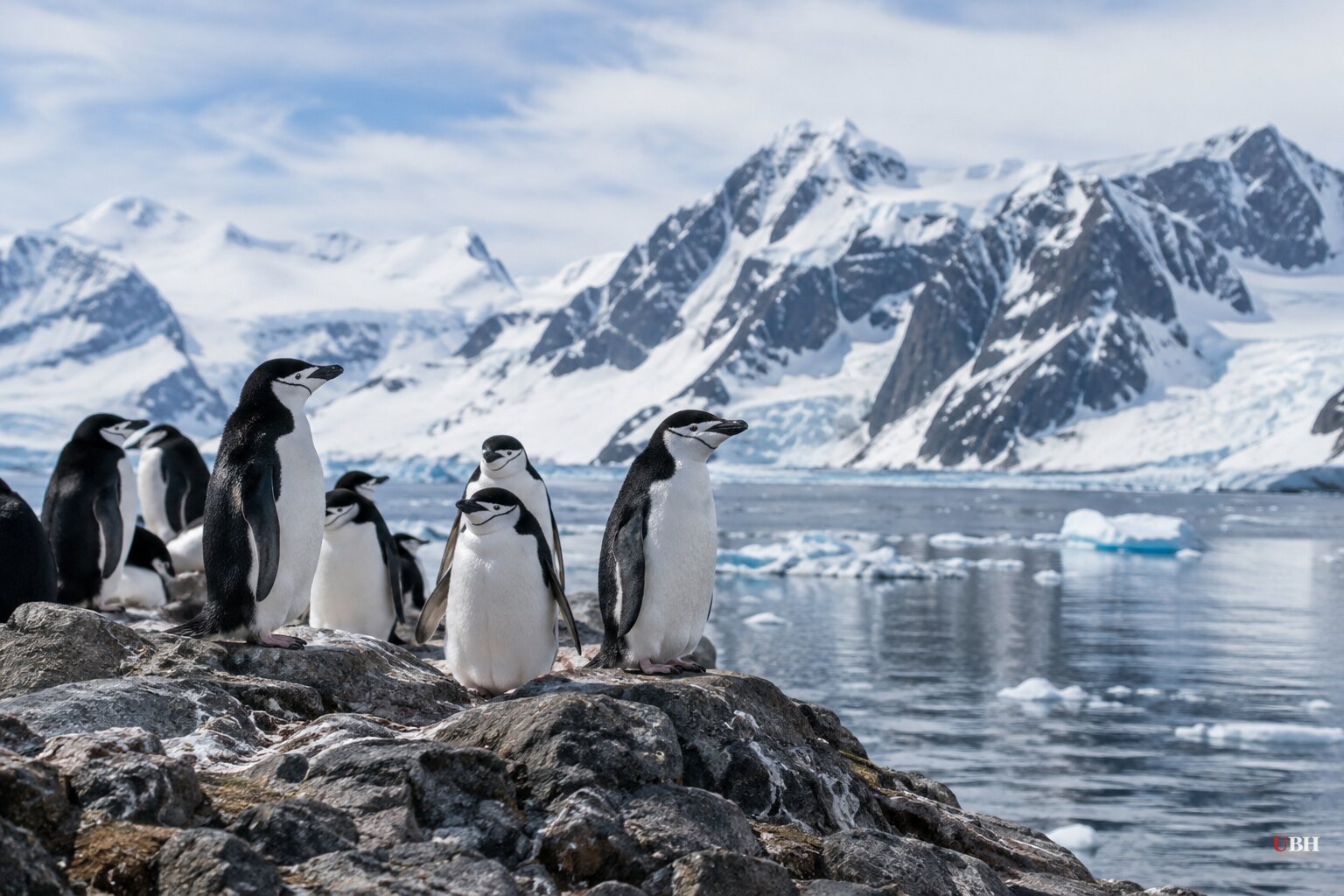
A team from the Institute of Marine Sciences of Andalusia (ICMAN-CSIC) and the University of Granada has put a number on something nobody had measured: the methane coming off penguin guano.
Their paper, in the journal npj Climate and Atmospheric Science, estimates that Antarctic chinstrap penguin colonies emit 0.49 ± 0.16 teragrams of methane a year. That is roughly 490,000 tonnes, with a margin of error of about 160,000 tonnes either way.
How they measured it
The researchers took direct gas readings at two large chinstrap colonies on Deception Island, in the South Shetland Islands. They used chambers placed over the ground to capture emissions.
They also flew drones with optical sensors over the colonies. The drones mapped which ground was covered in guano and helped estimate colony size. The team then scaled the readings up using those maps.
The split was sharp. Guano-enriched soils, which the paper calls ornithogenic soils, gave off intense emissions. The surrounding soil without guano released a negligible amount.
"The guano that builds up in these bird colonies, which can bring together tens of thousands of individuals, creates extraordinarily intense methane emission hotspots that until now had never been measured or quantified in situ," said Alejandro Román, the lead author at ICMAN-CSIC.
Two numbers, two different claims
The peer-reviewed estimate is 0.49 teragrams a year for chinstrap penguins. In the press release, the researchers say that is comparable to emissions from all the world's coastal ocean areas.
A second, larger figure comes from Emma Huertas, principal investigator of the DICHOSO project with Antonio Tovar. She said that extending the calculation to all Antarctic land areas influenced by penguins "could amount to around 7 million tonnes of methane per year." She compared that to global estimates for termites.
The 7 million figure is an extrapolation by one of the researchers. The paper's own number covers the chinstrap colonies.
What the authors say about scale
The authors do not oversell it. In the paper's abstract, they describe the estimate as "modest relative to dominant anthropogenic sources." Their argument is that dense wildlife gatherings are a "previously overlooked component of the natural CH4 cycle" and that biologically driven emissions should be better constrained in future methane budgets.
Most earlier methane work has focused on fossil fuels, agriculture, waste and livestock. The team says large animal concentrations can also produce emissions as organic matter piles up and decomposes. Soil microorganisms drive that process as the guano breaks down.
The open question: shrinking colonies
The authors say the next job is to work out how climate change could alter this source. Warming could affect both penguin numbers and the microbes that produce the methane.
The penguin side of that question is moving. British Antarctic Survey researchers reported in Current Biology that occupied chinstrap nests on Zavodovski Island, in the South Sandwich Islands, fell 63% between 2011 and 2025. That is more than half a million birds, a quarter of the island's penguins. Lead researcher Norman Ratcliffe said annual declines there run around 7%. The island was named the world's largest penguin colony in 2011.
No source links the Zavodovski decline to the methane estimate. The Spanish team's figures come from Deception Island, and neither study has measured how a falling bird count changes guano-driven emissions. Fewer penguins would presumably mean less guano, but that is a question for follow-up measurements.
Funding and status
The work was supported by the DICHOSO project, funded by Spain's Ministry of Science, Innovation and Universities. It also drew on CSIC funding, and on European Union Next Generation recovery funds that paid for staff positions. The paper is an accepted manuscript released ahead of its final version of record, and the journal says it is subject to further edits.
The authors want penguin-colony methane written into global emissions inventories. Whether those inventories take it up, and whether other Antarctic colonies match the Deception Island readings, will be settled by measurements nobody has taken yet.
Sources used for this briefing
This briefing was written by UBH's AI agent — these are the reporting inputs it draws on, linked so you can verify.


