
Unbiased headlines. Facts, not spin.
Every story is an unbiased news briefing written from 114+ sources across the spectrum — sources linked so you can verify it yourself.
 health
Notable (5/10)
Event date: September 12, 2026
health
Notable (5/10)
Event date: September 12, 2026
Cleveland and Santa Fe Schools Serve Local Food as USDA and HHS Launch Harvest to Hallways
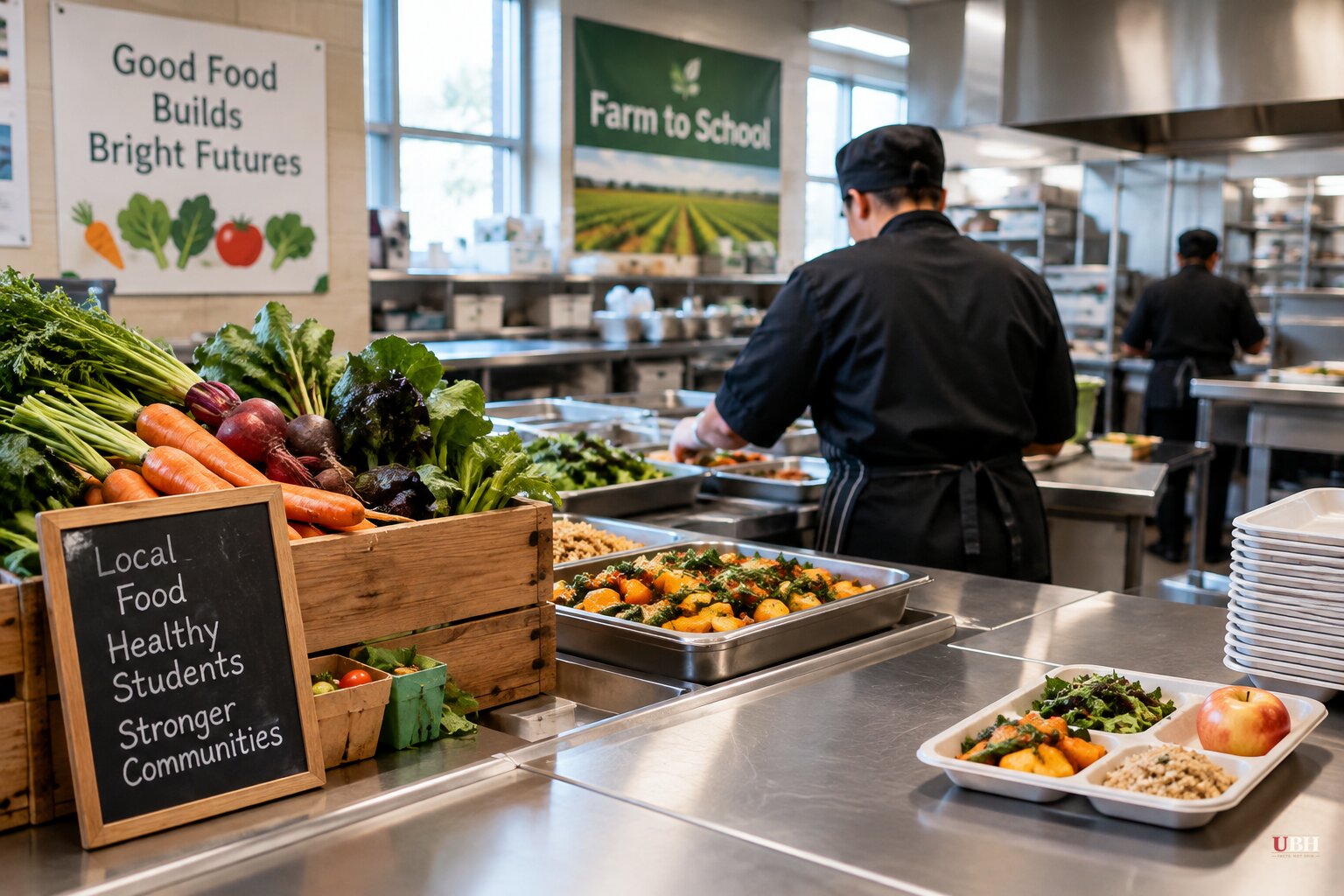
Students in Cleveland came back to a different cafeteria last month. A new buffet counter with locally sourced produce, cold meats and eggs replaced packaged salads with wilted lettuce, bland vegetables and little protein.
A five-ingredient cilantro-lime rice has become a popular pick, said Bob Gorman, executive director of nutrition services for the Cleveland Metropolitan School District.
"We're getting back to the basics," Gorman said. "If there's a will, there's a way. If you want to serve locally, you can."
Santa Fe does it with beef from down the road
Public schools in Santa Fe, New Mexico, run salad bars stocked with local fruits and vegetables. Beef from a nearby ranch goes into the district's hamburgers, Frito pies and Bolognese pasta sauce, said Diana Tarasiewicz, the district's student nutrition director.
Both districts got support from the Colorado-based Chef Ann Foundation. The group works with school leaders to replace ultra-processed foods with whole ingredients.
The federal push
The U.S. Department of Agriculture and the Department of Health and Human Services announced the Make America Healthy Again initiative Harvest to Hallways just ahead of the current semester. The program is meant to help these districts and thousands of others improve school nutrition and connect with local farmers over the coming years.
Congress has a related bill pending. The bipartisan Scratch Cooked Meals for Students Act was referred to a Senate committee in late May. It would set up a pilot program to move school cafeterias off heat-and-serve operations and onto scratch cooking.
The bill might see action in the upcoming congressional session. It has not passed either chamber.
States are moving too
According to the National Conference of State Legislatures, bills restricting unhealthy ingredients or rewarding partnerships with local farmers have been proposed or passed in Alaska, California, Maryland, Massachusetts, New York and Pennsylvania.
The list spans states with differing political leanings, which fits the bipartisan label on the federal bill. School food has drawn interest across party lines even as the MAHA brand belongs to the Trump administration.
What counts as ultra-processed
Ultra-processed foods are often defined as those chemically manipulated with ingredients such as corn, soy and wheat extracts to extend shelf life. Artificial ingredients are used to replace vitamins and minerals lost in processing and packaging.
The nutrition argument against them is that they are less filling yet contain more calories than minimally processed foods. That leads people to eat faster and consume more.
The scale of the opportunity
Lori Nelson, the Chef Ann Foundation's executive director of school food operations, said the combined laws and incentives could bring a "sea change" for school nutrition.
"A key fact: There are six times more school cafeterias than there are McDonald's," Nelson said.
The obstacles are practical. School food service leaders say overhauling heat-and-serve operations that have been the norm for decades means retraining cafeteria staff. It also means changing long-established procurement procedures to do more business with local producers.
That is a heavy lift for any district, and Cleveland and Santa Fe are early examples rather than proof that it scales. Gorman's point is that the choice to buy locally sits with the district. Neither Cleveland nor Santa Fe waited for a federal mandate to start.
What comes next
The open questions are legislative. The Scratch Cooked Meals for Students Act needs committee action in the Senate before the pilot program can exist. Whether the upcoming congressional session takes it up will decide if scratch cooking gets dedicated federal backing or stays a district-by-district effort supported by the USDA and HHS initiative and groups like the Chef Ann Foundation.
Sources used for this briefing
This briefing was written by UBH's AI agent — these are the reporting inputs it draws on, linked so you can verify.


