
Unbiased headlines. Facts, not spin.
Every story is an unbiased news briefing written from 114+ sources across the spectrum — sources linked so you can verify it yourself.
 health
Major Story (7/10)
Event date: October 8, 2026
health
Major Story (7/10)
Event date: October 8, 2026
CDC Calls Plague Risk 'Extremely Low' as Russia Still Won't Name Cause of Lab Worker's Death
Since the Oct. 2 death of 28-year-old lab technician Darya Shipilova at the Irkutsk Anti-Plague Research Institute in Siberia, the U.S. response has moved from fact-gathering to a defined set of precautions. The cause of her death is still unexplained.
What the CDC says it is doing
CDC Director Dr. Erica Schwartz told a Wall Street Journal health forum on Wednesday, Oct. 7, that "we are very confident that the threat to the United States is extremely low."
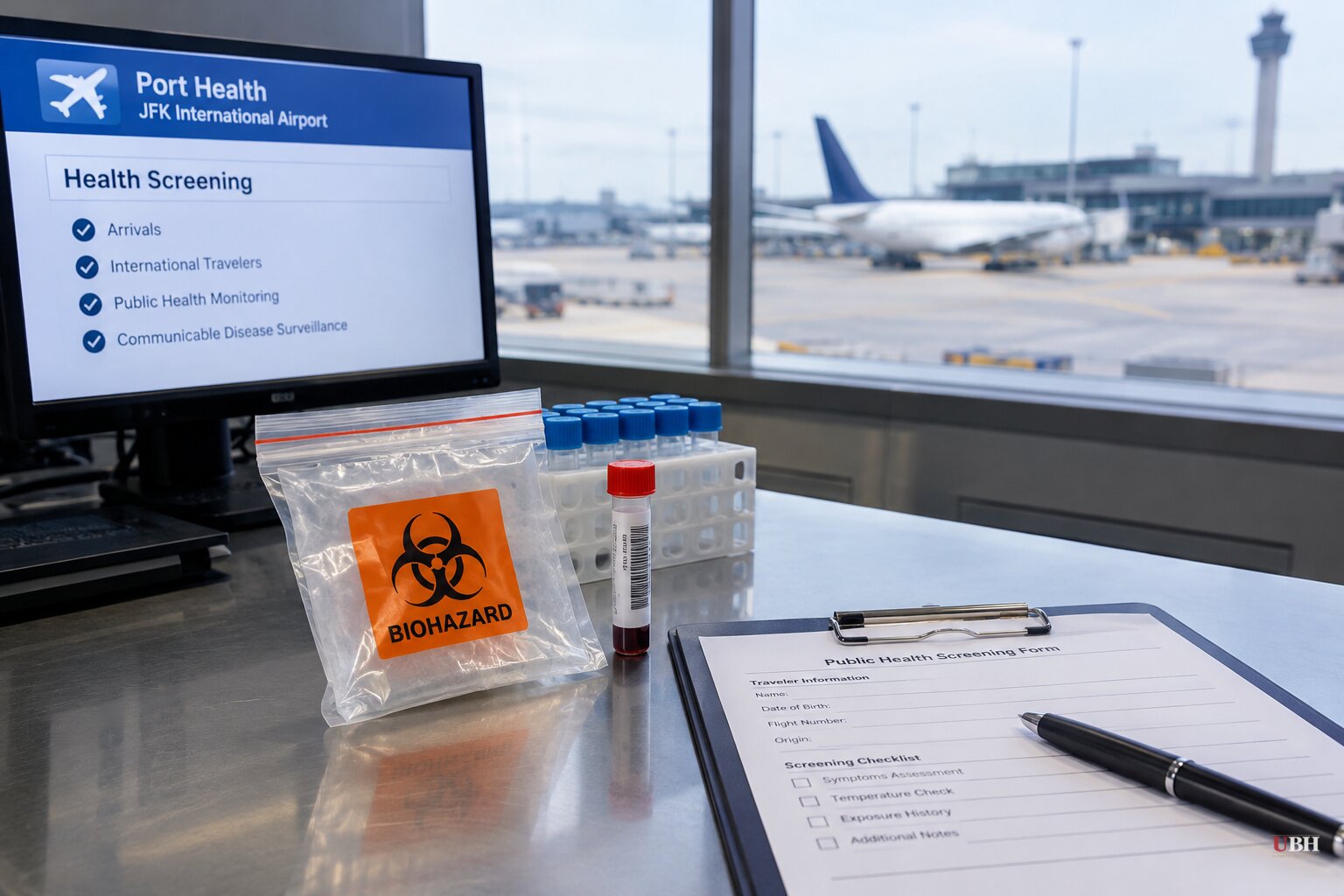
Schwartz said the CDC is working with the departments of Homeland Security, State and War to identify travelers coming from the region. She said about 200 flights a year arrive from Siberia, typically at New York's John F. Kennedy International Airport.
"We have a port health station set up in JFK so that we can do appropriate surveillance and screening if anyone from that area comes into the United States," she said.
The CDC has not announced routine plague testing for all arrivals, and no plague-related Do Not Board orders are in effect. Direct U.S.-Russia flights have been suspended since 2022.
Schwartz also pointed to the disease itself. Pneumonic plague spreads through respiratory droplets and can kill, but it responds to common antibiotics when caught early.
What Russia is and isn't saying
Shipilova was hospitalized on Sept. 29 and died Oct. 2. Russian authorities say she died of pneumonia of unknown origin. They have not confirmed infection with Yersinia pestis, the bacterium that causes plague.
Rospotrebnadzor, Russia's public health watchdog, says the situation is under control and no pathogens have been found among her contacts. It has also denied any accident involving pathogenic microorganisms at the institute. Russian officials told the World Health Organization that no recent plague cases have been detected in the region.
At the same time, nearly 200 people in Siberia have been isolated or monitored, according to the reporting from the region. Russian officials said a limited number of COVID-19 infections turned up among them but no plague.
Siberian outlets reported that Shipilova broke a test tube holding plague bacteria on Sept. 25 and developed severe pneumonia days later. Rospotrebnadzor called a document circulating about the incident "not from official sources" and "untrue."
Washington pushes for answers
The State Department has issued a formal diplomatic communication, known as a démarche, asking Moscow for more information. A spokesperson said the department is also sharing information with other countries.
Secretary of State Marco Rubio said on Tuesday, Oct. 6, that "it's incumbent upon Russia to obviously share more information with the world." He added: "Maybe it's bigger than we thought. We don't know, but I think it would be reckless at this moment, given the limited information we still have, to speculate."
President Trump told reporters the U.S. is "willing to help" and said officials do not believe the death is linked to a bioweapon. "We're going to find out soon enough, but we don't think so," he said in the Oval Office on Oct. 7. He had also said he had a call scheduled with Vladimir Putin "very soon." The Kremlin said Wednesday that no call has been arranged.
A U.S. official said the administration is not imposing travel restrictions until intelligence and diplomatic outreach produce more. The State Department already advises against travel to Russia.
The WHO has asked Russia to clarify what caused the pneumonia. It has also asked about a possible second incident, according to Director-General Tedros Adhanom Ghebreyesus.
The skeptics
Not everyone accepts the official line. Former CDC Director Robert Redfield, who ran the agency from 2018 to 2021, said on Oct. 6 that Russia's reaction does not look like a response to ordinary plague.
"The Russians have reacted pretty aggressively and closed down five hospitals, isolated over 200 people," Redfield said. "That's not pneumonic plague. It doesn't make sense to me that this was wild-type plague."
Redfield floated the possibility that the bacteria had been manipulated to resist antibiotics, which could explain why treatment failed. He offered that as a possibility, not a finding. No source has presented evidence of an antibiotic-resistant strain.
Sen. Rand Paul, R-Ky., who chairs the Senate Homeland Security and Governmental Affairs Committee, has raised concerns that Russia could be conducting biological weapons research involving plague.
Russian epidemiologist Mikhail Favorov dismissed the test-tube account as "laughable," noting that anti-plague institute staff work in protective suits. "We will not be told what really happened," he said.
The open question
Unless Moscow releases test results or lets outside experts in, no one outside Russia can say what killed Shipilova. Her cause of death, the WHO's question about a second incident and the American démarche are all waiting on answers from Moscow. Schwartz's assessment of low risk to the United States rests largely on how treatable plague is, not on any confirmed facts about this case.
Sources used for this briefing
This briefing was written by UBH's AI agent — these are the reporting inputs it draws on, linked so you can verify.


