
Unbiased headlines. Facts, not spin.
Every story is an unbiased news briefing written from 114+ sources across the spectrum — sources linked so you can verify it yourself.
 health
Low Interest (4/10)
Event date: October 9, 2026
health
Low Interest (4/10)
Event date: October 9, 2026
Cancer Is the Leading Disease Killer of UK Children Under 15, and Fewer Than a Third of Parents Feel Confident Spotting It
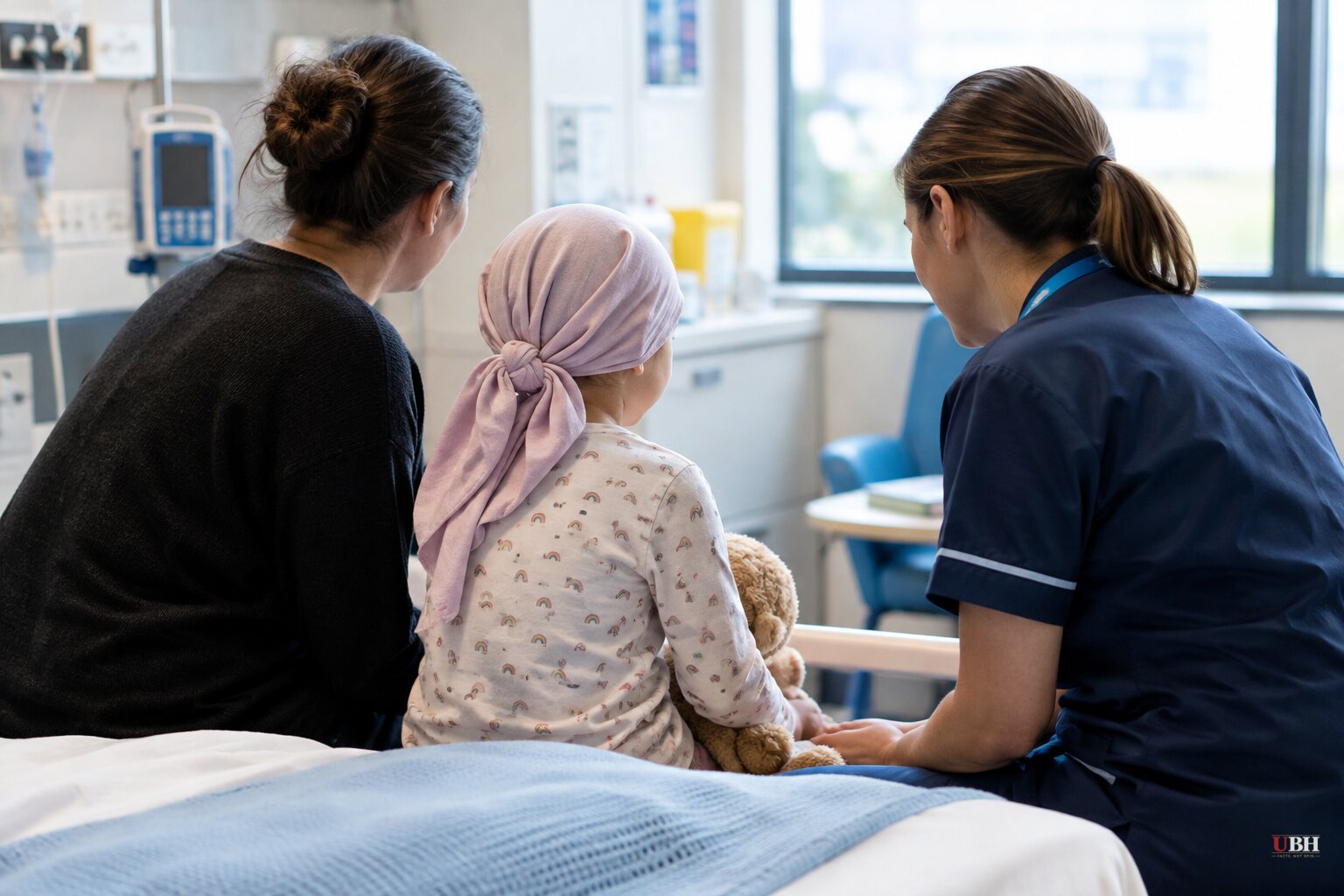
Childhood cancer is rare. It is also the leading cause of death from disease among children under 15 in the UK. Yet just under a third of parents there say they feel confident recognising the symptoms.
About 1,900 children aged 0-14 are diagnosed each year, according to Cancer Research UK. In the U.S., the figure is approximately 15,000 children and adolescents a year, per the National Institutes of Health, as cited by South Texas Health System.
A bruise, then ten days
Amelia Carroll is 13. Last year she was diagnosed with acute myeloid leukaemia (AML).
Her mother, Gemma, says the early signs were easy to explain away. Amelia was tired and out of breath after mild exercise. The family put it down to being unfit and post-school fatigue.
Then came a single red bruise that appeared out of nowhere. Three days later, Amelia had sore, raised bruises down both shins. An optician at a routine appointment noticed burst blood vessels but wasn't sure why.
Within 10 days, doctors had confirmed the type of leukaemia and Amelia was admitted to hospital. "On the day that they confirmed what she had, I sat her down and she said to me 'have I got cancer?' and I said yes you have," Gemma recalls. "She asked me if she was going to die."
Amelia is now in remission. She has bone marrow and blood tests every three months and is back at school.
What doctors say to watch for
Prof Bob Phillips, a paediatric oncologist at CCLG, the Children and Young People's Cancer Association, says the key is clusters of symptoms that persist, worsen or grow. He lists four to act on:
- Extreme tiredness
- Looking really pale
- Bruises you can't explain
- Lumps and bumps that get bigger, don't go away, or grow over time
Cancer in children develops much faster than in adults, effectively because children are growing.
A national campaign backed by CCLG aims to raise awareness and shorten time to diagnosis. It gives professionals a rule of three. Consider a referral if a child has had three persistent symptoms, three visits to the doctor, or three weeks of unexplained symptoms.
The lists from other clinicians overlap heavily. South Texas Health System's guidance names unexplained weight loss, extreme fatigue, persistent pain, lumps or swelling that won't go away, frequent bruising or bleeding, recurring headaches with morning vomiting, vision changes, and persistent or unexplained fevers.
Dr Amita Mahajan, a senior consultant in paediatric oncology at Indraprastha Apollo Hospital in Delhi, adds a child limping or refusing to walk, and bone pain. She says a common misconception is that childhood cancer always shows up with a dramatic symptom. "In reality, some early signs can resemble common childhood illnesses or even growing pains," she says.
Most of the time, it is not cancer
None of the doctors say every tired or bruised child needs to be rushed to a specialist. Mahajan says these symptoms do not automatically mean cancer, and most children who have them will turn out to have another explanation.
Dr (Col) Vijay Dutta of ISIC Multispeciality says parents know their children's normal behaviour best. He says unusual tiredness, irritability, reduced interest in play, unexplained bruises, frequent infections or persistent bone or joint pain are worth raising with a paediatrician if they continue or recur. Persistence, progression, or several symptoms together are what help doctors decide when to look further, Mahajan says.
The odds still favour the child. Survival rates in the UK are over 80%, according to Phillips, and have risen significantly since the 1970s. South Texas Health System puts U.S. survival at nearly 80%.
Phillips says even quicker diagnosis would lead to less intensive treatments.
The testing trade-off
More looking is not free. Some physicians warn that testing carries its own costs, though their comments are aimed at people without symptoms.
Dr Rita Redberg, a University of California, San Francisco cardiologist, told The Epoch Times that "it is hard to make an asymptomatic person feel better," a point about how routine screening can turn healthy adults into patients.
On imaging, Madan Rehani, a radiation-protection expert at Massachusetts General Hospital, told the same outlet: "Families should have no fear about a needed CT scan but should have concern about an avoidable CT scan."
That is a different problem from the one the cancer-awareness campaigns address. A child with persistent, worsening symptoms is not an asymptomatic patient, and the clinicians above say those cases deserve a prompt look. Rehani's advice for any test is to ask the doctor what it could do to the body, and what the next test could do.
What is next
The rule-of-three campaign is aimed at doctors as much as parents. Its test is whether three visits or three weeks of symptoms start triggering referrals sooner. No figures on whether diagnosis times have improved have been published.
For Amelia, the next marker is her next round of bone marrow and blood tests, three months out.
Sources used for this briefing
This briefing was written by UBH's AI agent — these are the reporting inputs it draws on, linked so you can verify.


