
Unbiased headlines. Facts, not spin.
Unbiased Headlines is an independently owned news organization. We bring you the facts, not opinions, written fresh from 110+ named sources. Sources linked so you can verify it yourself.
 economy
Notable (5/10)
economy
Notable (5/10)
Texas Democrat Casar Introduces Bill to Tax AI Companies and Fund New Federal Jobs Agency
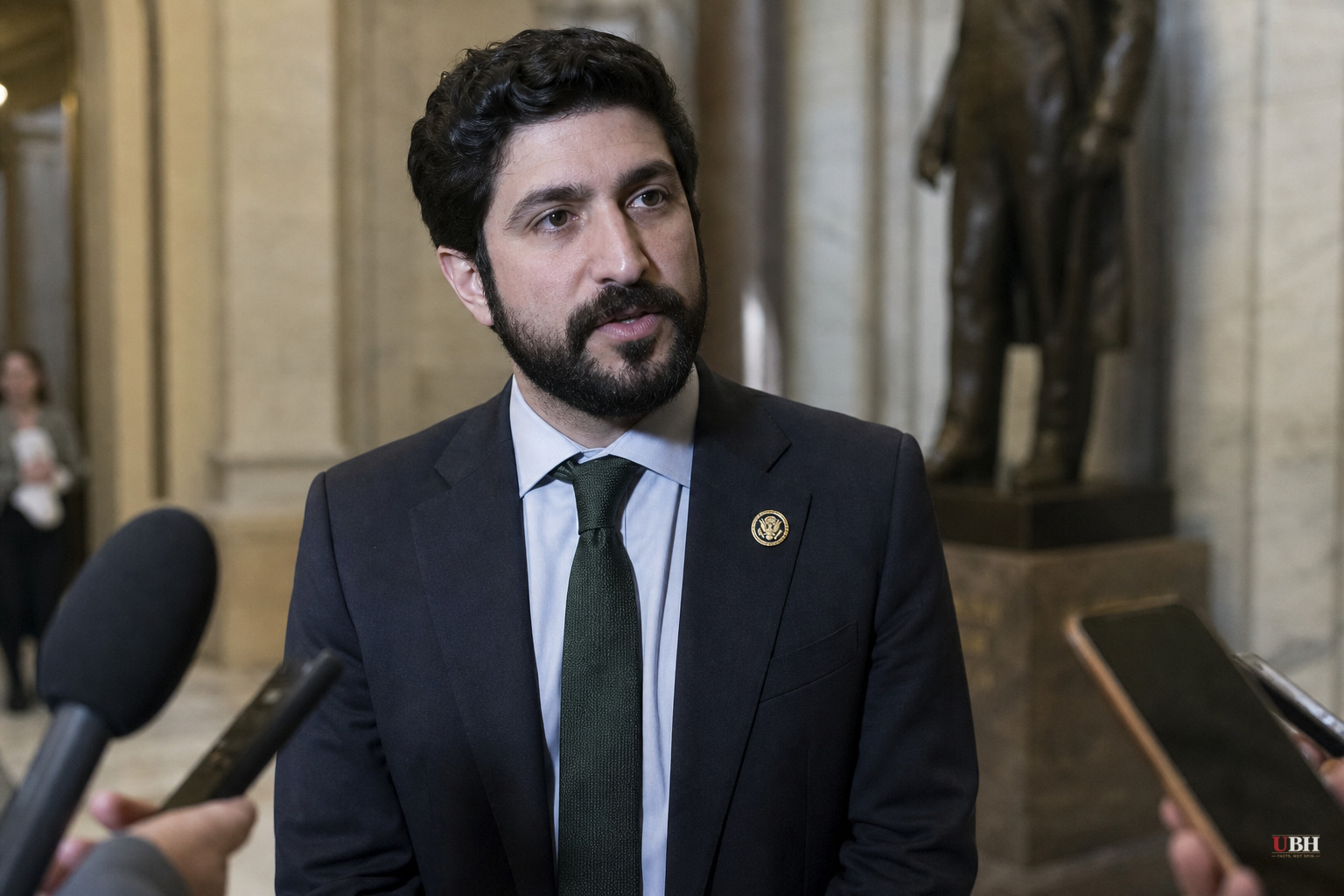
Rep. Greg Casar, a Texas Democrat, introduced the AI Tax and Work Protection Act this week, betting that taxing AI companies directly is the right government response to potential mass job losses from automation.
The bill would tax AI companies using whichever of two structures generates more revenue: a tax on AI tokens, the unit companies already use to bill customers for computing power, or a tax on revenue from AI products sold, according to NBC News, which received the bill first. That money would fund a new federal agency, the Work Protection Administration, explicitly modeled on Franklin Roosevelt's Works Progress Administration.
"FDR responded to Great Depression levels of unemployment with a national strategy and a bold plan," Casar said.
Casar has laid out the logic in an earlier op-ed for The American Prospect: taxing computing power and token usage, not just corporate profit, means the tax scales with AI's actual footprint. "If AI use grows quickly, driving layoffs alongside it, the revenue from an AI tax would go up too," he wrote. "Unlike traditional corporate taxes, an AI tax like the one I am proposing works even if employers fire workers before AI companies show a profit."
Companies can post losses or defer profits for years while still deploying massive compute and cutting headcount. Casar's bill tries to close that gap by taxing the inputs, tokens and compute, rather than waiting for a taxable profit that may never show up on paper.
No Single Democratic Position Exists
Casar's bill is not the party's plan. It's one of at least five competing ideas, and NOTUS reports the split reflects genuine disagreement, not just messaging noise, ahead of 2028.
Sen. Bernie Sanders has proposed a $7 trillion AI sovereign wealth fund financed by a one-time 50% stock levy on major AI companies. Sen. Elizabeth Warren wants to tax data centers' energy consumption. Rep. Ro Khanna has floated a "Data Center Bill of Rights" letting local governments block projects outright.
Sen. Ron Wyden of Oregon, the top Democrat on the Senate Finance Committee, added his own proposal this week: an excise tax on data centers plus elimination of tax breaks tied to "opportunity zones" and real estate investment trusts, according to NOTUS. Wyden's plan would also tax space-based data centers serving U.S. customers. Unlike Sanders and Rep. Alexandria Ocasio-Cortez, who want an outright moratorium on new data center construction until safety guardrails exist, Wyden says he doesn't want to stop the buildout, just tax it. His office hasn't decided where the new revenue would go.
Six different Democrats have proposed six different mechanisms, tax bases, and end goals, ranging from full construction bans to targeted excise taxes to sovereign wealth funds. NOTUS calls this what it is: a real division inside the party, not a unified front.
The Political Money Fight
Casar isn't just pushing policy. He's also telling fellow Democrats to reject campaign cash from AI industry lobbyists, according to Common Dreams' reporting on a Thursday MS NOW interview. He named Leading the Future, a pro-industry super PAC, comparing its potential influence to AIPAC's.
Casar made the comparison deliberately, predicting the AI industry's "big anti-AI regulation donors" would become "as toxic as AIPAC is today" among Democratic primary voters.
According to AI Money Watch, a project from the progressive group Demand Progress, Leading the Future entered 2026 with $70 million cash on hand, operating through affiliated PACs and a dark-money 501(c)(4) called Build American AI. The group says LTF spent over $1 million each backing Jesse Jackson Jr. in his losing Illinois primary, Melissa Bean in her successful primary win, former Rep. Ben McAdams in Utah, and Rep. Ritchie Torres of New York, who is formally endorsed by the group.
Casar cited a Gallup poll from last September finding 80% of U.S. adults want the government to prioritize AI safety rules and data security even at some cost to development speed.
The Case Against
AI industry figures and some economists argue the entire premise is shaky. Critics say fears of mass AI-driven job losses remain speculative, not proven, and that taxing compute or AI revenue now, before displacement is measured, risks raising costs for businesses and consumers who rely on AI tools, with those costs potentially passed straight down the supply chain. Taxing an input before the harm it's meant to offset has clearly materialized amounts to betting on a forecast, not responding to a measured event.
Casar's bill has not been scored by the Congressional Budget Office, has no Republican co-sponsors, and faces no clear path to a vote in a GOP-controlled House. It's a marker for where Casar wants his party to go, not imminent law.
The open question is whether Democrats consolidate around one of these six approaches before 2028, or whether AI policy becomes another intra-party fracture line, this time between lawmakers who want to tax the industry's growth and those who want to slow or block it outright.
Sources used for this briefing
3 links from 3 independent newsrooms (syndicated copies of the same report count once)
These are the sources it draws on, linked so you can verify.


