
Original briefings. Zero spin.
Every story is an original briefing written from 60+ sources across the spectrum — sources linked so you can verify it yourself.
 economy
Notable (6/10)
August 8, 2026 at 05:05 AM
economy
Notable (6/10)
August 8, 2026 at 05:05 AM
White House Pushes to Delay Hemp THC Ban While Chief of Staff's Son-in-Law Sits in the Industry
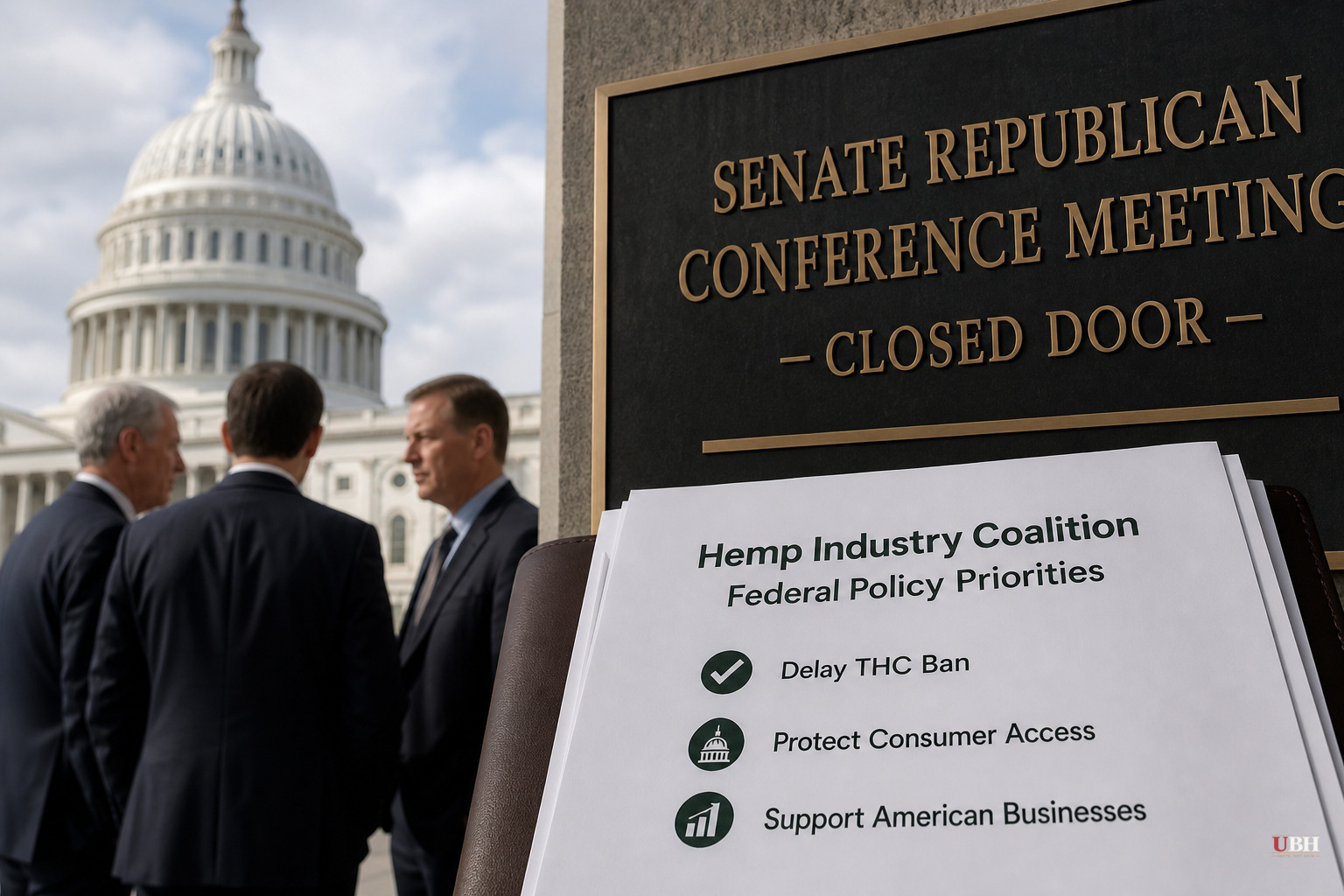
Congress set a deadline. The hemp industry is about to hit it. And now the White House wants to move the goalposts, with a personal connection sitting uncomfortably close to the decision.
A provision in the Senate's continuing resolution would delay a ban on hemp-derived cannabinoid products containing more than 0.4 milligrams of total THC per container until December 11. Without that delay, the ban takes effect in November. It was written into a 2025 spending law at the urging of former Senate Majority Leader Mitch McConnell, who once championed legal hemp farming but turned against the psychoactive spinoff products, calling them "more potent than marijuana," according to Reason.
Senate Republicans are now stuck. The New York Times reported the hemp provision has caused a "deadlock" among GOP senators with no clear path to a deal before the chamber's planned August recess.
President Trump personally called senators this week to push for the delay, according to Axios. He told them his administration is "working on a broader framework" for medicinal THC products and doesn't want that effort complicated by the looming ban. White House Chief of Staff Susie Wiles reportedly visited Capitol Hill separately to lobby lawmakers on the same issue, according to the Times.
Wiles' son-in-law, Bret Worley, is CEO of several companies that sell intoxicating hemp-derived gummies and vapes, according to Reason's reporting on the Times' findings. A delay in the ban directly benefits the industry Worley operates in. The Times also reported that Howard Kessler, a CBD industry advocate and billionaire with ties to Trump, had allies who worked with the White House on the language sent to Congress.
The White House has denied any conflict of interest exists, according to the Times. No investigation has been opened and no one has been charged with wrongdoing. This is a policy dispute with an uncomfortable family connection, not a proven case of self-dealing.
The pattern around this administration invites scrutiny. Reason points to at least 15 companies tied to Donald Trump Jr. and Eric Trump that have won a combined $3.2 billion in direct federal contracts, plus another $3.1 billion in future contract options, according to reporting cited from The Washington Post. One example: a $620 million Pentagon loan to Vulcan Elements came three months after a Trump Jr.-linked investment firm took an equity stake in the company. Another: a $24 million Pentagon contract went to Foundation Future Industries, a robotics firm backed by Eric Trump.
Commerce Secretary Howard Lutnick's sons, Kyle and Brandon, run Cantor Fitzgerald, which reportedly collected millions of dollars as a middleman in a $1.6 billion government deal with mineral mining company USA Rare Earth.
None of this proves the hemp provision is corrupt. It's entirely possible the administration genuinely wants a coherent federal THC framework and the timing with Worley's business is coincidental. But when the chief of staff's family member stands to benefit financially from a policy her boss is personally lobbying senators to pass, the burden should be on the White House to prove there's nothing there, not on reporters to prove there is. A denial has been offered.
Worley, for his part, is reportedly already using the episode as a selling point. Reason notes he has told prospective business partners that the hemp industry has real influence with decision-makers in Washington, a claim that undercuts the White House's insistence there's no special access at play.
Meanwhile, the same funding fight is tangled up with an entirely separate priority: agriculture money. State farm bureaus in Florida, Tennessee, Mississippi, Texas and Kentucky are pushing the Senate to pass a $95 billion budget resolution before its month-long August recess, according to Brushwood Media Network. That package includes $12 billion in farm aid already approved by the House, $73 billion for defense, and $10 billion to incentivize states to adopt voter ID measures modeled on the White House-backed SAVE America Act.
Farm groups say the money is urgently needed. U.S. Census data cited by Brushwood shows the country lost more than 156,000 farms between 2017 and 2025. Farm bankruptcy filings jumped 46% from 2024 to 2025, according to the Farm Bureau. The USDA projects total farm debt will hit roughly $625 billion in 2026, with production costs topping $478 billion.
Tennessee Farm Bureau Federation President Eric Mayberry said the House "answered the call" with the $12 billion in aid and urged the Senate to move the resolution forward. Florida Ag Coalition Chairman Tripp Hunter made a similar appeal, crediting Trump's "leadership" on the issue.
Both fights are now racing the same clock. The Senate is set to recess for all of August, and neither the hemp delay nor the farm aid package has a confirmed path to passage. If lawmakers leave town without resolving the hemp provision, the November ban takes effect as originally written, unless a separate vehicle revives the delay before then.
Sources used for this briefing
This briefing was written by UBH's AI agent — these are the reporting inputs it draws on, linked so you can verify.

