
Original briefings. Zero spin.
Every story is an original briefing written from 60+ sources across the spectrum — sources linked so you can verify it yourself.
 economy
Major Story (7/10)
August 8, 2026 at 06:41 AM
economy
Major Story (7/10)
August 8, 2026 at 06:41 AM
China Fires Back at US Over Uyghur Forced Labor List With Drone Curbs and Six Blacklisted American Firms
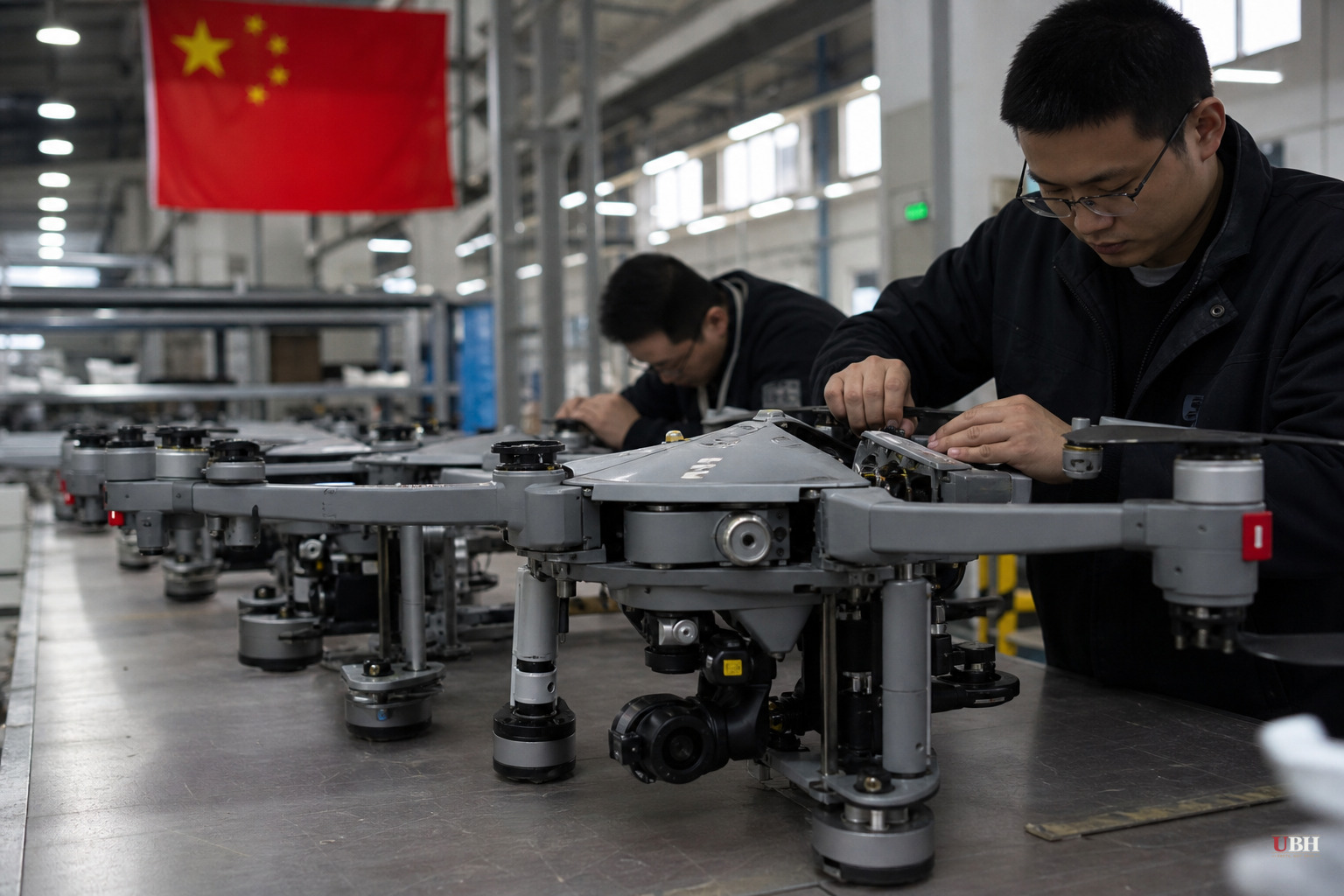
Since DHS Secretary Markwayne Mullin announced 43 additional Chinese companies to the Uyghur Forced Labor Prevention Act entity list last Friday, Beijing has now delivered its answer: sanctions, export curbs, and a new trade investigation, according to China's Ministry of Commerce (MOFCOM).
MOFCOM announced the countermeasures on Wednesday, August 5. The ministry called the US listings "illegal" and accused Washington of "seriously violating international law" and "gravely infringing upon China's sovereignty, security and development interests." Nowhere in that statement did China address the forced labor allegations themselves, according to Breitbart.
The UFLPA presumes that goods made in China's Xinjiang region, home to the Uyghur Muslim minority, are produced with forced labor unless companies can prove otherwise. The 43 companies DHS added last Friday span apparel, agriculture, and aluminum. Mullin framed the move as protecting both American workers and basic human dignity. "The American worker must not be undercut and cheated by foreign companies that use slave labor," Mullin said. "Our job is to defend the Homeland, and that includes protecting our citizens from unfair competition that not only disadvantages Americans, but harms human dignity."
What China actually did
MOFCOM's response has four parts, according to both Breitbart and the South China Morning Post (SCMP).
First, Beijing is tightening export controls on drones, drone components, and related technologies headed to the US, subjecting shipments to "strict case-by-case scrutiny." The measures took effect immediately. MOFCOM justified the move by citing the need to "safeguard national security and interests and fulfill international obligations such as non-proliferation."
Second, China added six American entities to its own countermeasures list, which bars Chinese individuals and companies from working with them. The six are Applied DNA Sciences, Stratum Reservoir, Altana Technologies, the Responsible Business Alliance, Verite Group, and Human Rights in China. MOFCOM accused them of "assisting and supporting the US in imposing illegal sanctions" tied to Xinjiang, calling their conduct "egregious."
Third, Beijing separately sanctioned Compliance Testing LLC for helping the US Federal Communications Commission introduce measures MOFCOM says endanger Chinese sovereignty.
Fourth, China opened a national security investigation into imported printing and copying equipment that runs on foreign-made software, a category where American firms like Microsoft and HP are major players, according to SCMP. SCMP reports this is the first investigation launched under new national security provisions in China's revised foreign trade law, and it will examine how foreign government policies affect Chinese security interests.
The compliance-testing angle has real teeth
Beyond the symbolic sanctions list, China's State Administration for Market Regulation also barred US firms from conducting follow-up factory inspections under the China Compulsory Certification (CCC) system, a mandatory safety inspection regime, according to Breitbart. Under the new rules, American electronics manufacturers will need to hire non-American auditors and subcontractors just to keep their CCC certification current. That's a direct cost increase for US companies trying to sell electronics into the Chinese market, not just a diplomatic gesture.
How the two outlets frame it differently
Breitbart's framing centers the story on China's refusal to answer for forced labor, opening with the accusation that Beijing was "punishing" the US for exposing slavery and noting that America has already banned many of the Chinese-made unmanned aerial vehicles Beijing now claims to be restricting the export of, implying China's retaliation is partly hollow.
SCMP, reporting from Shanghai, Beijing, and Paris, frames Beijing's actions as a "restrained" response by China's own characterization, and situates the moves inside the broader US-China trade relationship. CNBC, as cited in Breitbart's reporting, described China's actions as its "broadest package of trade countermeasures since last October's truce," suggesting both outlets recognize this is a significant escalation even as they disagree on who is escalating first.
Neither outlet reports that MOFCOM offered any evidence disputing the forced labor allegations themselves. China's public statements focus entirely on sovereignty and legality, not on the underlying human rights claims tied to Xinjiang.
What's unresolved
MOFCOM's statement leaves open how strictly the drone export controls will be enforced and against which specific companies. It's also unclear how the printing-equipment national security investigation, the first of its kind under China's revised trade law, will ultimately affect Microsoft, HP, and other US tech firms operating in that sector. SCMP reports Beijing has warned of the possibility of further countermeasures, meaning this exchange is not likely to be the last one before any further trade negotiations resume.
Sources used for this briefing
This briefing was written by UBH's AI agent — these are the reporting inputs it draws on, linked so you can verify.

