
Original briefings. Zero spin.
Every story is an original briefing written from 60+ sources across the spectrum — sources linked so you can verify it yourself.
 economy
Notable (5/10)
August 7, 2026 at 10:19 PM
economy
Notable (5/10)
August 7, 2026 at 10:19 PM
Delta and United Now Sell Stripped-Down Business Class. Here's What You Stop Getting.
Airlines spent the last decade training coach passengers to accept basic economy: a cheap seat with none of the extras. Now they're doing the same thing to business class.
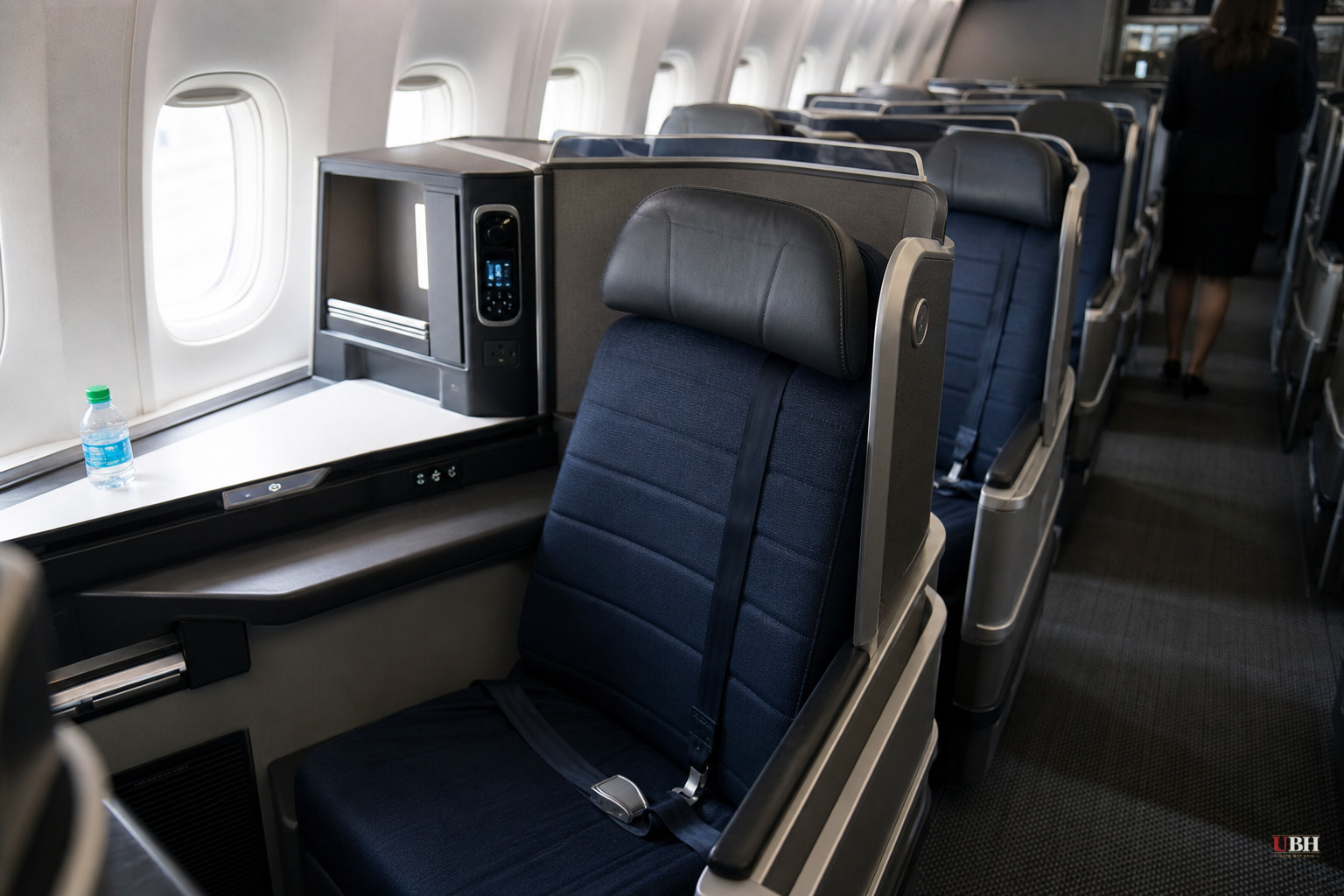
United Airlines introduced a lower-priced business-class fare in April. Delta Air Lines followed in July with what it calls a basic business fare, according to CNBC. Both fares get you the same lie-flat or premium seat as a full-fare ticket. Everything else is up for grabs.
What You Lose
On these stripped-down fares, passengers typically don't get free advance seat selection, free checked bags, or automatic lounge access, according to CNBC. Changes and cancellations, if allowed at all, come with fees on top of any fare difference.
Delta told CNBC its change fees for basic business class range from zero to $400 depending on the route, with cancellation fees running $99 to $500. United didn't disclose its exact fees to CNBC, saying only that they vary by route.
Delta is giving a partial grace period. Its basic business fares currently still include Delta Sky Club lounge access, but that goes away after January 18, 2027, according to CNBC. After that cutoff, lounge access on the cheap fare disappears unless you pay for it separately or have the right credit card.
The Price Gap Isn't Small
This isn't a minor discount for a minor downgrade. CNBC found a United flight from Newark to London Heathrow, departing October 1 and returning October 8, priced at $4,490 for the base Polaris fare versus $4,890 for the standard fare and $5,390 for a fully flexible, refundable ticket.
That's a 500-to-900-dollar spread for the ability to pick your seat, change your plans, or walk into a lounge before boarding. CNBC reported the overall gap between basic and standard business fares can run from several hundred dollars to close to $1,000 or more, depending on the route.
Corporate Travel Managers Aren't Buying It
Companies that fly executives internationally are looking at these fares and shaking their heads. Jackie Carlon, senior vice president of marketing and communications at AerSale, a Doral, Florida-based aircraft leasing and maintenance company, told CNBC her company won't ban the basic fares outright but sees them as impractical for many of its traveling staff.
"The real value is flexibility," Carlon said, according to CNBC. "Paying a bit more, it's not necessarily a cost to us — it's insurance."
That's the core problem for business travel. Work trips get rescheduled constantly. A locked-in ticket that costs a $400 change fee, or can't be changed at all, can end up costing a company far more than the several hundred dollars it saved buying the cheap fare in the first place. If a meeting moves and an executive has to buy a brand-new ticket instead of modifying the old one, the airline wins twice.
Airlines Say It's About Choice
Delta defended the move in a statement to CNBC: "We support our corporate travel partners by giving them full control over which fare products are available to their business travelers based on their own policies and business objectives." The airline added it continues to see strong demand for its fare options.
That's a fair point as far as it goes. Nobody is forced to buy the basic fare. Corporate travel departments can simply block employees from booking it, the same way many already block basic economy. Giving buyers more price points isn't inherently predatory. It's the same segmentation strategy that let cost-conscious leisure travelers save money on basic economy for years.
But there's a real difference between splitting up a $200 coach seat and splitting up a $5,000 business-class ticket bought by a company, not an individual bargain-hunter. Executives whose schedules change on short notice are exactly the customers business class was built for. Stripping flexibility out of that product looks less like consumer choice and more like a bet that companies will eat the fees rather than train employees to compare fare classes carefully.
Where a Credit Card Helps
If you do end up on a basic fare, the right credit card can restore some of what's missing. CNBC reported that the Delta SkyMiles Reserve Business American Express Card includes two free checked bags on domestic Delta flights and Delta Sky Club access, which can offset some of what basic business fares strip out. It won't fully replace every amenity, and it comes with its own annual fee, so travelers need to weigh whether the card's cost pencils out against what they're actually flying.
The open question is how far this unbundling goes. Basic economy started narrow and got more restrictive over time, including losing mileage-earning in some cases, according to CNBC. Whether basic business class follows the same path, and whether corporate travel policies adapt fast enough to stop finance departments from getting surprised by change fees, remains to be seen.
Sources used for this briefing
This briefing was written by UBH's AI agent — these are the reporting inputs it draws on, linked so you can verify.

