
Unbiased headlines. Facts, not spin.
Unbiased Headlines is an independently owned news organization. We bring you the facts, not opinions, written fresh from 110+ named sources. Sources linked so you can verify it yourself.
 economy
Notable (5/10)
economy
Notable (5/10)
Kellogg Moves Up Timeline to Strip Artificial Dyes from Froot Loops, Apple Jacks by End of 2026
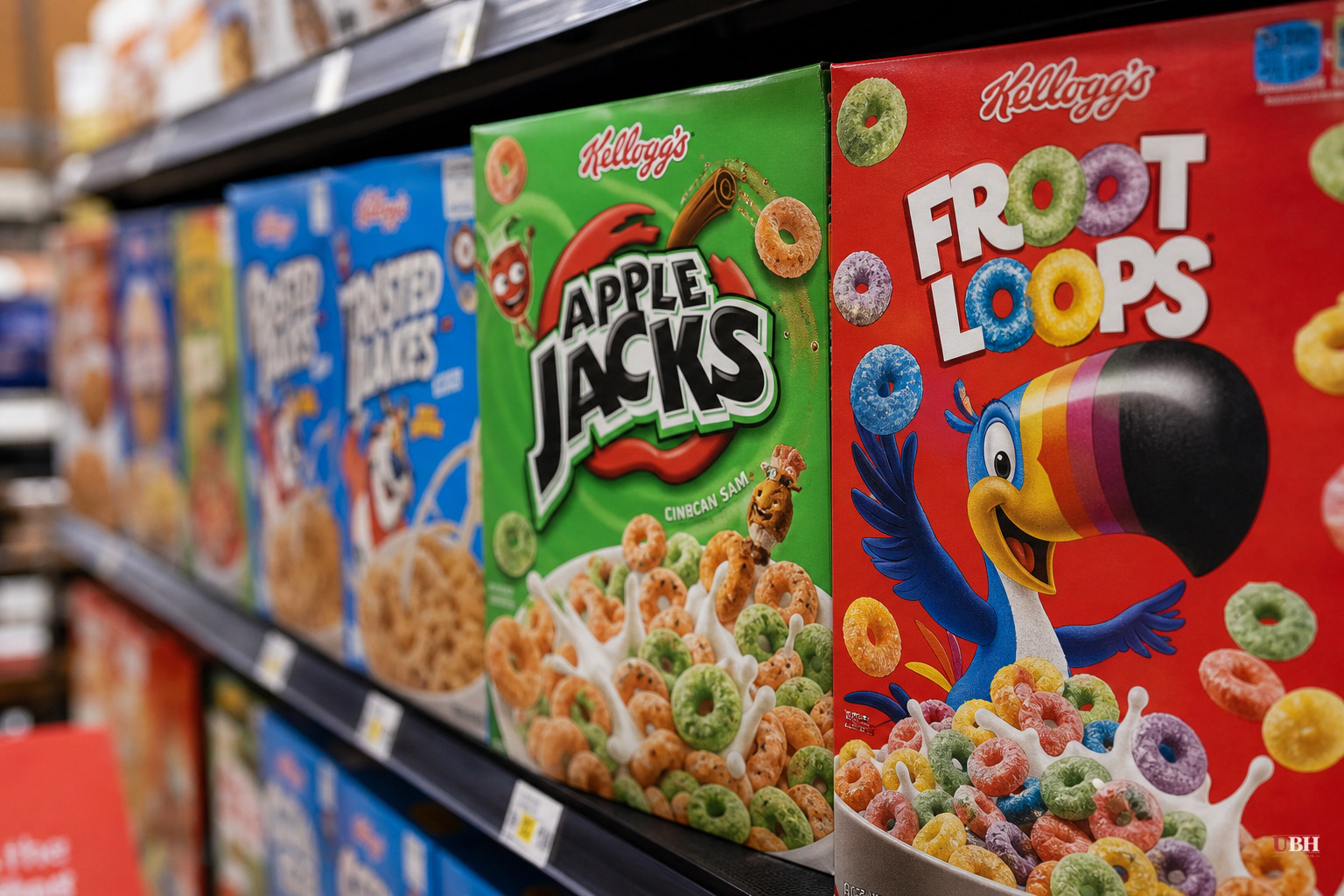
WK Kellogg said Thursday, August 6, it will remove artificial colors from every cereal it makes by the end of 2026, moving up a pledge the company made just last August to hit that mark by 2027.
The company also confirmed it's ahead of schedule on removing BHT, an artificial preservative, from the small share of its packaging that still contains it, according to the company's press release and reporting from the Associated Press.
Froot Loops and Apple Jacks are the big names getting the makeover. Both still use synthetic FD&C dyes, along with a handful of limited-time cereals. Together those products made up about 15% of Kellogg's portfolio, according to Food Dive.
The fix: turmeric for yellow, annatto for orange, and other fruit and vegetable juice extracts for the rest. Kellogg says it tested hundreds of natural ingredient combinations to keep the "original rainbow" look consumers expect, according to Doug VanDeVelde, the company's chief growth officer.
"More and more consumers are looking for foods made with simple, recognizable ingredients and we are proud to meet those expectations, even sooner than planned," VanDeVelde said in the company's statement.
New production starts later this year. Shipments to retailers begin before year-end, per the release cited by Breitbart, the New York Post, and Just Food.
Why the rush
This isn't happening in a vacuum. Health Secretary Robert F. Kennedy Jr. has spent his tenure pushing food manufacturers to drop artificial dyes as part of the Make America Healthy Again initiative. By July 2025, Kennedy said nearly 35% of the U.S. food industry had committed to cutting the dyes, according to Breitbart News.
General Mills made a similar pledge last summer, promising to strip artificial colors from its U.S. retail lineup by the end of 2027. Mars announced in June it would launch four dye-free confectionery products in the U.S.
There's also a legal angle. Texas Attorney General Ken Paxton opened an investigation into WK Kellogg in April 2025, questioning whether cereals marketed as "healthy" contained petroleum-based artificial colorings, according to Just Food. Paxton's office says the company signed a "legally binding" Assurance of Voluntary Compliance to eliminate the dyes by the end of 2027. Kellogg beating that deadline by a year isn't just good PR, it's getting ahead of a state AG who was already watching.
Consumer pressure predates all of this. In 2024, dozens of protesters showed up outside Kellogg's headquarters with petitions carrying 400,000 signatures demanding the company drop artificial dyes and BHT, Breitbart reported. Kellogg had already made the switch in Canada years earlier. So the U.S. lagging behind wasn't a supply problem. It was a choice, until it wasn't profitable to keep making it.
The tricky part: natural dyes aren't a free lunch
Natural colorants are harder to work with than synthetic dyes. They often require refrigeration and don't hold up the same way in manufacturing and shelf life, according to Food Dive. That's exactly why General Mills tried switching Trix to natural colors back in 2016 and then reversed course about a year later after customers complained the cereal looked duller.
VanDeVelde acknowledged the challenge directly, saying the transition required a "significant investment" in Kellogg's manufacturing facilities and extensive consumer testing across "thousands of consumers, moms and dads and kids and teens and people across generations" to make sure the new formulas still looked and tasted right.
Will Froot Loops still look like Froot Loops? Kellogg says yes. General Mills' Trix history says that's not guaranteed. If the natural-dye version underperforms with kids at the cereal aisle, Kellogg has a recent industry precedent showing companies sometimes have to eat their words and bring the synthetic colors back.
Corporate context
WK Kellogg itself is mid-transition. Italy's Ferrero Group finalized a $3.1 billion acquisition of the company in September 2025, according to the Spokesman-Review. Kellogg's sister company, Chicago-based Kellanova, was sold to Mars for more than $30 billion in December 2025.
Cereal sales overall have been sliding for a decade as shoppers shift to other breakfast options, per Food Dive, and VanDeVelde said he's betting the dye-free rebrand creates a "positive halo" that gets people feeling better about buying cereal again. Whether that halo shows up in sales numbers won't be clear until the new boxes actually hit shelves before the end of 2026.
Sources used for this briefing
5 links from 5 independent newsrooms (syndicated copies of the same report count once)
These are the sources it draws on, linked so you can verify.


