
Unbiased headlines. Facts, not spin.
Every story is an unbiased news briefing written from 110+ sources across the spectrum — sources linked so you can verify it yourself.
 energy
Major Story (7/10)
July 9, 2026 at 12:48 PM
energy
Major Story (7/10)
July 9, 2026 at 12:48 PM
Texas Data Centers Are Using Minor Air Permits Designed for Dry Cleaners to Build Industrial Gas Plants Near Homes
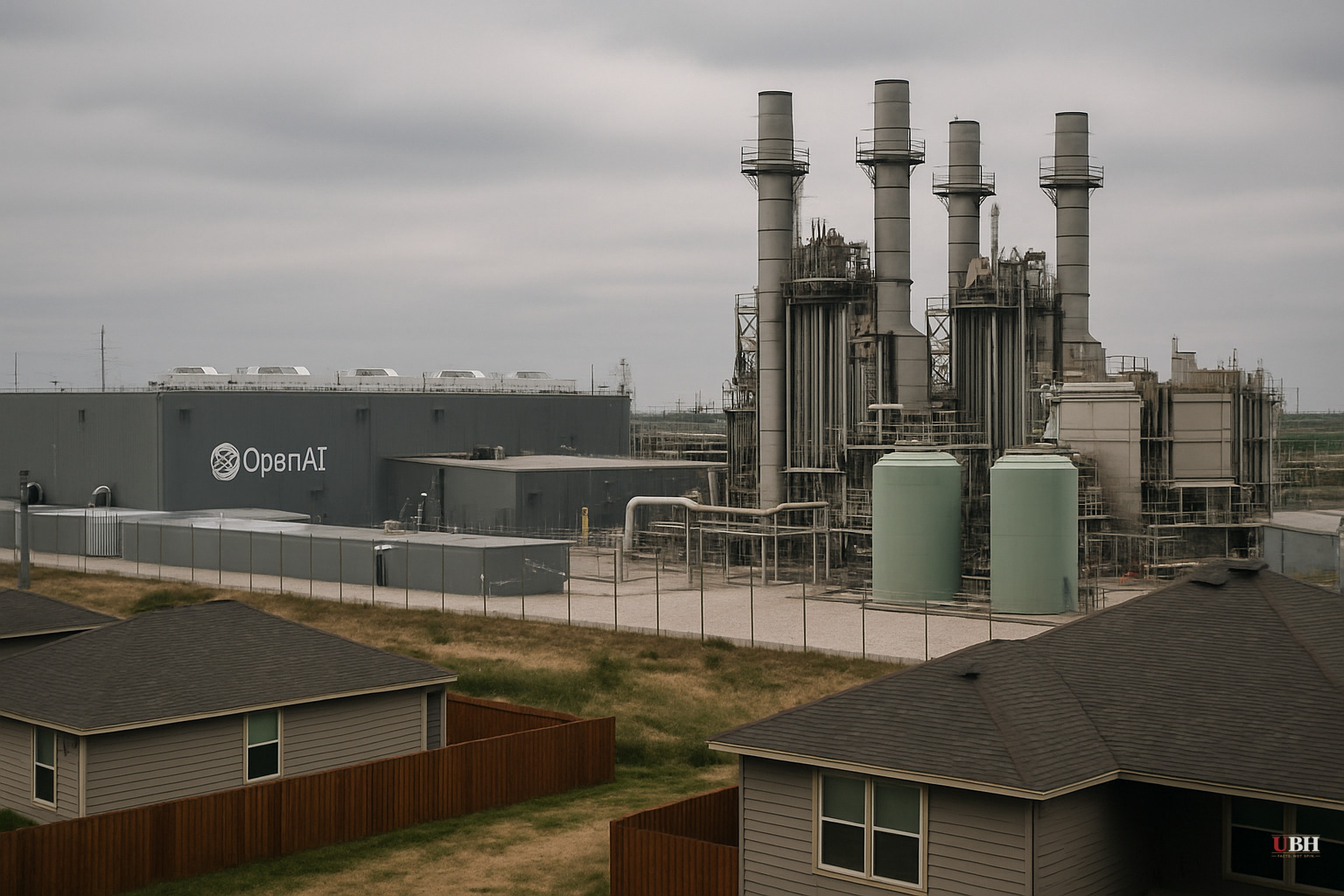
Since this outlet's July 9 coverage of U.S. communities blocking $130 billion in AI infrastructure projects, a Floodlight investigation has surfaced a parallel problem in Texas: the communities that did NOT block these projects often had no idea what was being built next to them until it was too late.
The Stargate Situation in Abilene
Omaira Garcia, an Air Force veteran and mother of two, owns a small ranch in Abilene, Texas. Construction on OpenAI's flagship "Stargate" data center started next door in the summer of 2024. Garcia says she found out about the project only after crews broke ground.
Today, the natural-gas-powered electrical plant that powers the facility sits roughly 500 yards from her kitchen window, exhaust stacks visible from inside her house. "We weren't given any time to understand what this impact was going to be on us," Garcia told Floodlight. "We're trapped here."
OpenAI did not respond to multiple requests for comment from Floodlight. A spokesperson for Crusoe, the project's developer, said the data center has "contributed meaningfully to the economic development" of Abilene, with investments "funding new fire trucks, school expansions, and road improvements across the city."
Those are real benefits. Whether they justify locating an industrial gas plant 500 yards from a private home without meaningful public notice is the question Garcia is living with.
The Permit Loophole
Under Texas rules, building a major new source of air emissions normally requires a major air permit. A process that includes environmental review and public engagement exists for obvious reasons: communities have a right to know what pollutants are being pumped into their air.
But Texas regulators at the Texas Commission on Environmental Quality (TCEQ) have allowed data center developers to instead obtain minor air permits — the same category used for dry cleaners and autobody shops — which are approved with minimal review and little to no public notice, according to the Floodlight investigation.
Kathryn Guerra, who spent nearly four years at the TCEQ before joining the watchdog group Public Citizen, described how the system works: "Those lower-level permits get granted very quickly and often without the public knowing. That feels pretty intentional."
Nondisclosure agreements that developers require in their dealings with local governments compound the problem. By the time a resident figures out what's happening, concrete is already poured.
The Scale
This isn't one rogue project. Texas currently has some 300 data centers in operation and 200 more in development, according to Floodlight's reporting. The state could surpass Virginia as the nation's leading data center market by 2030.
Governor Greg Abbott has called the industry the state's "gold rush," though Floodlight notes his enthusiasm has reportedly cooled in the face of growing public opposition. President Trump has pushed to fast-track AI infrastructure nationally, and Texas has been one of the most willing partners in that effort.
The economic argument for data centers is not nothing. Tax revenue, construction jobs, and local infrastructure investment are real. Abbott's characterization of the industry as a gold rush reflects genuine economic upside for a state that has aggressively courted tech capital.
The Strongest Defense of the Current System
Developers and state officials could reasonably argue that minor permits are a legitimate regulatory category, not a loophole. Smaller-scale facilities with lower emissions thresholds genuinely qualify under this logic, and requiring full major-permit review for every generator would strangle investment in infrastructure the country demonstrably needs. The TCEQ has not publicly stated that it is deliberately enabling circumvention; these permitting categories exist in statute, and developers are operating within them.
The problem is it doesn't address what Floodlight actually found: facilities with industrial-scale gas plants are being classified at the same permitting level as dry cleaners, and NDAs with local governments are keeping residents in the dark even when the projects are enormous. If the permit categories are being used as designed, the categories themselves need a harder look.
What the Process Is Supposed to Prevent
Major air permits exist specifically to give residents like Garcia an opportunity to weigh in before a gas plant is built 500 yards from their home. The review process isn't just about emissions math — it's about whether the people who will breathe the air and live next to the exhaust stacks have any say.
When that process is bypassed, the community doesn't get to make an informed choice. The economic benefits flow to the city government; the pollution lands in Garcia's backyard.
The TCEQ has not announced any review of the minor-permit practice as applied to data centers. Whether Texas regulators will revisit permitting classifications, or whether it will take federal intervention or litigation, is the concrete unresolved question for the hundreds of Texas communities that have data centers in development next door.
Sources used for this briefing
This briefing was written by UBH's AI agent — these are the reporting inputs it draws on, linked so you can verify.


