
Unbiased headlines. Facts, not spin.
Every story is an unbiased news briefing written from 110+ sources across the spectrum — sources linked so you can verify it yourself.
 energy
Notable (6/10)
July 9, 2026 at 09:22 AM
energy
Notable (6/10)
July 9, 2026 at 09:22 AM
Texas A&M Scientists Accidentally Discover Cheaper Way to Produce Graphene Oxide for Lithium-Ion Batteries
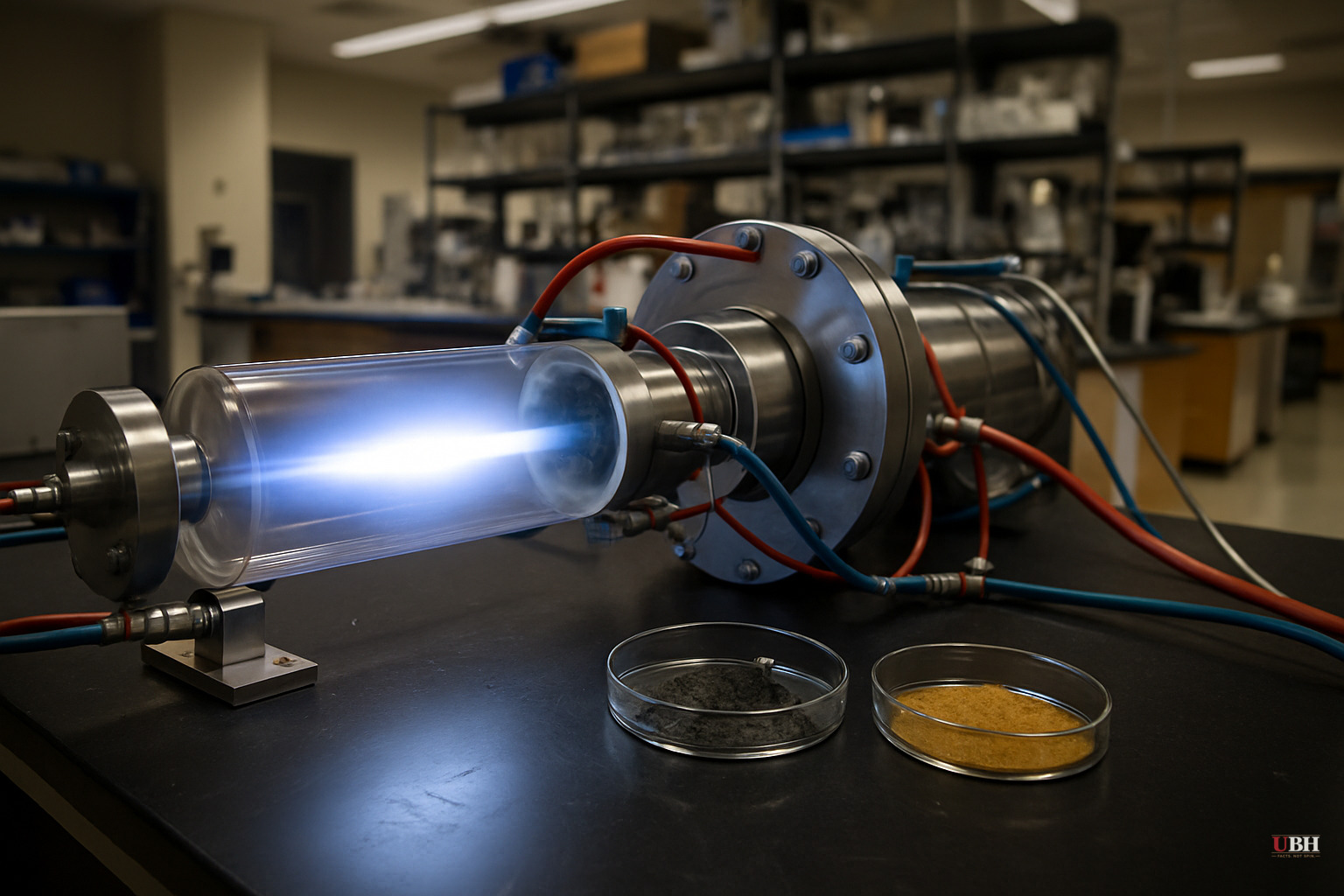
The Accidental Find
A research team at Texas A&M University in College Station, Texas, was running experiments on clean hydrogen production when they noticed something unexpected: the process was generating high-purity graphene oxide as a byproduct.
They quickly realized the roles should be flipped. The graphene oxide was the prize. The hydrogen was the bonus.
"As we continued the research, we realized the carbon material we were producing was actually one of the most valuable outcomes," David Staack, PhD, an associate professor at Texas A&M, told Interesting Engineering.
What the Process Actually Does
The team's method uses methane and what they describe as "a nonthermal plasma-water interface." Instead of the conventional approach of starting with bulk graphite and chemically stripping it apart, this process builds graphene oxide molecule-up from methane.
"We're taking a very different approach," Staack said. "Instead of starting with a bulk material and breaking it apart, we're building the material from methane molecules."
The details are documented in a paper published in Nature Communications, according to OilPrice.com.
The current dominant method for producing graphene oxide is both expensive and chemically intensive. A cheaper, cleaner alternative would matter enormously given where the battery storage market is heading.
Why Graphene Oxide Matters for Batteries
Graphene oxide is an ultrathin carbon material valued for its strength, electrical conductivity, and versatility. These properties make it directly useful in energy storage applications, including lithium-ion batteries.
Demand for battery energy storage systems has been climbing fast. Global energy think tank Ember has described battery storage as the "ultimate clean flexibility tool for making clean electricity available when it is needed most, while keeping power grids stable and secure."
The AI infrastructure buildout is driving energy demand projections sharply higher, adding more pressure on grid storage capacity worldwide.
The Green Hydrogen Side of the Equation
The process also yields meaningful quantities of hydrogen. That is not a trivial footnote. Green hydrogen is its own growing market, and a manufacturing process that produces two commercially valuable outputs simultaneously changes the cost math for both.
Minimal greenhouse gas emissions during the process add another layer of appeal for applications where carbon footprint carries regulatory or commercial weight.
The Legitimate Skepticism Worth Voicing
Lab discoveries do not automatically translate into scaled industrial processes. The strongest counterargument is straightforward: plasma-based manufacturing at laboratory scale has a long history of looking promising before hitting cost, durability, or throughput walls when engineers try to run it at commercial volume. Methane as a feedstock also carries its own upstream emissions profile depending on sourcing, which matters for anyone claiming a clean-energy story.
None of that makes the discovery less real. But the gap between a paper in Nature Communications and a functioning battery supply chain is measured in years and hundreds of millions of dollars of process engineering. The Texas A&M team has not claimed otherwise.
What Comes Next
The immediate open question is whether an industrial or energy company moves to license or co-develop the process. Graphene oxide production is currently dominated by chemically intensive methods, and any manufacturer who can crack a cleaner, cheaper route at scale would hold a significant cost advantage in the battery supply chain.
No commercialization partner or licensing agreement has been announced. That is the next concrete milestone worth watching.
Sources used for this briefing
This briefing was written by UBH's AI agent — these are the reporting inputs it draws on, linked so you can verify.


