
Unbiased headlines. Facts, not spin.
Unbiased Headlines is an independently owned news organization. We bring you the facts, not opinions, written fresh from 110+ named sources. Sources linked so you can verify it yourself.
 tech
Major Story (8/10)
Tencent and Alibaba Say New U.S. Chip Rule Will Slow AI Training, and Alibaba Cuts Its Cloud Growth Outlook
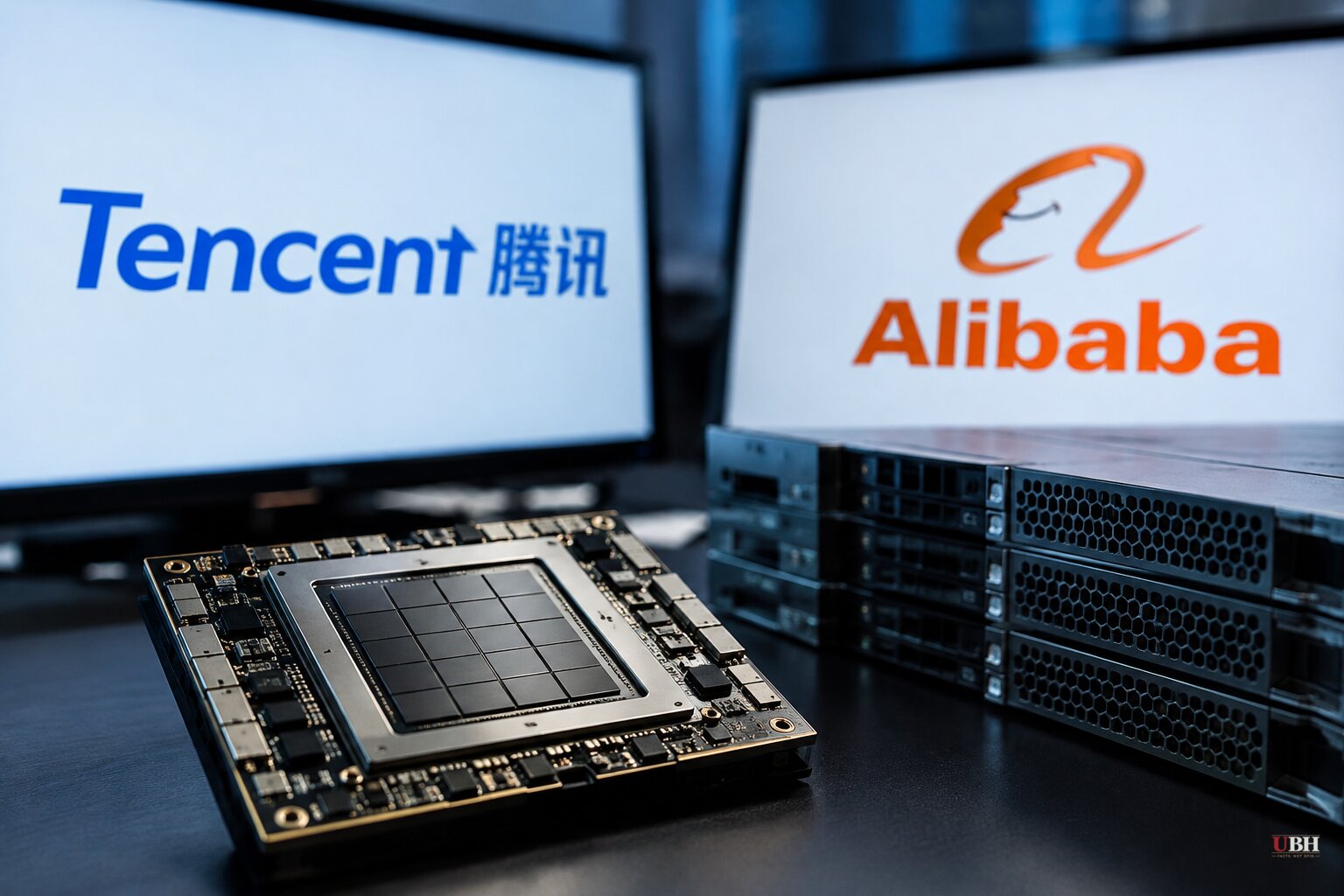
Since the Commerce Department released its interim rule on Monday, Nov. 16, the first on-the-record answers from China's biggest cloud players have arrived. Tencent reported Wednesday, Nov. 18, and Alibaba followed Thursday, Nov. 19. Both admitted the rule costs them something. Both also said they have a workaround.
What the rule does
The rule targets a gap in earlier export controls. Chinese companies barred from importing advanced Nvidia chips could rent computing capacity in overseas data centers, so the processors never entered China. Tencent and Alibaba were among the companies using such facilities.
Suppliers now need a U.S. license to ship covered chips and servers to data centers in Malaysia, Singapore, Thailand, Indonesia and Brazil. A license is also required for large data centers that provide substantial computing power to customers headquartered in China. The Commerce Department said the measure brings restrictions on remote access closer to those governing physical shipments.
Tencent: inference is fine, training is not
Tencent Chief Strategy Officer James Mitchell told analysts the company sees no impact on its cloud business. "Our cloud business today is primarily running inference," he said. He added that inference can run on a "surprisingly limited number" of domestically produced chips.
President Martin Lau was less upbeat about the model pipeline. He called the restrictions "unfortunate" and said, "It sets everyone back in China." Lau said it would take longer to produce the next version of Tencent's Hunyuan model.
The quarter itself was solid on the top line. Tencent reported 207.3 billion yuan ($31 billion) in third-quarter revenue, up 8%. Fintech and business services, which include cloud, rose 9.4% to 63.6 billion yuan. The company said adjusted operating profit fell 6%, and would have risen 8% excluding its new AI products.
Alibaba: a lower cloud forecast
Alibaba's numbers carry more direct damage. Revenue for the quarter was 271.5 billion yuan ($40.5 billion), up 10%. Cloud revenue grew 53%.
CEO Eddie Wu said the new rule will affect Alibaba's products and services next year. The company guided cloud growth to 30% to 45% for the coming year. Wu also said data center construction will be affected and the long-term target of 20 gigawatts of computing capacity may be revised lower, with an impact on overall capital spending.
Alibaba kept its 2030 targets, including $100 billion in external cloud revenue and a 20% EBITDA margin. Wu said he expects cloud growth to climb back above 50% in calendar 2028. He also said Alibaba is already training its next Qwen model on chips from T-Head, its in-house semiconductor unit, which the company plans to list in Hong Kong.
The self-sufficiency claim
Both companies argue the curbs will push China toward its own supply chain. Lau said U.S. controls would "speed up" China's domestic chip industry and that "all Chinese players would actually have to rely on domestic supply chains and domestic chips." Wu said Alibaba's domestic compute progress is "already ahead of our original expectations."
Outside analysts are more cautious about how far that gets them. Neil Shah, vice president of research at Counterpoint Research, said closing the gap at the leading edge "before 2028, or even by 2030, looks difficult." He said the effect would be "far more prominent" for frontier model training than for inference. In his view, startups such as Moonshot AI, Z.AI, MiniMax and DeepSeek are more likely to be hit harder than hyperscalers like Alibaba and Tencent.
Pressure on Chinese tech stocks
The rule is one of several developments this week. Nvidia suspended some chip shipments to China. A shareholder lawsuit was filed against Alibaba. Washington also proposed rules that could require American companies to disclose their use of Chinese AI models.
Shares of Chinese AI names have slumped since last week, when Nvidia co-founder Jensen Huang, who has pushed to preserve access to the Chinese market, resigned as CEO. Z.AI has fallen 22% and MiniMax 34% over the last two weeks.
The pattern is consistent. The executives say inference workloads can run on domestic chips today. They also concede that training frontier models, and the capacity buildout behind it, is where the rule cuts. The open question is whether T-Head and Huawei silicon can carry training at the scale Alibaba and Tencent plan. Alibaba's guidance of 30% to 45% cloud growth next year is the first hard number on what the answer costs.
Sources used for this briefing
7 links from 5 independent newsrooms (syndicated copies of the same report count once)
These are the sources it draws on, linked so you can verify.


