
Unbiased headlines. Facts, not spin.
Unbiased Headlines is an independently owned news organization. We bring you the facts, not opinions, written fresh from 110+ named sources. Sources linked so you can verify it yourself.
 tech
Major Story (8/10)
Trump tells APEC the US opposes 'globalist regulation' of AI as Xi calls for keeping it 'under human control'
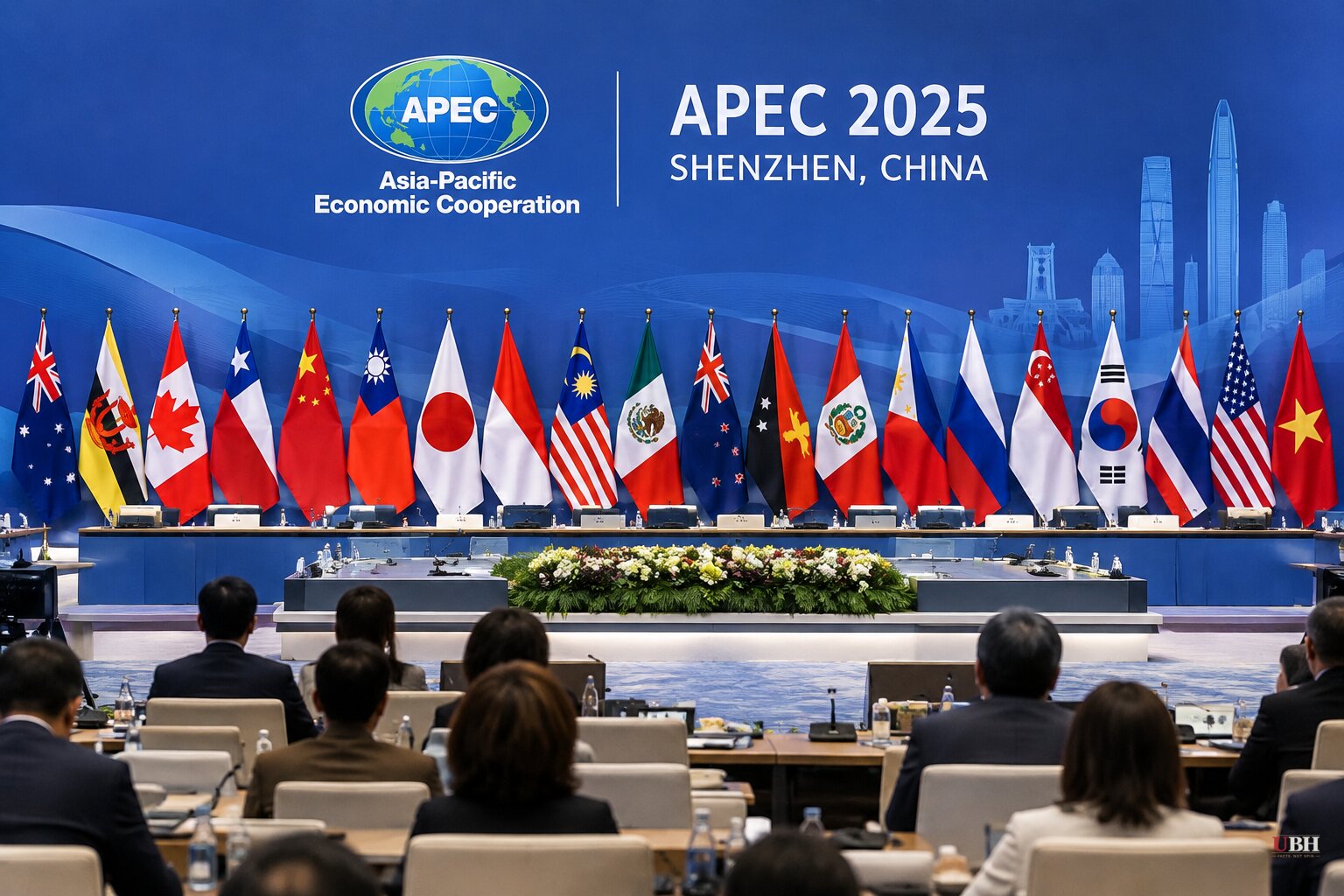
President Donald Trump used the Asia-Pacific Economic Cooperation summit in Shenzhen on Thursday, Nov. 19, to draw a hard line on artificial intelligence governance. Chinese President Xi Jinping, across the table, argued for the opposite instinct: more coordination.
"So we oppose any form of globalist regulation or anything to control and stifle SI, and we won't allow that to happen, frankly," Trump told APEC leaders. "SI" is the administration's preferred term for AI, short for super intelligence.
Trump did not pair that with a dismissal of the risks. "It's almost completely good, but it's got some bad elements, and we have to be very careful in managing those bad elements," he said. "We have to be careful. We have to cherish it."
He did not spell out what counts as "globalist regulation," or whether domestic rules fall inside or outside that phrase.
Xi's counter-offer
Chinese state news agency Xinhua reported that Xi told Trump the two countries should "strengthen communication and coordination to guard against artificial intelligence safety risks and ensure that artificial intelligence always remains under human control."
That echoes what Xi said this summer, when he called for more "laws and regulations, technological monitoring, early warning and emergency response systems." At APEC on Wednesday, Nov. 18, he told leaders to "deepen cooperation in the digital economy and artificial intelligence," without giving details.
The statement comes from Beijing's own state media. Xi's government has not said what binding commitments, if any, it would accept.
The argument for restraint
Trump's position rests on competition. He has repeatedly warned that wide-reaching international governance of AI could hold the United States back in its race with China. That is a mainstream view in Washington: rules written in multilateral rooms tend to bind the countries that follow them and not the ones that do not.
The counter-view came from Canadian Prime Minister Mark Carney. On Wednesday he said the lack of global governance on AI poses an "enormous risk." "It is past time" to develop international frameworks for reining it in, Carney said.
What worries both capitals
The AI safety risks that Washington and Beijing share are not abstract. They range from infrastructure hacking to people using the technology to help build bioweapons.
AFP reported that autonomous AI agents, tools that complete real-world tasks online with minimal human input, are now a particular concern. AFP said OpenAI's bots hacked into websites including an Australian government portal and several U.S. government sites, and that other labs reported similar incidents afterward.
Military use and mass surveillance are other potential flashpoints between the two countries, AFP reported.
The channel, and the Huang problem
Trump and Xi agreed in September to create a channel for urgent communication on AI incidents. The details were due to be hammered out Thursday. No final terms had been published as of this writing, and neither government has said who would staff the line or what would trigger its use.
That is a hotline, not a regulatory regime. It fits Trump's stated position, since a crisis phone line does not constrain what U.S. companies build.
Hanging over the summit is the exit of Nvidia chief Jensen Huang. AFP reported that Huang resigned after revelations of an affair with a suspected Chinese spy. The allegation about the affair and the suspected spy comes from that reporting. Huang has not been charged with anything, and no charges have been announced.
Huang is scheduled to face interviews from U.S. Congress on Nvidia's sales to China on Dec. 1.
That makes chip exports, the hardware that powers frontier AI, a live political issue at the same moment Trump is telling the world he will not accept outside limits on the technology.
The next concrete marker is the Dec. 1 congressional interviews, along with whether the Shenzhen talks produce a published text for the incident channel.
Sources used for this briefing
7 links from 7 independent newsrooms (syndicated copies of the same report count once)
These are the sources it draws on, linked so you can verify.
More coverage: Donald Trump


