
Unbiased headlines. Facts, not spin.
Unbiased Headlines is an independently owned news organization. We bring you the facts, not opinions, written fresh from 110+ named sources. Sources linked so you can verify it yourself.
 tech
Major Story (8/10)
European Commission Confirms AI-Generated Cyberattack Detected Oct. 22, Says Investigation Continues
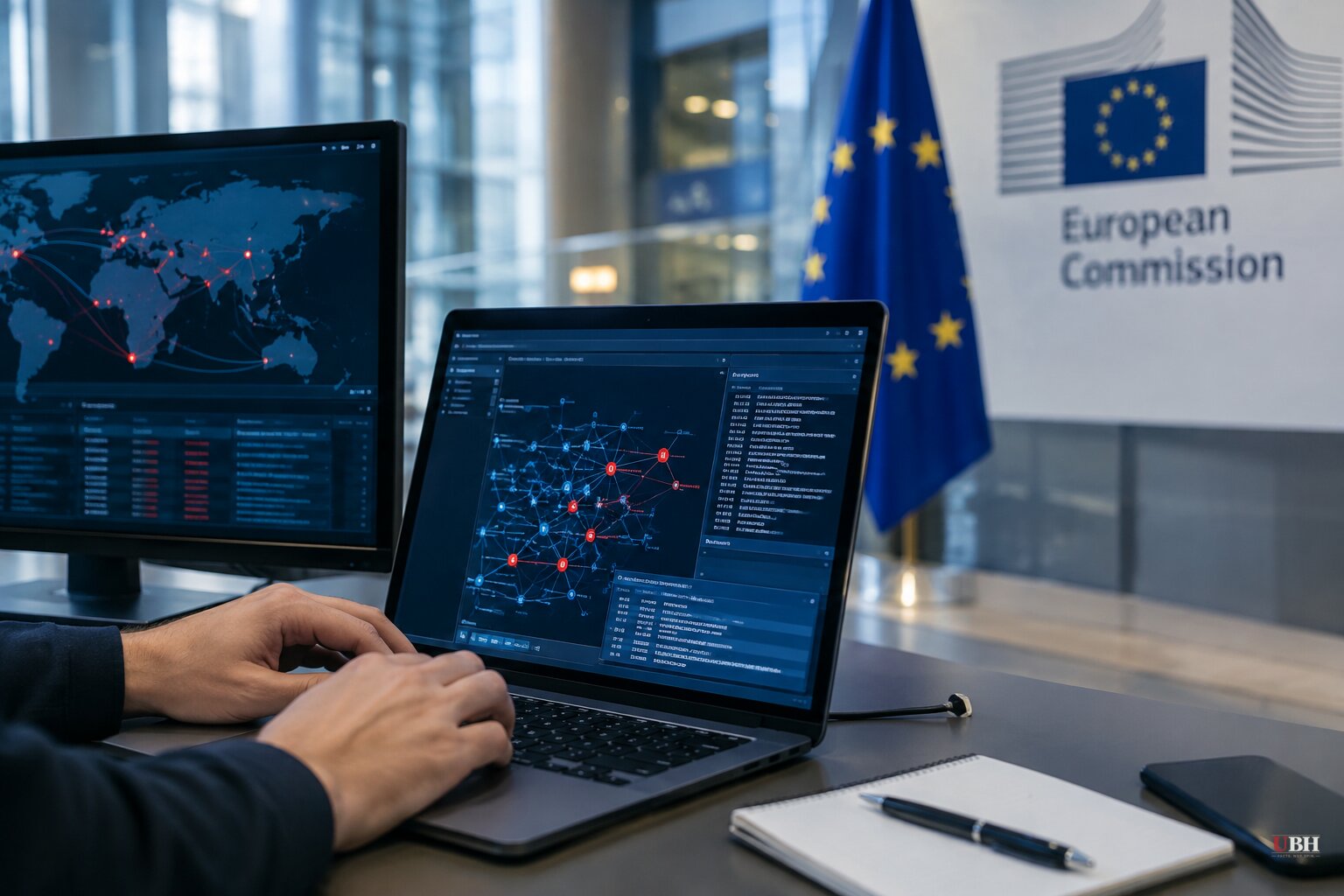
Since a run of hacks and outages this year, from the Los Angeles transit system in March to refrigeration systems in hundreds of French supermarkets in October, the list of public victims has kept growing. Today, Nov. 19, it added the European Commission, the EU's executive arm.
Commission spokesperson Thomas Regnier confirmed at a Brussels press briefing that the institution was hit by what he called an "AI-generated cybercampaign." The activity was detected on Oct. 22 and confirmed as a cyberattack on Oct. 26, he said.
"As a protective and preventive measure, we temporarily took down several applications, and most of them have since then been restored," Regnier said. "The investigation is still ongoing."
What the Commission says
Regnier said the attackers used a "publicly available" AI tool. "AI assisted tools can be used and especially misused to detect vulnerabilities," he said. "Indeed we can confirm that this was done with AI tools. No one is immune to this."
He said investigators have not detected "any evidence of a data breach affecting Commission staff as a whole." He said he was not aware of any ransom demand. The European Data Protection Supervisor has been notified.
A separate Commission statement said the attack targeted "individual systems," that affected teams were informed, and that the institution is "preventively checking other systems" while working with CERT-EU, the EU's cyber emergency team.
Regnier declined to say who is responsible, how large the attack was, or whether it has ended. He said it is difficult to judge the scale while the inquiry is under way.
Systems hit
Politico reported this morning that the disruption lasted at least 10 days and may have exposed employees' personal information. Its reporting named Sysper, the HR platform staff use for payslips, leave and timesheets, and MyPMO, the medical reimbursement system. Translation services were also affected.
The Commission did not confirm that list. Two EU officials told Euronews that Sysper was working again today, but the staff health insurance scheme was still unavailable. Those platforms store names, pay grades, home addresses and contact details, according to Brussels Signal. They are separate from the system that hosts the Commission's internal documents.
The Commission's own wording matters here. "No evidence of a data breach affecting Commission staff as a whole" does not rule out exposure of smaller datasets. Regnier did not say either way.
The tool
The Commission has not named the tool. Politico reported that CERT-EU identified ARTEX, a Chinese-made open-source AI penetration-testing framework, in the intrusion. That identification rests on Politico's reporting and has not been confirmed by the Commission.
What is documented is the tool's wider footprint. CERT-EU published a warning about ARTEX on Nov. 4, assessing that its public availability "will likely accelerate adoption by threat actors, resulting in more frequent, faster, and more scalable automated attacks with a higher success rate."
The FBI warned last week that ARTEX is being used heavily by criminals and nation-states against government agencies and dozens of critical sectors, "with some intrusions progressing from initial targeting to privileged access in under three hours." The framework was released in July and uses commercial AI models to automate vulnerability discovery and exploitation.
Shaun Williams, a senior director at SentinelOne, put it this way: the point is not that attackers use ARTEX, but that such tools let them find and exploit flaws in internet-facing devices "faster, more effectively, cheaper, and with less skill than ever before."
The disclosure gap
The attack was not public until Politico's story this morning, four weeks after detection. Asked why, Regnier said publicizing defensive measures could weaken them. "There was no hiding whatsoever," he told journalists.
Not everyone buys that. Dutch MEP Bart Groothuis of the Renew Europe group told Euronews his problem with the Commission is that "they keep the information about it internally." Officials told Euronews they received no formal internal communication about the incident. Politico reported that technical support first blamed the Sysper outages on a general malfunction without mentioning an attack.
The Associated Press reported that this is the first time the EU has disclosed a cyberattack carried out with AI tools.
A pattern at the Commission
This is the Commission's third disclosed cyber incident this year. On Jan. 30, CERT-EU detected an intrusion into infrastructure used to manage staff mobile devices, which may have exposed names and phone numbers. In March, hackers broke into the cloud account behind the Europa.eu websites and took about 91.7 gigabytes of compressed data, including names, email addresses and email content, according to CERT-EU. Officials have not linked the three incidents.
The Commission is simultaneously pressing member states on their own defenses. In June it took France and Spain to court for failing to implement the bloc's NIS2 cybersecurity directive. On Nov. 3 it said the wave of attacks on supermarket refrigeration systems across Europe was not a set of isolated incidents.
No related incidents have been reported at the European Council or the European Parliament.
Politico reported that the Commission convened its highest-level internal crisis body and that Tech Sovereignty and Security Commissioner Henna Virkkunen briefed fellow commissioners on Wednesday. Her office had not responded to a request for comment.
The open questions are specific: whether personal data of any staff was taken, who ran the campaign, and whether the health insurance system comes back online. Regnier said the Commission will act "based on the findings as they come."
Sources used for this briefing
8 links from 8 independent newsrooms (syndicated copies of the same report count once)
These are the sources it draws on, linked so you can verify.


